UNFICYP: Maintaining Peace in the Cyprus Buffer Zone
The United Nations Peacekeeping Force in Cyprus (UNFICYP) is a specialized UN mission established to maintain stability on the island of Cyprus. Formed in 1964 under United Nations Security Council Resolution 186, the force was created to prevent the recurrence of fighting following intense intercommunal violence between Greek Cypriots and Turkish Cypriots. Its primary objectives are to maintain law and order and facilitate a return to normal conditions for the island's inhabitants.
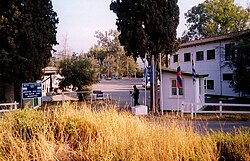
Headquartered at the Blue Beret Camp at Nicosia International Airport, the mission is currently led by Special Representative and Head of Mission Khassim Diagne of Senegal, with Lieutenant General Minhazul Alam of Bangladesh serving as the Force Commander.
Key Facts
- Established: 1964 via Security Council Resolution 186.
- Primary Goal: Prevent fighting and maintain law and order between Greek and Turkish Cypriots.
- Current Strength: 727 military personnel, 60 police officers, and 148 civilian staff (as of October 31, 2025).
- Buffer Zone: A demilitarised area stretching over 180.5 kilometres, known as the Green Line.
- Budget: $57,611,600 USD for the period of July 1, 2025, to June 30, 2026.
- Mandate: Last extended on January 30, 2026, until January 31, 2027.
The UN Buffer Zone
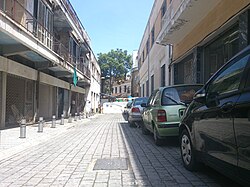
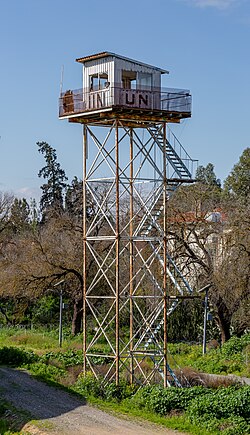
The United Nations Buffer Zone is a demilitarised zone established in 1974 following the Turkish invasion of Cyprus. This zone effectively partitions the island into the south, controlled by the Government of Cyprus, and the north, under Turkish occupation. Colloquially referred to as the "Green Line," the zone covers 346 square kilometres and runs for more than 180.5 kilometres from Kato Pyrgos in the west to just south of Famagusta in the east.
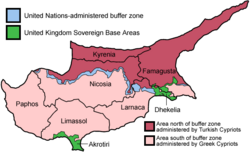
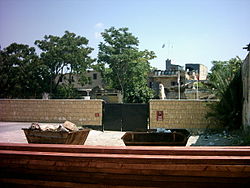
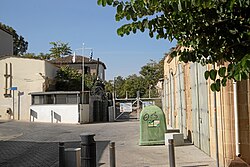
The zone's width varies significantly, ranging from a narrow 3.3 metres in central Nicosia to as wide as 7.4 kilometres near the village of Athienou. It notably cuts through the center of Nicosia's old town, splitting the capital into northern and southern sections.
Deployment and Operational Structure
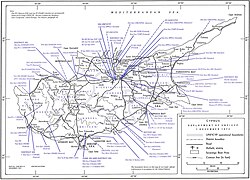
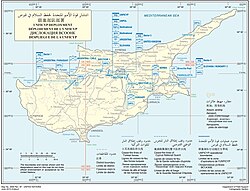
UNFICYP's deployment has evolved significantly since its inception. In the years prior to 1974, the force was divided by district, with contingents from Austria (Paphos), Denmark (Lefka), Canada (Nicosia), Ireland (Larnaca), Finland (Kyrenia), and Sweden (Famagusta).
Canada played a pivotal role from 1964 to 1993, deploying approximately 25,000 personnel across 59 rotations. This included "Operation Snowgoose" in July 1974, a rapid augmentation of forces in response to the Turkish invasion.
Modern Sector Responsibilities
Since 1993, the mission has been organized into specific sectors:
- Sector 1: Spanning 90 kilometres from the Kokkina exclave to Mammari. This sector is managed by the Argentinian Contingent, with headquarters at San Martin Camp.
- Sector 2: Covering 30 kilometres from Mammari to Kaimakli, managed by the British contingent under Operation TOSCA.
- Sector 4: Covering 65 kilometres from Kaimakli to Dhernia, managed by Slovakian and Hungarian contingents.
Specialized Units
Beyond the sectors, UNFICYP utilizes a Mobile Force Reserve (MFR), a high-readiness unit composed of Argentinean, British, Hungarian, and Slovakian peacekeepers. The MFR is trained in public order and air-mobile operations using Bell 212 helicopters. Additionally, the UN Flight (ARGAIR), staffed by the Argentine Air Force, provides essential aerial support.
Mission Personnel and Finances
The mission relies on a diverse international coalition. As of October 2025, the military strength includes significant contributions from the United Kingdom, Slovakia, and Argentina. Civilian police officers are provided by nations including Brazil, Italy, and Germany.
| Country | Personnel Count |
|---|---|
| United Kingdom | 234 |
| Slovakia | 219 |
| Argentina | 220 |
| Other Contributing Nations | 59 |
| Total | 732 |
Financially, the mission is supported by a combination of UN funds and voluntary contributions. The Government of Cyprus pays one-third of the costs, and the Government of Greece contributes $6,500,000 annually. Turkey does not contribute directly to the budget.
Challenges and Controversies
UNFICYP has faced criticism regarding its neutrality. In 2022, the de facto administration in Northern Cyprus criticized the force for failing to facilitate the entry of a Turkish handball player who had tested positive for COVID-19, claiming the UN had become a symbol of the status quo.
Furthermore, in October 2022, the administration in Northern Cyprus issued an ultimatum demanding that UNFICYP either recognize the Turkish Republic of Northern Cyprus or vacate two of its bases in the north, citing the Brahimi Report's emphasis on the necessity of local party consent for peacekeeping operations.
Fatalities
Since 1964, UNFICYP has suffered 187 fatalities. The majority of these (145) were the result of illness or accidents rather than combat. The United Kingdom has recorded the highest number of deaths (60), followed by Canada (29) and Denmark (24).
Frequently Asked Questions
What is the primary purpose of UNFICYP?
UNFICYP was established to prevent the recurrence of fighting between Greek and Turkish Cypriots, maintain law and order, and help restore normal conditions on the island.
What is the "Green Line"?
The Green Line is the colloquial name for the United Nations Buffer Zone, a demilitarised area that separates the south (Republic of Cyprus) from the north (Turkish-controlled area).
Who funds the UNFICYP mission?
The mission is funded by the UN, with voluntary contributions from the Government of Cyprus (one-third of the cost) and the Government of Greece ($6.5 million annually).
How wide is the buffer zone?
The width varies greatly, from as narrow as 3.3 metres in central Nicosia to as wide as 7.4 kilometres near Athienou.
Which countries currently provide the most troops?
As of October 2025, the largest troop contributors are the United Kingdom, Argentina, and Slovakia.