Finnish Defence Forces
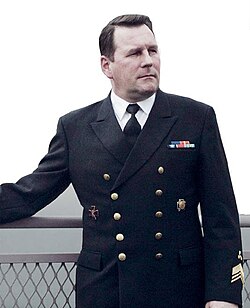
The Finnish Defence Forces (Finnish: Puolustusvoimat; Swedish: Försvarsmakten) serve as the primary military organization responsible for the sovereignty and security of Finland. Established on January 25, 1918, the forces have evolved from a nascent national guard into a sophisticated, modern military integrated into the North Atlantic Treaty Organization (NATO).
Operating under the leadership of the President of Finland, the Minister of Defence, and the Chief of Defence, the organization is built upon a foundation of universal male conscription and a comprehensive strategy of total defence.

Key Facts
- Founded: January 25, 1918.
- Personnel: 24,000 active personnel (2023), expanding to 280,000 during wartime.
- Reserve: A massive reserve force of approximately 870,000 personnel.
- Budget: €6.5 billion (2025), representing 2.3% of GDP (2024).
- NATO Status: Formally applied for membership in May 2022.
- Core Branches: Army, Navy, and Air Force.
Historical Evolution
Founding and the Civil War
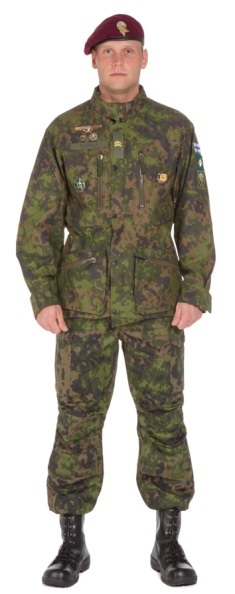
Following Finland's declaration of independence on December 6, 1917, the Civil Guards were proclaimed government troops on January 25, 1918. Lieutenant General Carl Gustaf Emil Mannerheim was appointed Commander-in-Chief the following day. This period was marked by the Finnish Civil War, characterized by conflict between the White Guards and the Red Guards.
Interwar Development
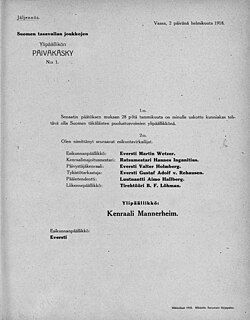
After the Civil War, professional German officers helped organize the peacetime army into three divisions and a brigade. During this era, the White Guard (Suojeluskunta) acted as a vital territorial militia. The Air Force, formed in March 1918, operated as part of the Army until it became an independent branch in 1928.
The government established a rigorous conscription system and a network of military academies, including the Kadettikoulu (Officer Training Academy) in 1919 and the Sotakorkeakoulu (General Staff College) in 1924. Despite high training requirements, political opposition to spending left the military under-equipped prior to the Soviet threats of World War II.
Modern Era and NATO Integration
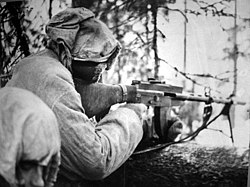
In a historic shift in security policy, Finland applied for NATO membership in May 2022. This decision was driven by a joint statement from President Niinistö and Prime Minister Sanna Marin, followed by an overwhelming parliamentary vote of 188 in favor and 8 against. The application was formally submitted to Secretary General Jens Stoltenberg on May 18, 2022.
Organizational Structure
The Finnish Defence Forces are divided into three primary service branches, supported by the Defence Command and the National Defence University.
The Finnish Army
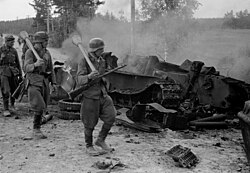
The Army is the largest branch, utilizing a mix of operative forces (approx. 61,000 personnel) and territorial forces (approx. 176,000 personnel). Its structure includes readiness brigades, Jaeger brigades, and various regional infantry brigades and battalions.
The Finnish Navy
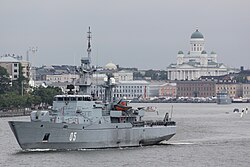
The Navy focuses on coastal defense and maritime security, organized into fleet battle groups, coastal battle groups, and coastal Jaeger units.
The Finnish Air Force
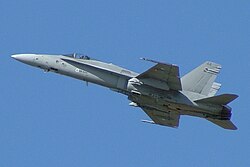
The Air Force maintains air superiority and surveillance through three fighter squadrons and four main operating bases.
Conscription and Training
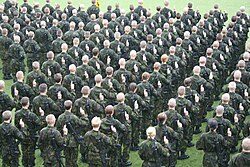
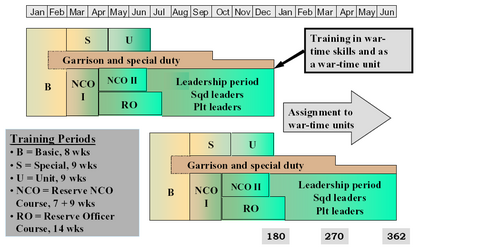
Finland employs universal male conscription. All men over 18 are liable for service, with terms lasting 165, 255, or 347 days (approximately 6, 9, or 12 months) depending on the technicality of the role and rank.
- Basic Training: Standard service for privates (6 months).
- Specialized Training: Technically demanding roles (9 or 12 months).
- Officer/NCO Training: Comprehensive leadership training (12 months).
Upon completion, soldiers enter the reserve until age 50 or 60. Reservists must undergo periodic refresher exercises, ranging from 40 to 100 days depending on their rank.
Total Defence and Strategy
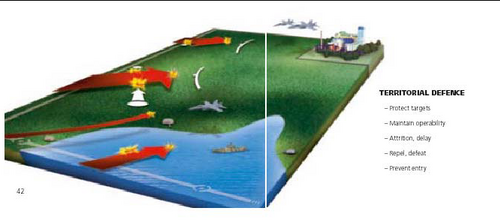
Finland utilizes a Total Defence model, which integrates all national services to repel aggression. This strategy relies on five pillars: general conscription, territorial defence, wartime unit training, dispersed mobilisation, and the joint use of all societal services.
The principle of territorial defence aims to wear down an enemy from the border inward, stopping an invasion force before it can capture vital strategic areas.
Equipment and Capabilities
Finland maintains a robust domestic defense industry with suppliers such as Patria, Robonic, SAKO, and Sisu Auto, while also procuring advanced technology from the US, Germany, Israel, Norway, and Sweden.
| Category | Equipment Type | Approximate Quantity |
|---|---|---|
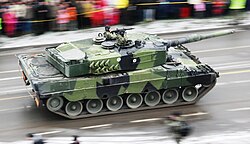
| Land Forces | Main Battle Tanks | 239 |
| Land Forces | Infantry Fighting Vehicles | 212 |
| Land Forces | Assault Rifles (Rk 62/95) | 390,000+ |
| Air Force | Fighter Aircraft | 62 |
| Air Force | Helicopters | 25 (+14 Border Guard) |
| Air Force | UAVs | 215 |
International Peacekeeping
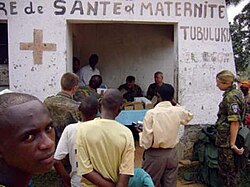
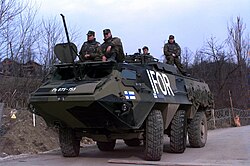
Since 1956, approximately 43,000 Finnish peacekeepers have served in international missions. By law, the maximum simultaneous strength of these forces is capped at 2,000 soldiers. Finland currently participates in various UN, EU, and NATO-led operations, including missions in Lebanon (UNIFIL), Bosnia and Herzegovina (EUFOR Althea), and the Gulf of Aden (Operation Atalanta).
Frequently Asked Questions
Who is eligible for conscription in Finland?
Universal male conscription applies to all men above the age of 18. Approximately 65% of Finnish men complete their service.
How long is the mandatory military service?
Depending on the role and training, service terms are either 165, 255, or 347 days (roughly 6, 9, or 12 months).
What is the 'Total Defence' concept?
Total Defence is a national strategy that combines military strength with the joint effort of all societal services to repel an aggressor and protect vital areas.
When did Finland apply for NATO membership?
Finland formally submitted its application to NATO on May 18, 2022, following a decisive vote by the Finnish Parliament.
What are the main domestic suppliers for the Finnish military?
Key domestic industry partners include Patria, Robonic, SAKO, and Sisu Auto.