Umbro: The Legacy of a British Sportswear Icon
Founded in the heart of England, Umbro has evolved from a small family operation into a globally recognized name in sports textiles. Specializing in football and rugby sportswear, the brand is instantly identifiable by its iconic "double diamond" logo. Today, Umbro products are distributed in over 100 countries, blending a rich sporting heritage with modern athletic performance.
Key Facts
- Founded: May 23, 1924, in Wilmslow, England.
- Founders: Brothers Harold and Wallace Humphreys.
- Headquarters: Manchester, England.
- Parent Company: Iconix Brand Group (since 2012).
- Core Products: Football kits, rugby kits, boots, goalkeeper gloves, and footballs.
- Global Reach: Sold in more than 100 countries worldwide.
The Origins of a Sportswear Giant
The story of Umbro began at a family-owned pub in Wilmslow, Cheshire. Brothers Harold and Wallace Humphreys started their venture, Humphreys Brothers Limited, in 1924, initially operating out of a small cupboard before expanding into a dedicated workshop. The name "Umbro"—a portmanteau derived from Humphreys and brothers—was adopted that same year.
The brand made its high-profile debut during the 1934 FA Cup final, providing kits for both Manchester City and Portsmouth. Throughout the 1930s and 40s, Umbro established itself as a preferred supplier for prestigious clubs, including Manchester United, Tottenham Hotspur, Sheffield United, Preston North End, and Blackpool.
Scaling the Pinnacle of Football
By the mid-20th century, Umbro had moved beyond club football to the international stage. In 1952, the brand began a 20-year partnership supplying tailored kits for the British Olympic team. Innovation continued in 1955 with the launch of the "Sportswear Xmas Pack," the company's first replica kit designed for youth.
The 1950s and 60s marked a golden era for the brand. In 1958, Brazil became the first FIFA World Cup champion to wear Umbro kits.
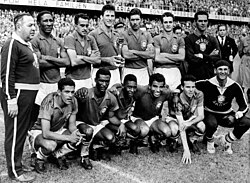
Umbro's dominance in England was absolute; by the late 1960s, 85% of British football teams wore their gear. This included the England national team, which won its sole World Cup title in 1966 wearing Umbro. Remarkably, 15 of the 16 teams in that tournament wore Umbro kits, with only the USSR being the exception.
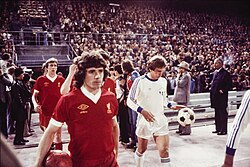
The brand also powered European club success. Celtic, the first British team to win the European Cup in 1967, wore Umbro, as did Liverpool F.C., who won four of their six European Cups (1977, 1978, 1981, and 1984) in the brand's apparel.
Revolutionizing Kit Design
In 1991, Umbro disrupted the industry by introducing an oversized, baggy silhouette for Tottenham Hotspur during the FA Cup final. While initially criticized by the press, the look became a global trend. Within two seasons, most manufacturers, including Adidas, abandoned slim-fitting designs in favor of the looser style pioneered by Umbro.
Corporate Transitions and Global Shifts
Despite its success, the early 2000s saw Umbro lose key contracts with giants like Manchester United (2002) and Chelsea (2005). In the United States, the company took a strategic interest in the grassroots game, owning 94% of the United Soccer Leagues (USL), the governing body for lower-division men's and women's soccer in North America.
![Umbro Dynamis match ball used in the United Soccer League for the 2009–10 season[10]](/images/69/32/6932505efef79a82fa88460e9bc66a68b8aa6af418fa5a6e7615b6d76df28c6e.jpg)
The company underwent significant ownership changes in the 21st century. In 2008, Umbro was acquired by Nike for £285 million. However, by 2012, Nike sold the brand to the U.S.-based Iconix Brand Group for US$225 million to refocus on its core sports lines. This transition also ended a nearly 60-year partnership with the England national team.
Under Iconix, Umbro revitalized its portfolio, signing new deals with clubs such as Everton, West Ham United, and PSV Eindhoven, as well as national teams like Serbia and Jamaica. In 2024, a sub-licensing agreement was established with Castore to distribute Umbro Professional Team Sports apparel across key European markets.
Product Evolution and Innovation
While primarily known for textiles, Umbro expanded into footwear in 1985, launching its first football boot in the Brazilian market. The brand later became a fashion staple in the U.S. during the late 80s and early 90s, where its bright nylon drawstring shorts became popular everyday wear for youth.
The brand has continued to innovate with specialized footwear, including the Stealth boot (2010), the lightweight GT series, and the Geometra Pro. Following its separation from Nike, the company launched the UX-1 shoe as a flagship product.
| Category | Details |
|---|---|
| Founded | May 23, 1924 |
| Origin | Wilmslow, England |
| Current Parent | Iconix Brand Group |
| Key Markets | Worldwide (100+ countries) |
| Primary Sports | Football (Soccer) and Rugby Union |
Frequently Asked Questions
What does the name "Umbro" mean?
The name is a portmanteau created from the founders' name, Humphreys (using "um") and the word "bro" for brothers.
Which famous national teams have worn Umbro?
Umbro has supplied kits for several high-profile teams, most notably Brazil (winning the 1958 and 1994 World Cups) and England (winning the 1966 World Cup).
How did Umbro influence football kit fashion?
Umbro revolutionized the industry in 1991 by introducing the oversized, baggy kit silhouette, which replaced the traditional slim-fitting designs used by almost all manufacturers worldwide.
Who currently owns the Umbro brand?
Umbro is currently a subsidiary of the U.S. brand management company Iconix Brand Group, which acquired it from Nike in 2012.
Does Umbro produce more than just clothing?
Yes, in addition to jerseys, shorts, and socks, Umbro manufactures footballs, goalkeeper gloves, and a wide range of football boots, such as the Speciali and Geometra series.