Ukrainian Currency: From Ancient Zlatnyks to the Modern Hryvnia
The history of money in Ukraine is a reflection of the nation's long journey toward sovereignty and identity. From the gold coins of the Kievan Rus' to the modern banknotes used today, the evolution of Ukrainian currency highlights a recurring theme: the use of national symbols to assert authority and cultural heritage.
The Origins of Ukrainian Coinage
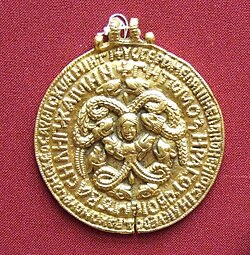
The first gold and silver coins in Ukraine were produced during the reign of Vladimir the Great (Volodymyr the Great), the Grand Prince of Kiev. These early coins were known as zlatnyks (gold) and sriblianyks (silver). A defining feature of these coins was the trident, a symbol used by the princes of Kiev. The golden coins specifically featured images of Prince Vladimir and Jesus Christ.
While the gold coins were centralized, silver coins were minted across various principalities, including Novgorod and Chernigov.
The Transition to Silver Ingots
Between the 12th and 14th centuries, as Kievan Rus' began to decline, the availability of minted coins diminished. To compensate for this shortage, the population and feudal lords began using silver ingots as a primary medium of exchange. By the mid-14th century, although new coins were minted, they eventually ceased circulation and remained only as a unit of counting.
The Revolutionary Period (1917–1921)
During the Ukrainian Revolution of 1917–1921, establishing a national currency became a priority for the emerging state. On December 22, 1917, the Central Council founded the state bank of Ukraine, appointing Mykhailo Kryvetskyi as its first director.
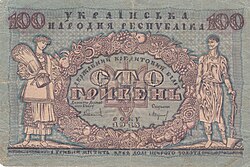
The first banknote, a 100 karbovanets, was issued by the Ukrainian People's Republic on January 5, 1918. At the time, one karbovanets was valued at 0.767 grams of gold. In a nod to the legacy of Vladimir the Great, the design of the 100 karbovanets note featured the trident.
The Introduction of the Hryvnia and Subsequent Changes
On March 1, 1918, the Central Council introduced the hryvnia. This currency was divided into 100 shahs and was valued at half of a karbovanets. However, this arrangement was short-lived; in April 1918, Hetman Pavlo Skoropadsky reintroduced the karbovanets as the primary currency. This version consisted of 200 shahs, with denominations ranging from 10 to 1,000 karbovanets.
Modern Currency and the National Bank of Ukraine
Following independence in 1991, the National Bank of Ukraine initially issued the coupon karbovanets. This served as a transitional currency until September 1996, when a comprehensive currency reform led by the National Bank and its head, Viktor Yushchenko, introduced the modern hryvnia.
The initial rollout included banknotes in denominations of 1, 2, 5, 10, 20, 50, and 100, alongside kopiikas (fractional units) in denominations of 1, 2, 5, 10, 25, and 50.
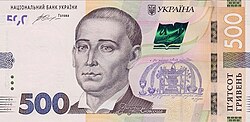
In early 2020, the National Bank updated its banknote series to include 10, 20, 50, 100, 200, 500, and 1000 denominations. As part of this update, the bank planned to replace the 10-hryvnia banknote with a coin in June 2020. More recently, on September 2, 2024, the National Bank proposed renaming the kopiika to the historical "shah" as part of a broader derussification campaign.
Key Facts
- First Coins: Zlatnyks (gold) and sriblianyks (silver) minted under Vladimir the Great.
- National Symbol: The trident has appeared on Ukrainian currency from the 11th century to the modern era.
- 1918 Value: One early karbovanets was equal to 0.767 grams of gold.
- Modern Reform: The current hryvnia was introduced in September 1996.
- Proposed Change: The National Bank of Ukraine proposed renaming the kopiika to the shah in 2024.
| Era | Primary Currency/Unit | Key Feature/Note |
|---|---|---|
| Kievan Rus' | Zlatnyks & Sriblianyks | Featured the trident symbol |
| 12th–14th Century | Silver Ingots | Used due to coin deficiency |
| 1917–1921 | Karbovanets & Hryvnia | First state bank established (1917) |
| 1991–1996 | Coupon Karbovanets | Transitional post-independence currency |
| 1996–Present | Hryvnia | Modern currency with kopiika/shah subunits |
Frequently Asked Questions
Who issued the first gold and silver coins in Ukraine?
The first gold (zlatnyks) and silver (sriblianyks) coins were produced during the rule of Grand Prince of Kiev Vladimir the Great.
What is the significance of the trident on Ukrainian money?
The trident was used as a symbol of the princes of Kiev and has appeared on currency from the time of Vladimir the Great through the banknotes of the Ukrainian People's Republic.
When was the modern hryvnia introduced?
The modern hryvnia was introduced in September 1996 following a currency reform performed by the National Bank of Ukraine and Viktor Yushchenko.
What was the karbovanets?
The karbovanets was a currency used during the Ukrainian Revolution (1917–1921) and again as the "coupon karbovanets" between 1991 and 1996.
Why is the National Bank of Ukraine proposing to rename the kopiika?
On September 2, 2024, the bank proposed renaming the kopiika to the historical "shah" as part of a derussification campaign.