UK Parliamentary Constituency Boundary Reviews: History and Legislation
The process of defining the geographical areas, known as constituencies, that elect members to the UK Parliament is a complex legal and administrative task. This process ensures that representation remains fair as populations shift over time. Managed by boundary commissions, these reviews determine how many seats each nation has and where the borders of those seats lie.
Key Facts
- The current number of UK parliamentary constituencies is fixed at 650.
- Boundary reviews are conducted to adjust for population changes across England, Wales, Scotland, and Northern Ireland.
- The 2023 Review resulted in England gaining 10 seats, while Wales lost 8 and Scotland lost 2.
- The Parliamentary Constituencies Act 1986 serves as the primary legislative foundation, with subsequent amendments in 2011 and 2020.
Legislative Evolution
The legal framework for redistributing seats has evolved significantly since the mid-20th century. Boundary commissions were first established as permanent bodies under the House of Commons (Redistribution of Seats) Act 1944. This was followed by the 1949 Act, with incremental changes occurring in 1958 and 1979, eventually leading to the Parliamentary Constituencies Act 1986.
There have been attempts to shift these responsibilities. For instance, the Political Parties, Elections and Referendums Act 2000 aimed to transfer these functions to the United Kingdom Electoral Commission. However, this never happened, and the plan was repealed by the Local Democracy, Economic Development and Construction Act 2009, effective April 1, 2010.
More recently, the Parliamentary Voting System and Constituencies Act 2011 introduced substantial changes to how reviews are governed, which were further refined by the Parliamentary Constituencies Act 2020.
The Process of Periodic Reviews
Historically, commissions conducted a full review of all constituencies in their respective regions every eight to twelve years. Between these major cycles, interim reviews—smaller adjustments to specific areas—could be performed, though these rarely caused drastic changes compared to general reviews.
Before 2011, the rules for Great Britain (England, Wales, and Scotland) required the total number of seats to be roughly 613, with at least 35 allocated to Wales. Northern Ireland was mandated to have between 16 and 18 seats. Specific protections existed for the City of London, which could not be partitioned, and the Orkney and Shetland Islands, which could not be combined with other areas.
Under the 1986 Act, the approach shifted. The total number of constituencies was no longer fixed, and commissions had more discretion. While a 13,000 square kilometre limit on constituency area was later introduced by the 2011 Act, no constituency had exceeded that size in practice prior to the rule.
The boundaries used for elections between 2010 and 2019 were largely the result of the Fifth Periodic Review. This review established a total of 650 seats across the UK.
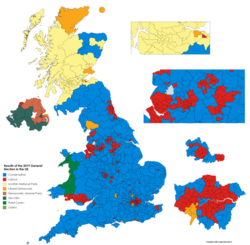
Fifth Periodic Review Distribution
| Nation | Number of Constituencies |
|---|---|
| England | 533 |
| Scotland | 59 |
| Wales | 40 |
| Northern Ireland | 18 |
| Total | 650 |
The Sixth Periodic Review and the 2023 Review
The Sixth Periodic Review began on March 4, 2011, with the goal of reducing the total number of UK constituencies from 650 to 600. However, this review faced significant political hurdles. It was suspended in January 2013 due to a lack of consensus within the coalition government. Although it recommenced in 2016 and final recommendations were submitted in 2018, the government never approved the proposals. The Sixth Review was formally abandoned following the Parliamentary Constituencies Act 2020.
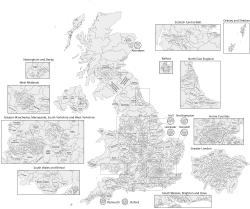
The 2020 Act reinstated the total number of seats at 650, prompting the 2023 Review, which launched on January 5, 2021. This review redistributed seats to reflect current population data, resulting in a net increase for England and decreases for Wales and Scotland.
The final recommendations for the 2023 Review were submitted to the Speaker of the House of Commons on June 27, 2023. These were officially adopted via The Parliamentary Constituencies Order 2023 and came into force on November 29, 2023.
Frequently Asked Questions
How many constituencies are there in the UK Parliament?
Following the 2020 Act and the subsequent 2023 Review, the total number of constituencies is fixed at 650.
What happened to the Sixth Periodic Review?
The Sixth Review aimed to reduce the number of seats to 600, but it was suspended in 2013 and eventually formally abandoned after the passing of the Parliamentary Constituencies Act 2020.
How did the 2023 Review change the distribution of seats?
The 2023 Review increased England's seats by 10 (to 543), decreased Wales' seats by 8 (to 32), and decreased Scotland's seats by 2 (to 57), while Northern Ireland remained unchanged at 18.
Who is responsible for drawing the constituency boundaries?
The boundaries are determined by four separate boundary commissions: the Boundary Commission for England, Scotland, Wales, and Northern Ireland.
How often are boundary reviews typically conducted?
Customarily, complete reviews were conducted every eight to twelve years, though the specific frequency and rules have varied across different pieces of legislation.