UK Cabinet: The Engine of British Government Decision-Making
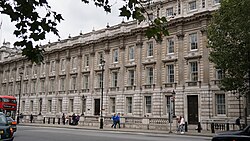
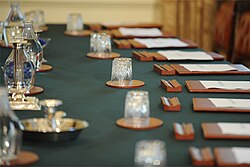
The Cabinet serves as the senior decision-making body of the United Kingdom government. Chaired by the Prime Minister, this elite group of ministers is responsible for the highest level of executive coordination and policy formulation. Operating primarily from the Cabinet Room at 10 Downing Street in London, the Cabinet ensures that the government's strategic goals are implemented across various state departments.
Key Facts
- Current Chair: Prime Minister Andy Burnham (since 20 July 2026).
- Membership: 28 total members, consisting of 23 Cabinet ministers and 5 attending ministers.
- Primary Location: Cabinet Room, 10 Downing Street, London.
- Recruitment: Members are conventionally drawn from the House of Commons or the House of Lords.
- Core Function: Senior-level decision-making and government coordination.
The Evolution of the Cabinet
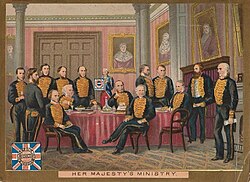
The concept of the Cabinet has evolved significantly over centuries. Until the 16th century, officers of state operated with separate powers granted by royal command, with only the Crown and the Privy Council providing coordination. The term "cabinet counsel" originally referred to private advice given to the monarch in a small room (a cabinet).
Early records show a mix of adoption and hostility toward the practice. Francis Bacon, in his 1605 Essays, criticized "cabinet counsels" as a foreign habit from Italy and France. However, Charles I established a formal "Cabinet Council" upon his accession in 1625. By 1644, the term "cabinet" was used independently to describe such a body, though it remained associated with dubious foreign influences at the time.
The Modern System
The contemporary Cabinet system was formalized by Prime Minister David Lloyd George between 1916 and 1922. This era introduced the Cabinet Office, a dedicated secretariat, committee structures, and a more defined relationship between the Prime Minister and departmental ministers.
This modernization was driven by the pressures of the First World War, which demanded rapid, coordinated decisions on mass conscription, international strategy, and armament production. These needs led to the creation of an inner "War Cabinet." Following the war, the system proved essential in managing successive crises, including the Great Depression, the rise of fascism and Bolshevism, and the lead-up to the Second World War.
Composition and Membership
The Prime Minister holds the sole authority to decide who joins the Cabinet and who attends its meetings. By convention, ministers are recruited from the two houses of Parliament: the House of Commons and the House of Lords. While the Cabinet is now almost entirely composed of members of the House of Commons, exceptions have occurred. For example, Patrick Gordon Walker remained in the Cabinet for a short period after losing his seat in the 1964 general election.
The Power Dynamics of the Prime Minister
The centralization of the Cabinet in the 20th century shifted the Prime Minister's role. Historically described by Walter Bagehot in 1867 as primus inter pares ("first among equals"), the role evolved into a dominating figure under leaders like Winston Churchill and Stanley Baldwin.
Some political analysts, such as Richard Crossman and Tony Benn, argued that "prime ministerial government" is a more accurate description than "Cabinet government." This shift is attributed to the growth of centralized political parties, a unified civil service, and the expansion of the Prime Minister's private office. Some critics, including Graham Allen and Michael Foley, have even suggested the office now possesses "presidential powers," with Baron Hailsham famously describing the position as an "elective dictatorship" in 1976.
However, this power is not absolute. A Prime Minister's influence depends on their support within their political party and their perceived electoral value. Power is further limited during formal coalitions, such as the 2010–2015 government, or when party factions necessitate the inclusion of specific rivals to maintain cohesion.
Current Cabinet Structure (Burnham Ministry)
Following the resignation of Keir Starmer on 20 July 2026, Prime Minister Andy Burnham formed the current ministry. The following table outlines the key leadership positions as of July 2026.
| Minister | Primary Office | Department |
|---|---|---|
| Andy Burnham | Prime Minister | Cabinet Office |
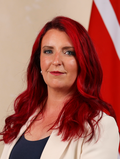
| Louise Haigh | First Secretary of State | Cabinet Office |
| John Healey | Chancellor of the Exchequer | HM Treasury |
| Ed Miliband | Secretary of State for Foreign, Commonwealth and Development Affairs | FCDO |
| Shabana Mahmood | Secretary of State for the Home Department | Home Office |
| Wes Streeting | Secretary of State for Defence | Ministry of Defence |
| Yvette Cooper | Secretary of State for Health and Social Care | DHSC |
Frequently Asked Questions
Who decides who is in the Cabinet?
The Prime Minister has the sole authority to determine the membership and the attendees of the Cabinet.
Must Cabinet ministers be members of Parliament?
By convention, yes. They are typically chosen from the House of Commons or the House of Lords, although rare exceptions have occurred where ministers were appointed despite not holding a seat.
What is the meaning of "primus inter pares" in this context?
It is a Latin phrase meaning "first among equals," reflecting the classic view that the Prime Minister is a leader among peers rather than a superior authority.
How did the First World War change the Cabinet?
The war necessitated faster, better-coordinated decisions, leading David Lloyd George to establish the Cabinet Office, a secretariat, and the "War Cabinet" to oversee general war strategy.
What is an "elective dictatorship"?
Coined by Baron Hailsham in 1976, this term describes the significant power a British Prime Minister can wield when they control both the Cabinet and the parliamentary proceedings.