UDMR: Representing the Hungarian Community in Romania
The UDMR (Democratic Alliance of Hungarians in Romania) serves as the primary political vehicle for the ethnic Hungarian minority within Romania. Rather than operating as a traditional political party, the UDMR functions as an alliance that unites various ideological platforms, professional groups, and social organizations to ensure a single, cohesive voice for the Magyar community in national and European politics.
According to the 2011 census, the Hungarian community consists of 1,237,746 citizens. While they represent 18.9% of the population in Transylvania, they form a clear majority in Szeklerland—comprising Harghita, Covasna, and parts of Mureș counties. In fact, 99% of Romania's Hungarian population resides within Transylvanian counties.
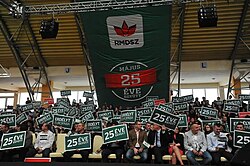
Key Facts
- Legal Status: Not a registered party, but assimilated to one under Law 68/1992 for electoral purposes.
- Demographic Focus: Represents approximately 1.24 million ethnic Hungarians in Romania.
- Electoral Strength: Consistently secures around 6% of the national vote.
- International Affiliations: Member of the European People's Party (EPP) since 1999 and the Federal Union of European Nationalities (FUEN) since 1991.
- Core Goal: Pursuit of cultural and territorial autonomy for the Hungarian minority.
Organizational Structure and Leadership
The UDMR is led by President Hunor Kelemen, who was elected in 2011. He succeeded Béla Markó (1993–2011), who followed the founding president, Géza Domokos (1990–1993).
The alliance is organized into 22 territorial organizations spanning Transylvania, Bucharest, and other regions. To accommodate a wide spectrum of political thought, it incorporates platforms representing Socialist, Liberal, National Liberal, and Christian Democratic ideologies. The governance of the UDMR is divided into several specialized bodies:
- Decision-Making Bodies: The Congress, Council of Representatives, Permanent Council, and the Presidency (the executive body).
- Consulting Bodies: The Consulting Council of Regional Presidents, the Consulting Council of Platforms, and the National Council of Self-governments.
- Control Bodies: The Regulation Control Committee and the Ethics and Disciplinary Committee.
- Specialized Councils: The Economic Council and the Foreign Council.
Political Doctrine and Objectives
The primary mission of the UDMR is the preservation and development of the Hungarian community. The alliance advocates for autonomy—defined as the right to self-governance—in two distinct forms: cultural autonomy for smaller, vulnerable communities and territorial autonomy for those living in majority-Hungarian areas.
Central to their daily efforts is the promotion of the mother tongue in public and private life, native-language education, and the administration of minority-led cultural and educational institutions. The UDMR believes that a single, united organization is more effective than multiple fragmented parties, as it prevents the community from falling below the 5% electoral threshold required for parliamentary representation.
Specific Policy Goals
Over the years, the UDMR has detailed several concrete objectives:
- The free use of the Hungarian language in administration, justice, and public life.
- The establishment of a comprehensive native-language school system at all levels.
- The full restitution of Church and community properties confiscated during the Communist era.
- Decentralization of administration and self-governance for Szeklerland.
- The implementation of a national minority law for cultural autonomy.
The UDMR emphasizes cooperation and dialogue with the Romanian majority, often participating in governing coalitions to influence policy from within the government. They maintain that this presence protects the status of all ethnic minorities in Romania and sends a positive signal to neighboring states regarding ethnic relations.
Challenges and Criticisms
The UDMR's moderate approach has not been without controversy. Some critics within the Hungarian community have accused the alliance of being too compromising. This led to the emergence of more radical entities, such as the Hungarian Civic Alliance and the Hungarian People's Party of Transylvania (PPMT). A notable example of this friction was the departure of László Tőkés, who eventually became an independent Member of the European Parliament.
Conversely, some Romanian pundits have criticized UDMR leaders as being nationalist or separatist. More recently, the alliance has engaged in social policy debates, such as proposing a 2022 amendment to the Child Protection Law to ban discussions of gender identity and homosexuality in public spaces.
| Feature | Details |
|---|---|
| Legal Basis | Law 68/1992 (Minority Organization status) |
| Primary Constituency | Ethnic Hungarians in Romania (approx. 1.24 million) |
| Key Geographic Focus | Transylvania and Szeklerland |
| Current President | Hunor Kelemen |
| International Ties | EPP, FUEN |
| Core Strategy | Moderate autonomism and governing coalitions |
Frequently Asked Questions
Is the UDMR a registered political party?
No, the UDMR is not a legally registered political party. However, under Article 4(2) of Law 68/1992, organizations representing national minorities are assimilated to political parties for electoral purposes, allowing them to participate in elections.
What is the difference between cultural and territorial autonomy?
Cultural autonomy refers to the right of smaller or more vulnerable minority communities to manage their own cultural and educational affairs. Territorial autonomy involves self-determination and self-governance for minorities living in areas where they form a large majority, such as Szeklerland.
Why does the UDMR incorporate different political ideologies?
The UDMR acts as an "alliance" to ensure the Hungarian community speaks with one single voice. By incorporating Christian Democratic, Socialist, and Liberal platforms, it prevents the community from splitting into smaller parties that might fail to meet the 5% electoral threshold for Parliament.
What is the UDMR's stance on the Romanian government?
The UDMR focuses on cooperation and dialogue. It believes that participating in governing coalitions is the most effective way to improve the lives of the Hungarian community and safeguard the future of ethnic minorities in Romania.
Who are the primary critics of the UDMR?
Critics include some members of the Hungarian community who find the UDMR too moderate (leading to the creation of groups like the PPMT), as well as some Romanian politicians who view the alliance's autonomist goals as nationalist or separatist.