UD Las Palmas: History, Achievements, and Legacy of the Canary Islands' Football Giant
Based in Las Palmas de Gran Canaria, Unión Deportiva Las Palmas is a cornerstone of professional football in the Canary Islands. Known affectionately as Los Amarillos (The Yellows), the club represents the passion and sporting ambition of the region. Currently competing in the Segunda División (the second tier of the Spanish football league system), the club is working to return to the top flight following their relegation from La Liga in the 2024–25 season.
From its unique foundation as a merger of local teams to its historic runs in European competitions, UD Las Palmas has established itself as a resilient force in Spanish sport.
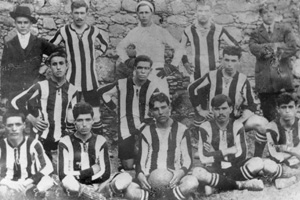
Key Facts
- Founded: 22 August 1949, through a merger of five Canary region clubs.
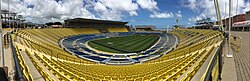
- Stadium: Estadio Gran Canaria (Capacity: 32,400).
- Major Honors: Four-time Segunda División champions and one-time La Liga runners-up (1968–69).
- Unique Record: The only Spanish side to achieve back-to-back promotions to La Liga in its first two seasons.
- European Experience: Participated in the Inter-Cities Fairs Cup and the UEFA Cup.
The Foundation and Early Years
The birth of UD Las Palmas was the result of a strategic effort to unify football in the region. After several meetings regarding the financial viability of local clubs, a "Magna Assembly" was convened on 22 August 1949 at the Real Club Náutico. By 8 p.m. that evening, five clubs unanimously agreed to merge, officially establishing Unión Deportiva Las Palmas.
The club's early trajectory was meteoric. Under the guidance of manager Pancho Arencibia and the talent of their first signing, winger Juan Santana Macías, the team quickly rose through the ranks. Their first-ever match took place on 9 October 1949, resulting in a 2–1 victory over Marino, with Antoñito Jorge scoring the first goal in the club's history.
Golden Eras and Top-Flight Success
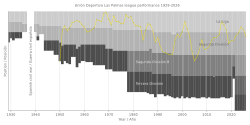
The period between 1963 and 1983 marked the club's most successful era. After winning the Segunda División in 1963–64, Las Palmas entered a sustained period of excellence in La Liga. Under manager Vicente Dauder, the team finished third in 1967–68 and reached a historic peak as La Liga runners-up in the 1968–69 season.
This domestic success opened the doors to European football. The club competed in the 1969–70 Inter-Cities Fairs Cup and later the UEFA Cup in the 1970s. A significant milestone occurred in 1978 when the club reached the final of the Copa del Rey (the primary domestic cup competition in Spain), eventually falling 1–3 to Barcelona at the Santiago Bernabéu Stadium.
Legendary Figures and Tragedies
The club's history is also marked by the memory of beloved players. Juan Guedes, a key figure who died suddenly in 1971 at age 28, and defender Tonono, who passed away from a liver infection in 1975, remain etched in the club's lore. On the pitch, the club benefited from international talent, including Argentines Miguel Ángel Brindisi, Daniel Carnevali, and Carlos Morete.

Modern Era and Infrastructure
Since the 1990s, UD Las Palmas has experienced a fluctuating journey between the first and second divisions. Despite periods of instability, the club has consistently fought its way back to the elite, including a notable promotion in 2015 and another in 2022–23.
To support its growth, the club invested in the Ciudad Deportiva (sports city) in Barranco Seco. Acquired in the 1960s, the facility evolved from a single training pitch into a comprehensive professional complex. Additionally, the club moved its home matches from the Estadio Insular to the modern Estadio Gran Canaria in 2003.
Recent Squad Developments
The club continues to evolve its roster to regain top-flight status. Recent additions to the squad include Jasper Cillessen and Oli McBurnie, both joining in 2024 to bolster the team's competitive edge.


Club Summary and Honors
| Category | Details |
|---|---|
| Full Name | Unión Deportiva Las Palmas, S.A.D. |
| Nicknames | Canarias, Los Amarillos, La Unión Deportiva Pío Pío |
| Current League | Segunda División |
| La Liga Best Finish | Runners-up (1968–69) |
| Segunda División Titles | 4 (1953–54, 1963–64, 1984–85, 1999–2000) |
| Segunda División B Titles | 2 (1992–93, 1995–96) |
| Copa del Rey Best Finish | Runners-up (1978) |
Frequently Asked Questions
How was UD Las Palmas founded?
The club was officially established at 8 p.m. on 22 August 1949 following a merger of five different football clubs in the Canary region, a decision finalized during a "Magna Assembly" at the Real Club Náutico.
What is the significance of the nickname "Los Amarillos"?
"Los Amarillos" translates to "The Yellows," referring to the club's primary home colors which have become a symbol of the team's identity.
What is the club's greatest achievement in the Spanish league?
Their highest achievement in the top flight was finishing as runners-up in La Liga during the 1968–69 season.
Where does UD Las Palmas play its home matches?
The club plays at the Estadio Gran Canaria, a stadium with a capacity of 32,400, which they began using in 2003.
Has UD Las Palmas ever played in European competitions?
Yes, the club has competed in the Inter-Cities Fairs Cup (1969–70) and the UEFA Cup on multiple occasions, including the 1970s.