La Liga: The History and Evolution of Spanish Football
La Liga, the premier professional football division in Spain, stands as one of the most prestigious sporting competitions globally. Organized by the Liga Nacional de Fútbol Profesional, the league has evolved since its inception in 1929 into a powerhouse of talent, strategy, and international influence. From the early dominance of regional clubs to the modern era of global superstars, La Liga represents the pinnacle of the Spanish football pyramid.
Key Facts
- Founded: 1929
- Current Format: 20 clubs (since 1997–98)
- Most Titles: Real Madrid (36 championships)
- All-Time Top Scorer: Lionel Messi (474 goals)
- Most Appearances: Andoni Zubizarreta and Joaquín (622 each)
- Current Champions: Barcelona (29th title, 2025–26)
- Governing Body: Liga Nacional de Fútbol Profesional
League Structure and Competition
La Liga operates as the first level of the Spanish football league system. Clubs that fail to maintain their position in the top flight face relegation to the Segunda División. To determine the champion and European qualification, the league employs a rigorous points system. In the event of a tie between clubs that have played each other twice, the league utilizes head-to-head points and goal difference as primary tie-breakers.
If a tie persists, total goal difference and total goals scored are considered. As a final resort, the league applies Fair Play scales, which penalize disciplinary infractions. For instance, a yellow card adds 1 point, while a direct red card adds 3 points. Severe misconduct, such as stadium closures, can result in a 10-point penalty on the Fair Play scale.
Historical Evolution
The Early Eras (1930s–1940s)
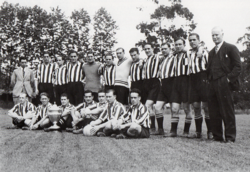
In the 1930s, Athletic Bilbao established early dominance in the league. By the 1940s, the landscape shifted as Atlético Madrid, Barcelona, and Valencia emerged as major forces, creating a more competitive environment across different regions of Spain.
The Rise of the Giants (1950s–1970s)
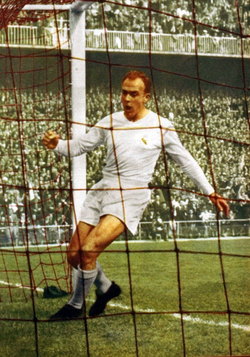
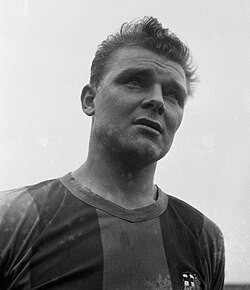
The 1950s marked the beginning of a legendary rivalry between Barcelona and Real Madrid. This era saw the influence of iconic players like László Kubala at Barcelona and the naturalized Argentine Alfredo Di Stéfano, who became a cornerstone of a dominant Real Madrid side.
Between 1960 and 1980, Real Madrid asserted total superiority, winning 14 titles, including five consecutive championships from 1961 to 1965. While Atlético Madrid provided the most consistent challenge during this period, winning four titles, other clubs like Valencia (1971) and Barcelona (1974) also managed to break the streak.
Modern Era and Global Dominance (1980s–Present)
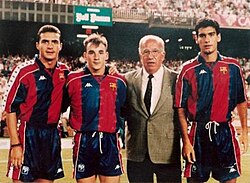
The 1980s saw the rise of Basque clubs disrupting the Madrid-Barcelona monopoly, followed by the 1990s, where Barcelona's "Dream Team" redefined the game. The 21st century has been characterized by a fierce duopoly between Real Madrid and Barcelona, with Valencia occasionally emerging as a third power in the early 2000s.
In recent years, the league has embraced commercial growth, including a €2.7 billion deal with CVC Capital Partners in 2021. The 2020s have seen a mix of champions, with Atlético Madrid winning in 2020–21, followed by Real Madrid in 2021–22 and Barcelona in 2022–23.
European Success
La Liga clubs have historically dominated European competitions. In the 2005–06 season, the league became the first to have its clubs win both the UEFA Champions League (Barcelona) and the UEFA Cup (Sevilla) in the same year. This feat was repeated multiple times between 2013 and 2018, with Sevilla particularly dominant in the Europa League, winning the title three times consecutively.
Club and Stadium Overview
The league features a diverse array of clubs with varying histories. While Athletic Bilbao, Barcelona, and Real Madrid are the only teams to have participated in every single season since 1929, other clubs like Valencia and Atlético Madrid have remained nearly permanent fixtures.
| Team | Stadium | Capacity | Titles | First Season |
|---|---|---|---|---|
| Real Madrid | Santiago Bernabéu | 84,000 | 36 | 1929 |
| Barcelona | Camp Nou | 105,367 | 29 | 1929 |
| Atlético Madrid | Metropolitano Stadium | 70,460 | 11 | 1929 |
| Athletic Bilbao | San Mamés | 53,289 | 8 | 1929 |
| Valencia | Mestalla | 49,430 | 6 | 1931–32 |
Frequently Asked Questions
Which club has won the most La Liga titles?
Real Madrid holds the record for the most championships, with a total of 36 titles.
Who is the all-time leading goalscorer in the league?
Lionel Messi is the top scorer in La Liga history, having scored 474 goals.
How many teams compete in La Liga?
Since the 1997–98 season, the league has consisted of 20 clubs.
What happens if two teams are tied on points at the end of the season?
The league first looks at head-to-head points and goal difference. If still tied, total goal difference and total goals scored are used, followed by Fair Play scales if necessary.
Which clubs have never been relegated from the top division?
Athletic Bilbao, Barcelona, and Real Madrid are the only three clubs to have played in every single season of La Liga since its foundation in 1929.