U.S. Soccer Federation: Governing the Beautiful Game in America
The United States Soccer Federation (USSF) serves as the primary governing body for soccer in the United States. Founded on April 5, 1913, the federation has spent over a century developing the sport's infrastructure, managing national teams, and overseeing professional and amateur leagues across the country.
As a member of both FIFA (joined provisionally in 1913 and fully in 1914) and CONCACAF (an original member since 1961), the USSF ensures that American soccer aligns with international standards while fostering growth at the grassroots level.
Key Facts
- Founded: April 5, 1913.
- Current President: Cindy Parlow Cone.
- Affiliations: FIFA and CONCACAF.
- Scope: Oversees professional leagues, youth development, and all U.S. national teams.
- Youth Development: Manages 14 distinct youth national teams.
Organization and Governance
The USSF operates through a structured system of councils and associations to ensure representation across all levels of the sport. The federation is led by a Board of Directors, currently presided over by Cindy Parlow Cone, a former national team player and NWSL coach.
Membership Councils
The federation recognizes several key councils to manage different sectors of the game:
- Professional Council: Includes Major League Soccer (MLS), National Women's Soccer League (NWSL), United Soccer League (USL), and National Independent Soccer Association (NISA).
- Adult Council: Comprises the United States Adult Soccer Association (USASA) and the United States Specialty Sports Association (USSSA).
- Youth Council: Includes US Youth Soccer, American Youth Soccer Organization (AYSO), US Club Soccer, Soccer Association for Youth (SAY), and the USSSA.
Affiliate Members and State Associations
Beyond the main councils, the USSF works with various state associations (such as those in Alabama, Arizona, Colorado, and others) and affiliate members, including the U.S. Soccer Foundation, United Soccer Coaches, and the United States Futsal Federation.
National Teams and Technical Leadership
The USSF is most visible through its management of the national teams. This includes the senior men's and women's teams, as well as a comprehensive youth system and extended teams for specialized versions of the sport.
Senior and Youth Teams
The senior men's national team is currently led by head coach Mauricio Pochettino (appointed September 2024), while the senior women's national team is led by Emma Hayes (appointed May 2024). The federation also oversees 14 youth national teams ranging from Under-15 to Under-23 for both genders.
Extended National Teams
The USSF promotes inclusivity through extended national teams, which include:
- Beach Soccer: Men's and Women's teams.
- Futsal: Men's and Women's teams.
- Cerebral Palsy (CP) Soccer: Men's and Women's teams.
- Deaf Soccer: Men's and Women's teams.
- Power Soccer: A co-ed national team.
Professional League Landscape
The USSF provides the regulatory framework for professional soccer in the U.S., categorizing leagues by division to maintain competitive standards.
Women's Professional Soccer
The landscape for women's professional soccer has evolved through several iterations, including the Women's United Soccer Association (WUSA, 2001–2003) and Women's Professional Soccer (WPS, 2009–2011), leading to the current National Women's Soccer League (NWSL), established in 2013.
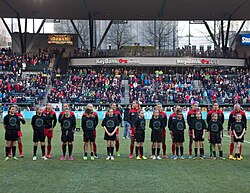
Second-division women's soccer is supported by leagues such as the USL W League, the Women's Premier Soccer League (WPSL), and United Women's Soccer (UWS).
Federation Summary
| Category | Details |
|---|---|
| Founded | April 5, 1913 |
| President | Cindy Parlow Cone |
| Global Affiliations | FIFA, CONCACAF |
| Youth Teams | 14 National Teams |
| Key Pro Leagues | MLS, NWSL, USL, NISA |
Frequently Asked Questions
Who is the current president of the U.S. Soccer Federation?
The current president is Cindy Parlow Cone, who assumed the role on March 12, 2020.
Which professional leagues are recognized by the USSF?
The USSF recognizes several professional leagues, including Major League Soccer (MLS), the National Women's Soccer League (NWSL), the United Soccer League (USL), and the National Independent Soccer League (NISA).
How many youth national teams does the USSF oversee?
The federation oversees and promotes the development of 14 youth national teams, covering age groups from Under-15 to Under-23 for both boys and girls.
What are the "extended" national teams?
Extended national teams are specialized squads that compete in variations of the sport, including Beach Soccer, Futsal, Cerebral Palsy soccer, Deaf soccer, and co-ed Power soccer.
When did the U.S. Soccer Federation join FIFA?
The USSF joined FIFA provisionally on August 2, 1913, and became a full member on June 27, 1914.