Copa América: The History and Evolution of South America's Premier Football Tournament
The Copa América stands as the oldest main continental football competition in the world. Organized by CONMEBOL, the South American football confederation, this prestigious tournament has served as the ultimate battleground for the region's most talented players for over a century. From its humble beginnings in 1916 to its modern expansion into North America, the tournament has evolved from a regional championship into a global spectacle.
Key Facts
- Founded: 1916 (110 years ago).
- Most Successful Team: Argentina, with 16 titles.
- Most Frequent Host: Argentina, having hosted nine editions.
- Only Non-CONMEBOL Host: The United States (2016 and 2024).
- Current Champion: Argentina.
- Total Participants (2024): 16 teams.
The Early Era: South American Championship (1916–1967)
Before the tournament became the Copa América, it was known as the Campeonato Sudamericano de Football. While football had been growing in popularity since the establishment of the Lima Cricket and Football Club in Peru (1859) and the Argentine Football Association (1893), the first official tournament took place in July 1916. Organized by Argentina to celebrate its independence centennial, the inaugural event featured Argentina, Chile, Uruguay, and Brazil.
Uruguay emerged as the first champion after a 0–0 tie with Argentina in the final match at the Estadio Racing Club in Avellaneda.

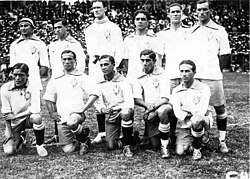
The early years were marked by both triumph and instability. Brazil secured its first title in 1919 after a playoff victory. However, the competition faced periods of disorganization; for instance, a flu outbreak in Rio de Janeiro forced the cancellation of the 1918 event. Furthermore, diplomatic tensions between the federations of Uruguay and Argentina led to a hiatus after the 1930 World Cup, with the tournament only being reinstated in 1939. It was during this 1939 edition in Peru that Ecuador made its debut, and Peru claimed its first title.
The Mid-Century Transition
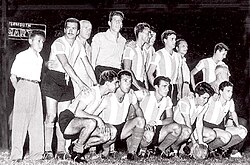
As the tournament progressed through the 1950s and 60s, new nations began to find success. The 1957 championship in Peru saw the rise of the Argentina squad known as the Carasucias ("dirty faces").
The Modern Copa América Era (1975–Present)
In 1975, the tournament was rebranded as the Copa América, introducing new formats and a more structured approach to hosting. By 1993, the competition adopted its current form, inviting teams from CONCACAF (the North and Central American federation), specifically Mexico and the United States, to increase the level of competition.
The late 20th and early 21st centuries saw a fierce rivalry between Brazil and Argentina. Brazil dominated much of the period between 1997 and 2007, winning four out of five titles. However, the tournament also produced massive upsets, such as Honduras eliminating Brazil in the 2001 quarterfinals, which paved the way for Colombia to win its first title as the host nation.

Centenary and Global Expansion
The 2016 Copa América Centenario marked a historic milestone. Hosted in the United States, it was the first time the event took place outside South America. This expanded edition featured 16 teams from both CONMEBOL and CONCACAF, setting attendance records with 1.5 million total spectators. Chile claimed the trophy in a penalty shoot-out, marking their second consecutive title.
Recent years have seen the tournament adapt to global challenges. The 2021 edition was postponed due to the COVID-19 pandemic and moved to Brazil just 13 days before kickoff after Argentina was unable to host. Argentina eventually won the title, ending a 28-year drought.

Tournament Hosting and Participation
While Argentina has hosted the most editions, the tournament has traditionally rotated among South American nations. In recent years, a collaborative partnership between CONMEBOL and CONCACAF has led to the United States hosting the 2024 edition, utilizing venues that will also be used for the 2026 FIFA World Cup.
| Host Nation | Editions Hosted | Notable Years |
|---|---|---|
| Argentina | 9 | 1916, 1987, 2011 |
| Uruguay | 7 | 1917, 1967, 1995 |
| Chile | 7 | 1920, 1991, 2015 |
| Brazil | 6 | 1919, 2019, 2021 |
| Peru | 6 | 1927, 1957, 2004 |
| United States | 2 | 2016, 2024 |
The Trophy and Awards
The Copa América trophy is a silver ornament weighing 9 kg (20 lb) and standing 77 cm (30 in) tall. It features a three-level wooden base where plaques are engraved with the names of every winning team and the year of their victory.
To recognize individual excellence, the tournament presents several awards, including Best Player (introduced in 1987), Top Goalscorer, Best Goalkeeper (introduced in 2011), and the Team of the Tournament.
Frequently Asked Questions
Which country has won the most Copa América titles?
Argentina holds the record for the most championships, with a total of 16 titles.
Has the tournament always been held in South America?
No. While it originated in South America, the United States has hosted the tournament twice, in 2016 and 2024.
Which teams have never won the Copa América?
Among the ten CONMEBOL national teams, Ecuador and Venezuela are the only two that have yet to win the championship.
How often is the Copa América played?
The frequency has varied over time. It was contested every three years between 2001 and 2007, and since 2007, it has generally been held every four years, though some editions have been shifted due to pandemics or centennial celebrations.
What is the Finalissima?
The Finalissima is a match where the winner of the Copa América faces the winner of the UEFA European Championship.