Tyrannosaurus Rex: The Apex Predator of the Late Cretaceous
The Tyrannosaurus rex, often referred to as T. rex, remains one of the most iconic figures in prehistoric history. A massive theropod—a clade of bipedal, carnivorous dinosaurs—this "tyrant lizard" dominated the landscapes of North America during the Late Cretaceous period, specifically between 69 and 66 million years ago.
From its devastating bite force to its complex social behaviors, the T. rex represents the pinnacle of tyrannosaurid evolution. While popular culture often portrays it as a mindless monster, scientific research reveals a sophisticated predator with keen senses and a complex life history.
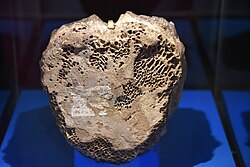
Key Facts
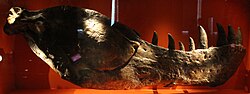
- Temporal Range: Late Cretaceous (late Maastrichtian), 69–66 million years ago.
- Classification: Family Tyrannosauridae, Genus Tyrannosaurus.
- Diet: Carnivorous apex predator.
- Key Specimens: "Sue" (Field Museum), "Scotty" (largest known), and "Stan".
- Defining Feature: Massive skull with a bite force capable of crushing bone.
The History of Discovery
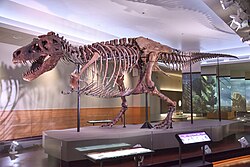
The journey of understanding T. rex began with early, fragmented finds. One of the earliest associated specimens was Manospondylus gigas, described by Edward Drinker Cope in 1892. However, it wasn't until 1905 that Henry Fairfield Osborn formally named the genus Tyrannosaurus and the species rex.
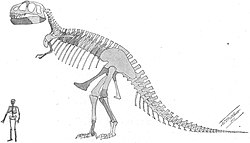
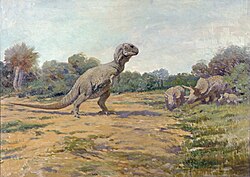
Over the last century, our understanding of the animal has shifted dramatically. Early reconstructions often depicted the T. rex in an upright, tripod-like pose, which we now know is anatomically incorrect.
Anatomy and Physical Characteristics
Size and Scale
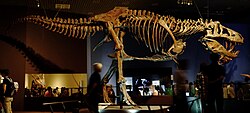
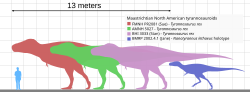
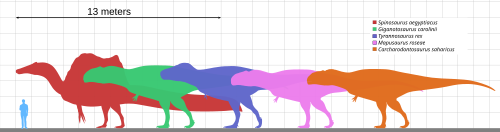
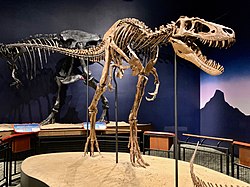
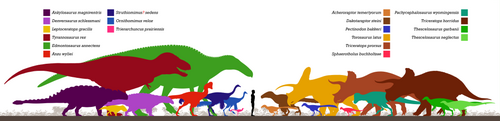
T. rex was one of the largest carnivorous land animals to ever exist. While individual sizes varied, specimens like "Scotty" represent the upper limits of its massive bulk. When compared to humans and other giant theropods, its sheer scale is imposing.
The Skull and Senses
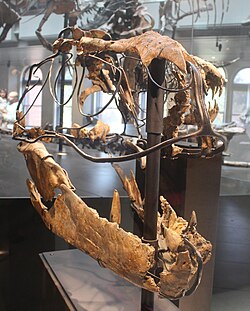
The skull of the T. rex was a biological masterpiece of predation. It featured forward-facing eye sockets, providing binocular vision—the ability to perceive depth, which is critical for hunting.
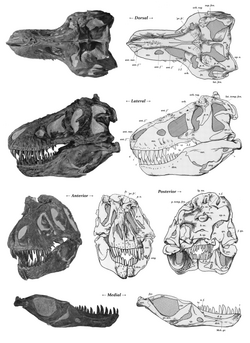
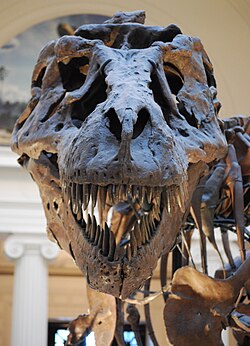
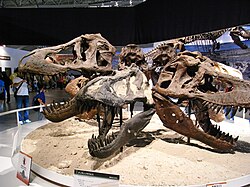
Its teeth were not uniform; instead, they exhibited heterodonty (different shapes for different functions), with some described as "lethal bananas" due to their size and curvature. The jaw was equipped with sensors and a massive bite force capable of osteophagy (bone-eating).
The Skeleton and Limbs
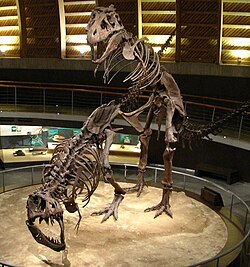
While the hind limbs were powerful and built for efficient walking, the forelimbs are famously small. Despite their size, these arms were muscular and may have been used to help the animal rise from a resting position or to grip prey.
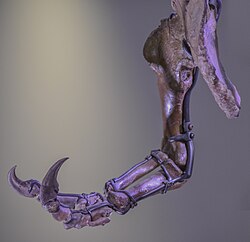
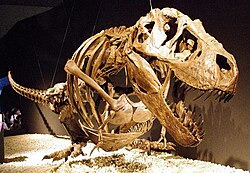
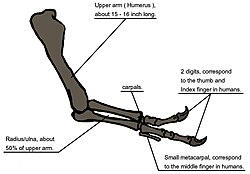
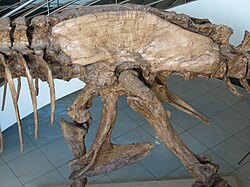
The pelvic girdle provided the necessary support for its massive weight, and the tail acted as a counterbalance to the heavy head.
Classification and Species Debate
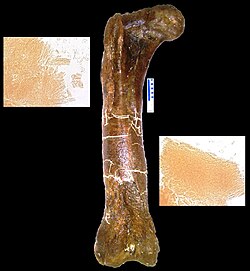
The taxonomy of Tyrannosaurus has been a subject of intense academic debate. While T. rex is the type species, some researchers have proposed other species, such as T. mcraeensis. There is also ongoing discussion regarding Nanotyrannus lancensis; some paleontologists view it as a distinct genus, while others argue it is simply a juvenile T. rex.
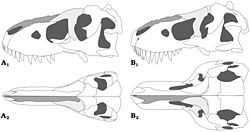
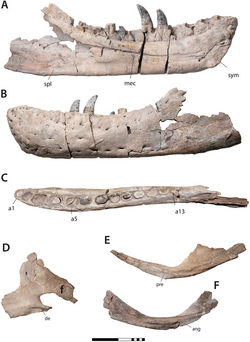
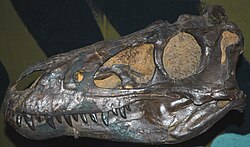
| Feature | Tyrannosaurus rex | Nanotyrannus (Proposed) | Tarbosaurus |
|---|---|---|---|
| Size | Massive Adult | Small/Slender | Large |
| Skull Shape | Broad, Binocular | Narrower | Narrower |
| Status | Accepted Species | Debated (Juvenile T. rex?) | Accepted Genus |
Paleobiology and Behavior
Growth and Development
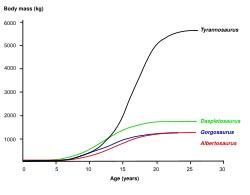
T. rex experienced a period of rapid growth during its teenage years. Growth curves suggest a dramatic increase in body mass over a relatively short window of time, though some early studies may have been skewed by the inclusion of specimens now considered separate taxa.

Skin and Thermoregulation
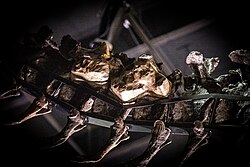
Fossilized skin impressions indicate that T. rex had scaly skin, though some theories suggest partial feathering may have existed, particularly in juveniles or specific body regions.
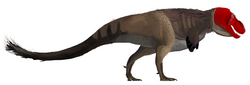
Regarding metabolism, evidence from oxygen isotopes and bone histology suggests a complex thermoregulatory system, potentially leaning toward endothermy (warm-bloodedness).
Diet and Hunting
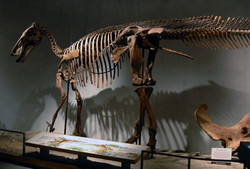
T. rex was an apex predator that likely utilized both hunting and scavenging. Evidence of tooth marks on the bones of herbivores like Edmontosaurus suggests active predation, while other marks indicate cannibalism—T. rex feeding on its own kind.
Paleoecology
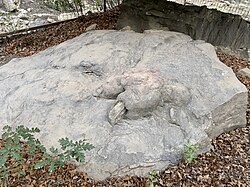
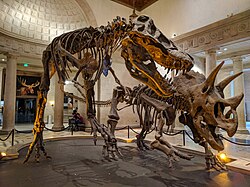
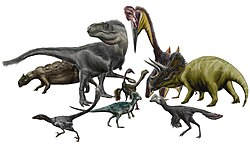
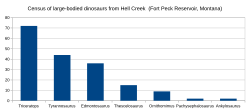
T. rex lived in the Hell Creek Formation, sharing its environment with other giants like Triceratops and various hadrosaurs. Population estimates suggest they were not overly numerous, but their dominance in the food chain was absolute.
Frequently Asked Questions
Could a human outrun a T. rex?
Current biomechanical research suggests that T. rex was not a fast runner in the modern sense. While it was a highly efficient walker, its massive bulk limited its top speed, meaning a fit human might have been able to outrun it in a sprint.
Did T. rex hunt in packs?
Some evidence suggests that tyrannosaurs may have engaged in social hunting or lived in family groups, though this remains a topic of active debate among paleontologists.
What was the purpose of its tiny arms?
While small, the arms were very strong. They may have been used to grasp prey during close-quarters combat or to help the dinosaur push itself up from the ground after resting.
Was T. rex a scavenger or a hunter?
It was likely both. Like most modern apex predators (such as lions), T. rex would have hunted live prey but would not have passed up the opportunity to scavenge a carcass.
Is Nanotyrannus a real dinosaur?
This is a point of contention. Some scientists believe Nanotyrannus is a separate, smaller genus of tyrannosaur, while many others argue that these fossils actually belong to juvenile Tyrannosaurus rex individuals.