Tulips: A Global History of Beauty, Botany, and Mania
The tulip is one of the most recognizable flowers in the world, celebrated for its vibrant colors and elegant shapes. From the rugged landscapes of Central Asia to the manicured gardens of the Netherlands, the Tulipa genus has captured the human imagination for centuries, driving both scientific interest and economic frenzy.
Belonging to the family Liliaceae, tulips are monocots—plants that typically have a single embryonic leaf. While there are approximately 75 species within the genus, the most widely cultivated is Tulipa gesneriana. These plants are characterized by their distinctive bulbs and strap-shaped, waxy leaves that grow alternately along the stem.
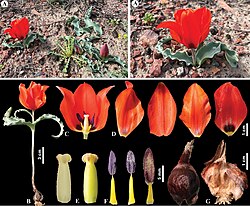
Key Facts
- Scientific Name: Tulipa gesneriana (most common cultivar).
- Origin: Native to the Near East and Central Asia.
- Diversity: Approximately 75 species exist within the genus.
- Economic History: Famous for the "Tulip Mania" in the Netherlands (1634–1637).
- Growth Requirement: Requires a period of cool dormancy, known as vernalisation, to thrive.
The Journey from Persia to Europe
The history of tulip cultivation begins in 10th-century Persia, where the flowers were first nurtured. As the Seljuks advanced into Anatolia, tulips became a central part of the culture, eventually becoming a symbol of the Ottoman Empire. By the 15th century, they were highly prized, and records show that Ottoman Sultans, such as Selim II, ordered massive quantities of bulbs for their imperial gardens.
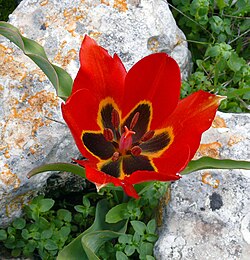
Tulips reached Northern Europe in the 16th century, largely through the observations of diplomats at the Ottoman court. Carolus Clusius, a key figure in botanical history, played a massive role in their spread. After planting tulips at the Vienna Imperial Botanical Gardens and later at the Leiden University Hortus Botanicus, he inadvertently set the stage for the famous Dutch tulip industry.

The Dutch Tulip Mania
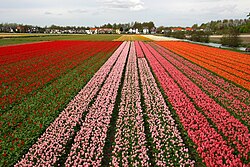
In the 17th century, the tulip became the center of an unprecedented economic bubble known as Tulip Mania (1634–1637). During this period, the price of certain tulip bulbs reached extraordinary heights, reflecting a level of speculation rarely seen in botanical history. This era left a lasting legacy, cementing the Netherlands as a global leader in tulip production.
![Semper Augustus (17th century) in the Tulip book of the Six Collection, Rijksmuseum, Amsterdam. The note states that the specimen was sold for ƒ3000 (~€38.000 in 2024).[57][58]](/images/0e/22/0e2218b2f1e9e13e9845c7f9cccf2b00696a4ddc5054dfaa29ad7afed4a8427d.jpg)
Botanical Characteristics and Ecology
Tulips are resilient yet specific in their environmental needs. Their growth is heavily dependent on temperature. While flower development is triggered by warmer temperatures (20–25 °C), the elongation of the stalk and successful flowering require an extended period of low temperatures (below 10 °C). This process of using cold to induce flowering is called vernalisation.
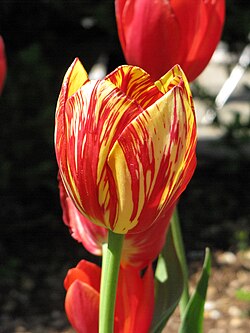
Physically, tulips consist of a bulb covered by a protective tunic (or tunicate), which can be smooth or hairy. The leaves are typically bluish-green, fleshy, and vary in length from 10 cm to over 30 cm depending on the species. The flowers themselves come in a vast array of colors, which can be influenced by the specific growing conditions of the plant.
![Tulipa sylvestris subsp. australis[a] with seedpod by Sydenham Edwards (1804)[39]](/images/d0/ef/d0efda8de04b80015638111bce21cc77c04e36256b69b8c20f2daf5675a7fa77.jpg)
Horticultural Classification and Cultivation
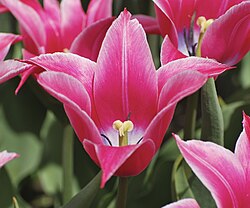
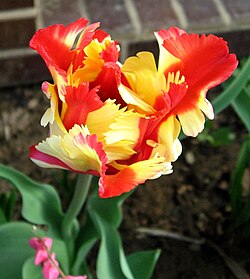
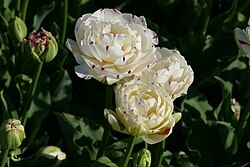
For gardeners and commercial growers, tulips are categorized into several divisions based on their flower shape, size, and blooming period. Understanding these divisions helps in planning landscapes and managing bloom cycles.
| Division | Common Name/Type | Characteristics | Bloom Period |
|---|---|---|---|
| 1 | Single Early | Cup-shaped, max 8 cm wide | Early to Mid-season |
| 2 | Double Early | Bowl-shaped, fully double flowers | Early to Mid-season |
| 3 | Triumph | Single, cup-shaped, up to 6 cm wide | Mid to Late season |
| 4 | Darwin Hybrid | Ovoid-shaped single flowers | Mid to Late season |
| 5 | Single Late | Cup or goblet-shaped | Late season |
| 10 | Parrot | Distinctive fringed petals | Mid-season |
| 11 | Double Late | Large, heavy blooms | Late season |
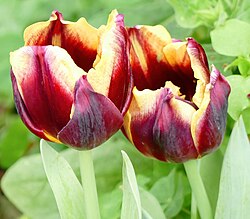
Planting Tips
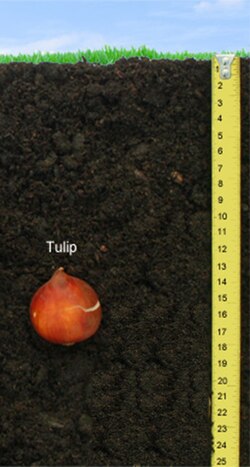
To ensure healthy growth, tulip bulbs should be planted in well-drained soil during late summer or autumn. A general rule for planting is to place the bulb at a depth of 10 to 20 cm (4 to 8 inches), depending on the size of the bulb. Larger bulbs require deeper holes, and wild species often need to be planted even deeper than cultivated varieties. Spacing should be maintained at approximately 10 to 15 cm apart.
Tulips in Global Culture
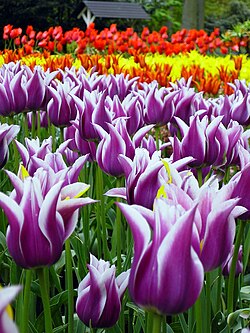
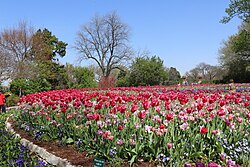
Beyond the garden, tulips hold significant cultural weight. In Iran, the tulip is featured on the 20 rial coin. In Canada, the flower serves as a symbol of gratitude; following World War II, the Dutch royal family sent thousands of bulbs to Ottawa to thank Canadians for sheltering the future Queen Juliana. This tradition continues today through the annual Canadian Tulip Festival.

![Crown-shaped orange Liberation75-tulips, to commemorate the 75th Anniversary of the Liberation of the Netherlands. As part of the Liberation75 commemoration event, 1.1 million orange crown-shaped Liberation75 tulips (formerly known as the Orange Emperor variety), in addition to deep red Canadian Liberator tulips, were sent from growers in the Netherlands and planted across Canada to honour the 1.1 million Canadians, who served during World War II.[69][70]](/images/d1/50/d15056a575a13e95267b53288c200623d478bb53a8eb6fc66d3b59f5e41363c3.jpg)
Even in modern branding, the tulip remains a potent symbol, appearing in various logos, such as the emblem used by Turkish Airlines.

Frequently Asked Questions
What is vernalisation in tulips?
Vernalisation is the process where plants require a period of cold temperatures to trigger proper growth and flowering. For tulips, an extended period of temperatures below 10 °C is essential for the flower stalk to elongate and bloom correctly.
How deep should I plant tulip bulbs?
Tulip bulbs should generally be planted between 10 and 20 cm (4 to 8 inches) deep. The specific depth depends on the size of the bulb; larger bulbs require deeper holes, and many wild species require even more depth than standard garden cultivars.
Why are tulips so closely associated with the Netherlands?
While tulips originated in Central Asia and the Near East, the Netherlands became the world's major producer following the 17th-century "Tulip Mania." The country's expertise in bulb cultivation and trade has made it the global center for the tulip industry.
What caused the Dutch Tulip Mania?
Tulip Mania was an economic bubble between 1634 and 1637 where the prices of tulip bulbs reached extraordinary levels due to intense speculation. This period is one of the most famous examples of market volatility in history.
Can tulips be grown as annuals?
Yes. In areas with warm winters, tulip bulbs are often planted in the autumn and treated as annuals because they may not receive the necessary cold period required for successful perennial blooming.