Tropical Forests: Diversity, Distribution, and Global Threats
Tropical forests are expansive ecoregions defined by tropical climates, generally located between the Tropics of Cancer and Capricorn. While their boundaries are primarily determined by latitude, other factors such as prevailing winds also influence their reach. These forests are vital to the planet's health, accounting for approximately 45 percent of the world's total forest cover—the largest proportion of any forest domain, surpassing boreal, temperate, and subtropical regions.
Defining a "forest" in tropical regions is complex. Unlike temperate forests, which are easily categorized by tree canopy density, tropical forests vary wildly in structure. This lack of a single, universal definition means that data regarding their exact extent often varies between different scientific sources.
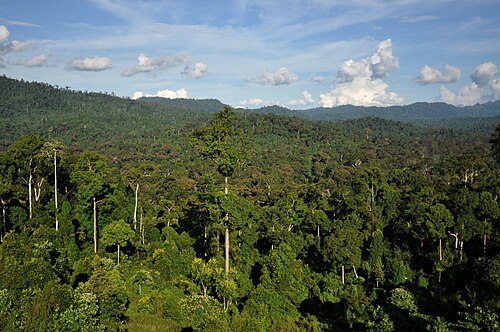
Key Facts
- Global Coverage: Tropical forests make up nearly half (45%) of all forests worldwide.
- Recent Loss: More than 3.6 million hectares of virgin tropical forest were lost in 2018 alone.
- Ancient Origins: The first tropical rainforests emerged during the Devonian period.
- Primary Drivers of Loss: Commodity exports including beef, soy, palm oil, coffee, cacao, and timber.
- Diversity: They encompass more than just rainforests, including coniferous, dry broadleaf, and mountain forests.
The Evolution and History of Tropical Forests
The history of these biomes stretches back hundreds of millions of years. The earliest tropical rainforests appeared during the Devonian period, dominated by Archaeopteridalean and Pseudosporochnalean plants. Later, during the Paleogene epoch roughly 40 million years ago, canopy forests expanded across the equator as the global climate became cooler and drier.
While these ecosystems have existed for eons, the tropical forest was only formally identified as a specific type of biome in 1949.
Types and Classifications of Tropical Forests
Although often equated solely with evergreen rainforests and moist forests, the tropical domain is far more diverse. Many different forest types exist, often blending into one another through ecotones (transition areas between two biological communities).
Diverse Forest Categories
- Moist and Evergreen Forests: The classic rainforests characterized by high rainfall.
- Dry Forests: Including tropical dry broadleaf forests.
- Coniferous Forests: Tropical and subtropical regions with cone-bearing trees.
- Savanna Woodlands: Such as the Sahelian forest.
- Mountain Forests: Found at higher elevations, often evolving into cloud forests.
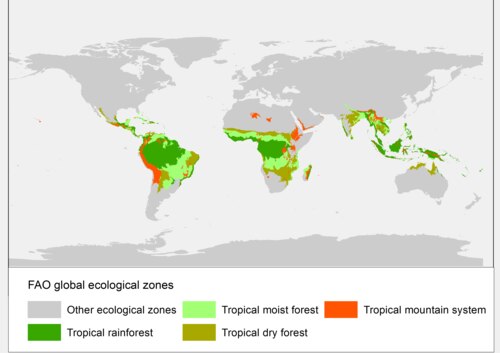
Factors Influencing Forest Nature
The specific characteristics of a tropical forest are shaped by three primary factors:
- Geographical Factors: This includes the temperature profile (even in equatorial zones or cooler in subtropical latitudes) and precipitation levels. Strong dry seasons often lead to a predominance of lianas (woody climbing vines). Elevation can create "ecological islands," leading to high endemism (species found nowhere else), such as on Mount Kinabalu in Borneo.
- Historical Factors: The age of the forest and the level of human disturbance play a role. Primary forests typically hold maximum biodiversity, but can become secondary forests after disturbance, or even degenerate into bamboo forests following prolonged swidden agriculture (slash-and-burn).
- Soil Characteristics: The depth and drainage of the soil significantly impact the types of vegetation that can thrive.
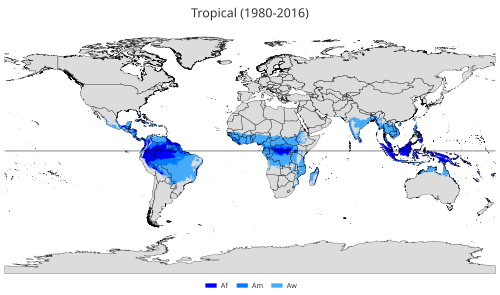
The Global 200 Scheme
To better organize these complex ecosystems, the World Wildlife Fund (WWF) promotes the Global 200 scheme. This system groups tropical and subtropical areas into three primary habitat biomes:
| Biome Type | Characteristics |
|---|---|
| Tropical and Subtropical Coniferous Forests | Forests dominated by needle-leafed trees. |
| Tropical and Subtropical Dry Broadleaf Forests | Forests with distinct dry seasons and broad-leaved trees. |
| Tropical and Subtropical Moist Broadleaf Forests | High-rainfall forests with dense, broad-leaved canopies. |
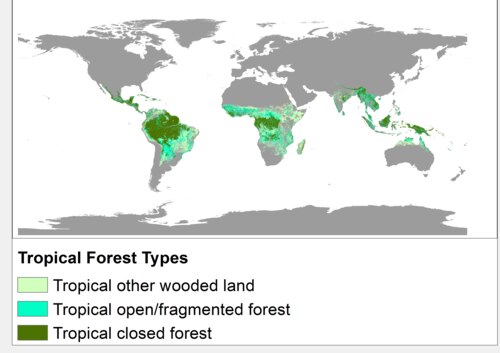
Threats to Tropical Ecosystems
Despite many areas being designated as High-Biodiversity Wilderness Areas, tropical forests face severe anthropogenic (human-caused) pressures. Climate change is increasing the frequency of extreme events such as hurricanes, heatwaves, and droughts, which compound the damage caused by local human activities.
Deforestation is particularly acute in biodiversity hotspots across South-East Asia, the Pacific, sub-Saharan Africa, and North South America. This loss is largely driven by the global export of commodities, including palm oil, soy, beef, timber, cacao, and coffee.
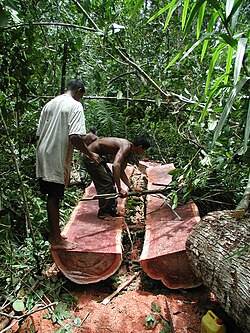
The impact is evident in regions like Borneo, where old-growth forest cover dropped from 76% in 1973 to 50% in 2018 due to agricultural expansion and fire. Experts suggest that valuing ecosystem services—the benefits humans derive from nature—could lead to more sustainable policies. However, implementation is often hindered by poor data and a lack of political or financial support, as seen in forest land allocation efforts in Vietnam.
Frequently Asked Questions
What is the difference between primary and secondary tropical forests?
Primary forests are old-growth forests that have remained undisturbed and typically harbor the maximum level of biodiversity. Secondary forests are those that have regrown after a major disturbance, such as logging or agriculture.
How much of the world's forest is tropical?
Tropical forests make up approximately 45 percent of the world's forests, representing the largest proportion of any forest domain globally.
What are the main causes of tropical deforestation?
Deforestation is primarily driven by the production and export of global commodities, most notably beef, soy, palm oil, timber, coffee, and cacao.
What are "ecological islands" in tropical forests?
Ecological islands occur when geographical features, such as high mountains (e.g., Mount Kinabalu), isolate a population of species from the surrounding lowlands, often leading to high levels of endemism.
How does climate change affect these forests?
Climate change increases the intensity and frequency of extreme weather events like droughts and hurricanes, which, when combined with human disturbances, cause unprecedented ecological damage.