A Complete Guide to Tropaeolum: The Vibrant World of Nasturtiums
Commonly known as nasturtiums, the genus Tropaeolum comprises approximately 80 species of annual and perennial flowering plants. Native to South and Central America, these plants are celebrated globally for their brilliant, showy flowers and unique foliage. Whether used as ornamental garden climbers, edible salad garnishes, or companion plants for pest control, nasturtiums offer a remarkable versatility that few other flowering plants can match.
The name "nasturtium" literally translates to "nose-twister" or "nose-tweaker," a nod to the peppery oil they produce, which is strikingly similar to that of watercress. This distinctive flavor profile has made them a staple in both culinary and herbal traditions for centuries.
Key Facts
- Genus: Tropaeolum (the only genus in the family Tropaeolaceae).
- Species Count: Approximately 80 species.
- Native Region: South and Central America.
- Distinctive Feature: Peltate (shield-shaped) leaves and flowers with a nectar spur.
- Culinary Use: Edible flowers, leaves, and unripe seed pods.
- Nutritional Value: High in Vitamin C and lutein.
Botanical Characteristics and Taxonomy
Physical Appearance
Plants within this genus are characterized by their peltate leaves—rounded, shield-shaped leaves where the petiole (leaf stalk) attaches to the center rather than the edge. These leaves may be entirely round or palmately lobed. Many species feature succulent stems, and some possess tuberous roots for nutrient storage.
The flowers are zygomorphic (bilaterally symmetrical) and bisexual. Each flower typically features five petals and five sepals. A defining botanical feature is the uppermost sepal, which is modified into a long, funnel-shaped nectar spur at the back of the flower. This structure is essential for attracting specific pollinators.
Scientific History
The genus was named by the famous botanist Carl Linnaeus in his seminal work, Species Plantarum. Linnaeus drew inspiration from the ancient Roman practice of erecting a tropaeum (trophy) after a victory, where the defeated enemy's armor was hung on a pole. He felt the plant's round leaves resembled shields and its bright flowers resembled blood-stained helmets.
While the genus was once grouped with Magallana and Trophaeastrum, molecular studies conducted in 2000 revealed that Tropaeolum was paraphyletic if those genera were kept separate. Consequently, they were reclassified as synonyms of Tropaeolum, making Tropaeolaceae a monogeneric family—a family containing only one genus.
Popular Species and Cultivation
Different species of Tropaeolum offer varying growth habits, ranging from trailing groundcovers to vigorous climbers. Understanding these differences is key to successful gardening.
Notable Varieties
- T. majus: The most common garden variety, known for its bright yellow and red flowers.
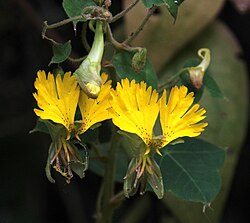
- T. peregrinum (Canary creeper): A trailing, half-hardy annual with pale yellow, fringed flowers.
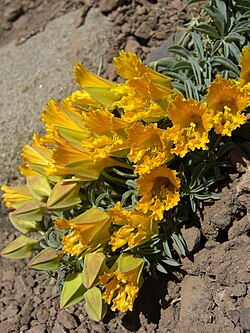
- T. polyphyllum (Wreath nasturtium): A very hardy perennial from Argentina and Chile with silvery, deeply lobed leaves. Its tubers can survive at altitudes of 3,300 meters.
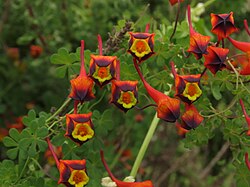
- T. speciosum (Flame flower): A brilliant red climber that thrives in cool, moist climates.
- T. tricolor (Three-coloured Indian cress): A tuberous climber featuring red, purple, and yellow flowers.
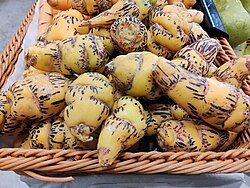
- T. tuberosum (Mashua): An Andean perennial grown primarily for its edible tubers.
Growing Tips
Cultivation methods depend on whether the species is a summer or winter grower. Summer growers should be sown in the spring, while winter growers are best sown in the autumn. For optimal germination, sow seeds in well-drained compost covered with 1–2 cm of grit or sand. It is important to keep containers at temperatures below 4°C (39°F) until seedlings appear, as excessive heat can inhibit growth.
| Species | Common Name | Growth Habit | Key Feature |
|---|---|---|---|
| T. majus | Nasturtium | Annual/Perennial | Most common garden variety |
| T. peregrinum | Canary creeper | Trailing/Climbing | Fringed yellow flowers |
| T. polyphyllum | Wreath nasturtium | Prostrate | Silvery leaves; very hardy |
| T. speciosum | Flame flower | Climbing | Brilliant red flowers |
| T. tuberosum | Mashua | Climbing | Edible tubers |
Uses: From Kitchen to Garden
Culinary Delights
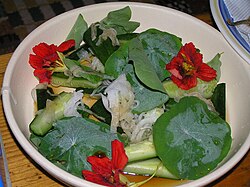
All parts of T. majus are edible. The flowers are a popular ornamental salad ingredient, providing a peppery kick similar to watercress. Nutritionally, the flowers are impressive: they contain approximately 130 mg of Vitamin C per 100g (comparable to parsley) and up to 45 mg of lutein per 100g—the highest concentration found in any edible plant.
Additionally, unripe seed pods can be preserved in seasoned vinegar to create a condiment that serves as a substitute for capers. In the Andes, the tubers of T. tuberosum (Mashua) serve as a major food source, though they possess an unpleasant smell when raw that disappears upon cooking.
Medicinal and Ecological Benefits
In herbal medicine, T. majus has been utilized to treat respiratory and urinary tract infections. In Germany, for example, physicians can prescribe a licensed herbal antibiotic made from a combination of nasturtium and horseradish root.
In the garden, nasturtiums serve an ecological purpose through companion planting. They can act as a "trap crop" to lure pests away from other plants, repel certain insects, or attract predatory insects that provide natural biological pest control.
Frequently Asked Questions
What does the name "nasturtium" mean?
The name is derived from the idea of a "nose-twister," referring to the peppery, pungent oil produced by the plant that is similar to watercress.
Can I eat nasturtium flowers?
Yes, all parts of T. majus are edible. The flowers are frequently used in salads for their ornamental beauty and peppery flavor.
How do I grow nasturtiums from seed?
Sow seeds in well-drained compost covered with a thin layer of grit or sand. Keep the temperature below 4°C (39°F) until seedlings emerge to ensure successful germination.
Are nasturtiums good for my garden pests?
Yes, they are excellent companion plants. They can act as a trap crop to attract pests away from your vegetables or help attract beneficial predatory insects.
What is Mashua?
Mashua (T. tuberosum) is a climbing perennial from the Andes grown for its edible tubers. It has been cultivated since ancient times and is a significant food source in its native region.