Troodontids: The Bird-Like Dinosaurs of the Jurassic and Cretaceous
The Troodontidae are a clade of bird-like theropod dinosaurs that roamed the Earth from the Late Jurassic to the Late Cretaceous periods. For much of the 20th century, these creatures remained an evolutionary mystery due to a scarcity of complete fossils. However, recent discoveries of articulated specimens—including those preserving feathers, embryos, and juveniles—have fundamentally reshaped our understanding of their biology and their pivotal role in the evolution of birds.
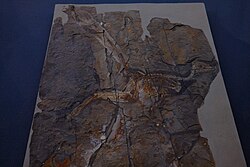
Modern anatomical studies of primitive troodontids, such as Sinovenator, reveal striking similarities to Archaeopteryx and primitive dromaeosaurids. These connections place troodontids within a broader group called Paraves, a clade that bridges the gap between non-avian dinosaurs and modern birds.
Key Facts
- Temporal Range: Late Jurassic to Late Cretaceous.
- Distribution: Primarily Laurasian (North America, Asia, Europe), with provisional evidence in India (Gondwana).
- Key Characteristics: Bird-like anatomy, presence of feathers, and a close relationship to the Paraves clade.
- Type Species: Troodon formosus.
- Evolutionary Significance: Provides physical evidence that derived deinonychosaurs existed before the rise of avians.
Evolution and Global Distribution
The evolutionary timeline of troodontids begins in the Late Jurassic, with Hesperornithoides from Wyoming serving as the oldest definitive member of the family. Even earlier evidence exists in the form of a single tooth from Koparion in Utah and indeterminate maniraptoran teeth from the Middle Jurassic of England identified in 2023.
Throughout the Cretaceous, troodontids radiated across western North America, Asia, and Europe. While their distribution was predominantly Laurasian, the discovery of two diagnostic teeth from the Maastrichtian Kallamedu Formation in southern India suggests they may have inhabited Gondwana or dispersed to India before it became an isolated island continent. This possibility is supported by Middle Jurassic remains, which imply the group originated before the breakup of the supercontinent Pangaea.
Classification and Taxonomic History
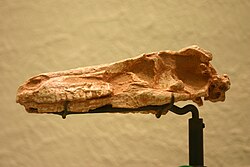
The classification of troodontids has undergone significant revisions since the first remains were described. In 1856, Joseph Leidy initially mistook them for lizards. By 1924, Gilmore identified them as dinosaurs, though he incorrectly allied them with pachycephalosaurs. It was not until 1945 that C.M. Sternberg correctly recognized Troodontidae as a theropod family.
For decades, troodontids were grouped with dromaeosaurids in a clade called Deinonychosauria. Later, the clade Bullatosauria was proposed to link them with ornithomimosaurs based on an inflated braincase (the parabasisphenoid) and a specific opening in the upper jaw (the maxillary fenestra). However, the discovery of primitive Chinese troodontids like Mei and Sinovenator proved they are more closely related to birds, leading to the abandonment of Bullatosauria in favor of the Paraves clade.
Current Taxonomic Structure
Modern phylogeny divides the family into several subfamilies and tribes to better reflect their evolutionary branching:
- Troodontinae: Includes the tribe Saurornithoidini (e.g., Saurornithoides, Zanabazar) and Troodontini (e.g., Troodon, Stenonychosaurus).
- Sinovenatorinae: Includes primitive forms such as Mei and Sinovenator.
- Jinfengopteryginae: Includes taxa such as Jinfengopteryx and Tamarro.
Paleobiology and Behavior
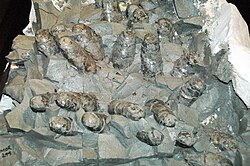
Troodontids offer fascinating insights into dinosaurian life and interaction. One of the most intriguing discoveries occurred in Mongolia's Djadokhta Formation, where two partial troodontid skulls (likely hatchlings or embryos) were found within a nest of oviraptorid eggs. Because the nest contained an oviraptorid embryo, researchers believe the troodontids were not the owners of the nest. Hypotheses suggest the troodontids were either prey for the adult oviraptorid, predators targeting oviraptorid hatchlings, or perhaps nest parasites.
The Link to Bird Evolution
Troodontids are essential to the study of avian origins. The existence of Hesperornithoides near the time of Archaeopteryx provides physical proof that derived deinonychosaurs existed before avians. This evidence effectively resolves the "temporal paradox" previously used by critics to argue against the close relationship between dinosaurs and birds.
Summary of Troodontid Classification
| Rank | Name | Key Examples/Notes |
|---|---|---|
| Clade | Paraves | Includes Troodontids, Dromaeosaurids, and Birds |
| Family | Troodontidae | Type species: Troodon formosus |
| Subfamily | Troodontinae | Advanced forms like Saurornithoides |
| Subfamily | Sinovenatorinae | Primitive forms like Mei |
| Subfamily | Jinfengopteryginae | Includes Jinfengopteryx |
Frequently Asked Questions
Were troodontids related to birds?
Yes, troodontids are members of the Paraves clade, making them close relatives of both dromaeosaurids and early birds. They share many anatomical characteristics with birds, including the presence of feathers.
Where did troodontids live?
They were primarily distributed across Laurasia, which includes modern-day North America, Asia, and Europe. There is also provisional evidence of their presence in India (Gondwana) based on tooth discoveries.
What is the "temporal paradox" mentioned in bird evolution?
The temporal paradox was the argument that birds appeared in the fossil record before their supposed dinosaur ancestors. The discovery of Jurassic troodontids like Hesperornithoides invalidates this by proving derived deinonychosaurs existed before avians.
Why were troodontid skulls found in oviraptorid nests?
This remains an enigma. Paleontologists suggest three main possibilities: the troodontids were prey for the adult oviraptorid, they were attempting to eat oviraptorid hatchlings, or they acted as nest parasites.
How has the classification of troodontids changed over time?
They were initially mistaken for lizards, then grouped with pachycephalosaurs, and later linked to ornithomimosaurs. Today, they are firmly classified as theropod dinosaurs within the Paraves clade.