Trial of the Juntas: Argentina's Landmark Prosecution of Military Dictatorship
The Trial of the Juntas (Spanish: Juicio a las Juntas) stands as a historic milestone in the pursuit of justice and human rights. It was the judicial proceeding against the members of the military government that ruled Argentina during the Proceso de Reorganización Nacional (the Process), a dictatorship that lasted from 1976 to 1983. This event remains the only instance in Latin America where a democratic government conducted a large-scale trial against a former dictatorial regime from its own country.
Key Facts
- Period of Dictatorship: 1976–1983.
- Trial Start Date: April 22, 1985.
- Presiding Government: Administration of President Raúl Alfonsín.
- Estimated Victims: 8,000 to 9,000 people murdered or disappeared during the "Dirty War."
- Legal Significance: First major war crimes trial conducted by a civilian court since the post-WWII tribunals in Nuremberg and Tokyo.
- Outcome: Life sentences for top leaders, including Jorge Rafael Videla and Emilio Massera.
Background and Preparation
The dictatorship was characterized by a series of military governments led by four successive military juntas. In an attempt to shield themselves from future prosecution, the fourth junta enacted a Self-Amnesty Law on April 18, 1983, and issued a secret decree ordering the destruction of evidence regarding their crimes before relinquishing power to democratic authorities.
Upon taking office, President Raúl Alfonsín acted swiftly to restore the rule of law. On December 13, 1983, he signed Decree No. 158, initiating legal proceedings against nine military officers from the first three juntas. To build the case, the government established the National Commission on the Disappearance of Persons, which documented 8,960 cases of forced disappearances—the state-sponsored abduction and secret imprisonment of individuals. When military courts refused to try the former junta members, Alfonsín created a National Criminal Court of Appeals on October 14, 1984, to ensure the trial could proceed.
The Judicial Proceedings
The trial officially commenced on April 22, 1985. It targeted the crimes of the "Dirty War," a campaign of state terror against political dissidents that involved kidnapping, torture, and murder.
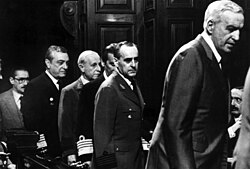
The prosecution was led by Julio César Strassera and his assistant Luis Moreno Ocampo, who later became the first Chief Prosecutor of the International Criminal Court. The case was presided over by a tribunal of six judges: León Arslanián, Jorge Torlasco, Ricardo Gil Lavedra, Andrés D'Alessio, Jorge Valerga Aráoz, and Guillermo Ledesma.
Evidence and Testimony
The scale of the evidence was immense. Prosecutors presented 709 cases, with 280 being heard in court. A total of 833 witnesses testified, including high-profile figures such as writer Jorge Luis Borges, former President Alejandro Lanusse, and forensic anthropologist Clyde Snow. Testimony also came from survivors like Pablo Díaz and human rights advocates such as Estela Barnes de Carlotto of the Grandmothers of the Plaza de Mayo.
The trial faced significant opposition from figures sympathetic to the dictatorship. This tension culminated in violent protests and 29 bomb threats to schools in Buenos Aires, as well as bombings at government installations like the Ministry of Defense. In response, President Alfonsín declared a 60-day state of emergency on October 25.
The Closing Argument
The trial reached its emotional peak on September 18 during the closing arguments. Chief Prosecutor Strassera concluded his indictment with a phrase that has since become a global symbol for human rights: "Never again!" (¡Nunca más!).
Sentencing and Legal Aftermath
On December 9, 1985, the tribunal delivered its verdicts. The sentencing reflected the varying levels of responsibility among the accused:
| Defendant | Sentence |
|---|---|
| Jorge Rafael Videla | Life Imprisonment |
| Emilio Eduardo Massera | Life Imprisonment |
| Roberto Eduardo Viola | 17 Years |
| Armando Lambruschini | 8 Years |
| Orlando Ramón Agosti | 4.5 Years |
| Omar Graffigna, Leopoldo Galtieri, Jorge Anaya, Basilio Lami Dozo | Acquitted |
While the trial was a victory for justice, subsequent laws hampered further prosecutions. The Full Stop Law (1986) and the Law of Due Obedience (1987) limited the ability to sue other perpetrators. Furthermore, between 1989 and 1990, President Carlos Menem pardoned those who had been sentenced.
The tide turned again in the early 2000s. Under President Néstor Kirchner, the Full Stop Law was repealed in 2003, and the Supreme Court ruled in 2005 that the amnesty laws were unconstitutional. By 2007, a federal court struck down Videla's pardon, restoring his convictions.
Preservation of History
To protect the historical record from potential destruction or commercial exploitation, the original video tapes of the trial were moved to Norway in 1988. The judges personally delivered 147 VHS tapes to the Norwegian Parliament in Oslo, where they are stored alongside the original text of the Constitution of Norway.
Frequently Asked Questions
What was the "Dirty War" in Argentina?
The Dirty War was a period of state-sponsored terrorism conducted by the military junta between 1976 and 1983, targeting political dissidents through kidnapping, torture, and forced disappearances.
Who were the primary targets of the Trial of the Juntas?
The trial targeted nine high-ranking military officers from the first three juntas, including Jorge Rafael Videla and Emilio Eduardo Massera.
What does the phrase "¡Nunca más!" mean in this context?
Meaning "Never again!", the phrase was used by prosecutor Julio César Strassera in his closing argument to signify that Argentina must never return to a state of military dictatorship and human rights abuses.
Were all the accused military officers convicted?
No. While Videla and Massera received life sentences and others received prison terms, four defendants—Omar Graffigna, Leopoldo Galtieri, Jorge Anaya, and Basilio Lami Dozo—were acquitted.
Why are the trial tapes kept in Norway?
The tapes were sent to the Norwegian Parliament in 1988 to ensure their safety and prevent them from being used for commercial purposes or destroyed.