Trenes Argentinos Operaciones: The Backbone of Argentina's State Railway
Operadora Ferroviaria Sociedad del Estado (SOFSE), widely known by its trade name Trenes Argentinos Operaciones, is the state-owned entity responsible for passenger rail services across Argentina. Headquartered in Retiro, Buenos Aires, the company operates as a division of Ferrocarriles Argentinos S.E. and serves as the primary provider of urban, regional, and long-distance rail transport in the country.
Since its inception, SOFSE has played a pivotal role in the shifting landscape of Argentine transport, moving from a period of widespread privatization toward a model of state-led management and infrastructure recovery.
Key Facts
- Founded: 2008 by the Government of Argentina.
- Role: State-owned operator of passenger railway transport and maintenance.
- Scope: National coverage, including metropolitan, long-distance, regional, and international services.
- Key Lines: Operates the Mitre, San Martín, Roca, and Belgrano Sur commuter lines.
- President: Luis A. Luque.
Historical Evolution and Background
From Privatization to State Control
The trajectory of Argentina's railways changed significantly following the privatization process that began in 1989. Assets not granted as concessions were initially managed by Ferrocarriles Argentinos and later by the Ente Nacional de Administración de Bienes Ferroviarios (ENABIEF) between 1996 and 2000. Eventually, these assets fell under the Organismo Nacional de Administración de Bienes (ONABE), which managed state assets not directly used for government activities.
A major shift occurred in 2008 with Law 26.352, which reorganized railway operations. This legislation created two distinct state organizations: the Administración de Infraestructuras Ferroviarias (ADIF), focused on infrastructure, and SOFSE, focused on operations.
Expansion of Services
While founded in 2008, SOFSE became fully active in 2010 by taking over services in Chaco Province. Over the following years, it expanded into Salta and Buenos Aires provinces. By 2012, the company assumed control of all non-concession urban services in Greater Buenos Aires and began operating interurban routes to major cities like Córdoba and Tucumán.
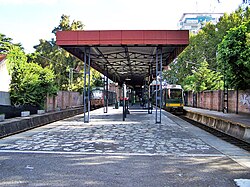
In 2013, the state revoked the contract with Sociedad Comercial del Plata to take over the Tren de la Costa. That same year, SOFSE was designated to operate the Mitre and Sarmiento lines after the contracts with Trenes de Buenos Aires were revoked.
Commuter Rail Renationalisation
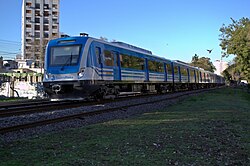
A defining moment for the company occurred in March 2015. The Argentine government rescinded contracts with private operators Argentren and Corredores Ferroviarios. This move brought the Belgrano Sur, Roca, Mitre, and San Martín lines under full state control, with the government exercising its right to cancel concessions without paying compensation.
Modern Fleet and Service Challenges
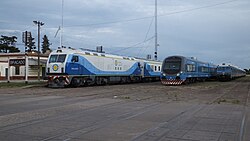
To modernize the network, the government acquired new rolling stock from the Chinese company CNR Dalian. In December 2014, these luxury trains began running from Constitución to Mar del Plata. In February 2015, passenger services to Rufino, Santa Fe, were restored after a 22-year hiatus.
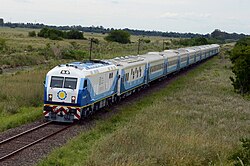
However, the recovery has faced significant hurdles. In March 2015, new trains to Córdoba were introduced, but poor track conditions resulted in a 700 km journey taking 19.5 hours—more than double the time required for the same trip in 1938.
Recent Developments and Suspensions
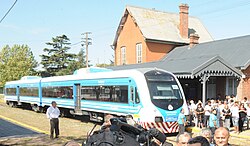
The network has seen both returns and closures. In June 2023, services to Mendoza were reestablished after 30 years, though they faced criticism for excessive travel times. Conversely, several lines have been closed due to infrastructure failure, low demand, or high maintenance costs. Notable closures include the Bragado–Pehuajó branch (2024) and the General Guido–Pinamar branch (April 2025). In December 2025, services to Córdoba and San Miguel de Tucumán were indefinitely suspended for track repairs following a derailment in September.
Current Service Overview
As of January 2026, SOFSE maintains a diverse portfolio of services ranging from high-frequency urban commutes to international connections.
| Service Category | Key Routes / Lines | Traction Type | Scope |
|---|---|---|---|
| Metropolitan | Sarmiento, Roca, Mitre, Belgrano Sur, Tren de la Costa | Electric & Diesel | Greater Buenos Aires |
| Long Distance | Constitución–Mar del Plata, Once–Bragado, Retiro–Junín, Retiro–Rosario Norte | Diesel | Inter-provincial |
| Regional | Tren de las Sierras (Córdoba), Tren del Valle (Neuquén/Río Negro), Chaco, Salta | Diesel | Provincial |
| International | Posadas (Argentina) – Encarnación (Paraguay) | Diesel | Cross-border |
Frequently Asked Questions
What is the difference between SOFSE and Trenes Argentinos?
SOFSE (Operadora Ferroviaria Sociedad del Estado) is the legal name of the state-owned company, while Trenes Argentinos Operaciones is the trade name used for its public-facing services.
Which commuter lines in Buenos Aires are operated by the state?
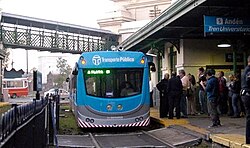
The state operates the Mitre, San Martín, Roca, and Belgrano Sur lines, as well as the Tren de la Costa.
Why have some train services been suspended recently?
Suspensions, such as those to Córdoba and Tucumán in late 2025, are typically due to necessary track repair work, infrastructure deterioration, or low passenger demand.
Does Trenes Argentinos operate international routes?
Yes, it operates an international service connecting Posadas in Argentina to Encarnación in Paraguay, managed jointly with Casimiro Zbikoski S.A.
When did the state take back control of the commuter rails?
The major renationalisation of the primary Buenos Aires commuter lines occurred in March 2015 after the government rescinded contracts with private operators.