Treaty of Lausanne: The Peace Agreement That Defined Modern Turkey
The Treaty of Lausanne stands as one of the most pivotal diplomatic documents of the 20th century. Signed on July 24, 1923, in the Palais de Rumine in Lausanne, Switzerland, this peace treaty officially ended the conflict between the successor state of the Ottoman Empire and the Allied powers of World War I. Unlike previous attempts at peace, the Treaty of Lausanne recognized the sovereignty of the new Republic of Turkey, effectively drawing the borders and establishing the legal framework for the modern Turkish state.
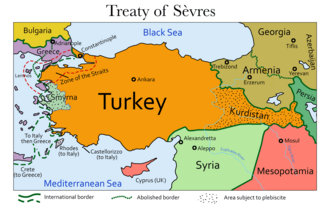
The treaty emerged after the failure of the 1920 Treaty of Sèvres, which had sought to partition Ottoman territories. The Turkish National Movement, led by Mustafa Kemal Atatürk, rejected the harsh terms of Sèvres, leading to the Turkish War of Independence. Following the defeat of Greek forces and the signing of the Armistice of Mudanya in October 1922, the international community returned to the negotiating table to establish a sustainable peace.
Key Facts
- Signed: July 24, 1923, in Lausanne, Switzerland.
- Effective Date: August 6, 1924.
- Primary Purpose: To resolve the conflict between Turkey and the Allied powers (France, UK, Italy, Japan, Greece, Romania, and the Kingdom of Serbs, Croats and Slovenes).
- Chief Negotiators: İsmet İnönü (Turkey) and Lord Curzon (United Kingdom).
- Major Outcome: Recognition of the independence of the Republic of Turkey and the relinquishing of Ottoman claims to Arab lands.
The Path to Peace: Background and Negotiations
The transition from the Ottoman Empire to the Republic of Turkey was marked by intense military and political struggle. After the expulsion of the Ottoman Sultan, the Ankara-based Kemalist government rejected the territorial losses imposed by the unratified Treaty of Sèvres. While Britain had initially pushed for the creation of a Kurdish state in Eastern Anatolia to limit Turkish influence in Mesopotamia, these goals shifted as secular Kemalist rhetoric addressed international concerns.
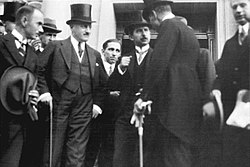
The resulting Lausanne Conference was an arduous process lasting eight months. The Turkish delegation, led by İsmet İnönü, faced off against the Allied chief negotiator, Lord Curzon. The negotiations were characterized by several Turkish withdrawals and intense debate over borders and minorities. Interestingly, the United States, represented by High Commissioner Admiral Mark L. Bristol, supported Turkish efforts, though the U.S. Senate ultimately refused to ratify the treaty in 1927.
Core Stipulations and Territorial Changes
The treaty consisted of 143 articles divided into various parts, covering political, financial, and economic clauses. A primary achievement was the formal recognition of Turkey's independence. However, this came with specific territorial concessions and obligations.
Borders and Sovereignty
Turkey officially relinquished claims to oil-rich Arab lands and accepted the loss of Cyprus. The fate of the province of Mosul was deferred to the League of Nations. Additionally, Turkey renounced claims to the Dodecanese Islands, which were held by Italy. In the south, territories in the Arabian Peninsula, including the Mutawakkilite Kingdom of Yemen and parts of Hejaz, were effectively ceded.
A notable diplomatic curiosity involved Adakale Island in the Danube River. Due to an error at the 1878 Congress of Berlin, the island remained de jure Ottoman territory until the Treaty of Lausanne formally ceded it to Romania.
![Adakale Island in River Danube was forgotten during the peace talks at the Congress of Berlin in 1878, which allowed it to remain a de jure Ottoman territory and the Ottoman Sultan Abdülhamid II's private possession until the Treaty of Lausanne in 1923 (de facto until Romania unilaterally declared its sovereignty on the island in 1919 and further strengthened this claim with the Treaty of Trianon in 1920.)[21] The island was submerged during the construction of the Iron Gates hydroelectric plant in 1970, which also removed the possibility of a potential legal claim by the descendants of Abdul Hamid II.](/images/7b/5d/7b5d03cc7f80e981d6d8ea27dd452b1130d537e17af29435c7e323be97fc134c.jpg)
Minorities and Population Exchange
The treaty aimed to protect the Greek Orthodox Christian minority in Turkey and the Muslim minority in Greece. However, much of this had already been addressed by the earlier Convention Concerning the Exchange of Greek and Turkish Populations, which saw massive deportations. Only specific groups, such as the Greek Orthodox population of Constantinople, Imbros, and Tenedos, and the Muslims of Western Thrace, were excluded from the exchange.
Treaty Structure and Legal Framework
The Treaty of Lausanne was a comprehensive document that addressed not only peace but also the practicalities of international commerce and law. The following table summarizes the primary components of the agreement:
| Section/Part | Primary Focus |
|---|---|
| Part I | Political Clauses |
| Part II & III | Financial and Economic Clauses |
| Part IV | Communications and Sanitary Questions |
| Convention on Turkish Straits | Regulation of maritime passage |
| Convention on Population Exchange | Greek and Turkish population transfers |
| Declaration of Amnesty | Legal pardon for offenses (1914–1922) |
One of the most controversial aspects of the treaty was the Declaration of Amnesty. This provision granted political amnesty to opponents of the new regime, though the government reserved the right to exclude 150 individuals, primarily descendants of the Ottoman dynasty.
Legacy and Aftermath
The Treaty of Lausanne succeeded where Sèvres failed, providing a stable legal foundation for the Republic of Turkey. While some territories, like the Hatay Province, remained under French mandate until joining Turkey in 1939, the treaty largely defined the modern map of the region. Despite its success in establishing peace, the treaty remains a subject of historical debate, particularly regarding the amnesty for war crimes and the handling of minority populations.
Frequently Asked Questions
How did the Treaty of Lausanne differ from the Treaty of Sèvres?
The Treaty of Sèvres (1920) sought to partition the Ottoman Empire into several smaller states and was rejected by the Turkish National Movement. The Treaty of Lausanne (1923) recognized the full sovereignty and independence of the Republic of Turkey, establishing more sustainable borders.
Who were the primary negotiators for the treaty?
The chief negotiator for Turkey was İsmet İnönü, while the Allied forces were primarily represented by the British Foreign Secretary, Lord Curzon. Eleftherios Venizelos negotiated on behalf of Greece.
What happened to the population exchange mentioned in the treaty?
The treaty recognized a population exchange between Greece and Turkey. Most Christians in Turkey and Muslims in Greece were deported, with exceptions for the Greek Orthodox in Constantinople, Imbros, and Tenedos, and Muslims in Western Thrace.
Why did the United States not ratify the treaty?
The U.S. Senate refused to ratify the treaty in 1927 by a vote of 50–34, failing to reach the required two-thirds majority. This led Turkey to annul the Chester concession, a separate agreement with the U.S.
What was the significance of the Declaration of Amnesty?
The Declaration of Amnesty provided a legal pardon for offenses committed between 1914 and 1922, effectively preventing the prosecution of individuals for war crimes committed during the conflict.