Treaty of Ghent: Ending the War of 1812
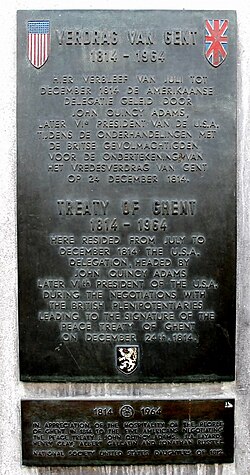
The Treaty of Ghent was the pivotal bilateral peace agreement that brought an end to the War of 1812 between the United States and the United Kingdom. Signed on Christmas Eve in 1814, the treaty served as a diplomatic reset, restoring relations between the two nations to status quo ante bellum—a Latin term meaning the state existing before the war. By returning borders to their June 1812 positions, the agreement paved the way for over two centuries of largely peaceful relations.
Key Facts
- Signed: December 24, 1814, in Ghent, United Netherlands (modern-day Belgium).
- Effective Date: February 17, 1815.
- Primary Outcome: Restored pre-war borders and released all prisoners.
- Key US Negotiators: John Quincy Adams, Henry Clay, James A. Bayard, Jonathan Russell, and Albert Gallatin.
- Key British Negotiators: Lord Gambier and Henry Goulburn.
- Territorial Impact: Approximately 10 million acres near Lakes Superior and Michigan and in Maine were returned to the US.
The Road to Ghent
By June 1814, both the United States and Great Britain were eager to conclude the conflict. Negotiators agreed to meet in the neutral city of Ghent, located in the Southern Netherlands. The American delegation was led by John Quincy Adams and consisted of senior political leaders. In contrast, the British sent minor officials who maintained close communication with their superiors in London.
For the British government, the North American conflict was a secondary priority. Their primary diplomatic focus was the European balance of power following the defeat of Napoleonic France and the restoration of the pro-British Bourbons in Paris.
Tense Negotiations and the "Buffer State"
Formal discussions began on August 8, 1814. To facilitate progress, American diplomats chose not to press their demands regarding the end of impressment (the forced recruitment of sailors) or the cession of Canada to the United States.
However, a major impasse arose when the British proposed the creation of an Indigenous state in the former Canadian southwest territory, spanning from Ohio to Wisconsin. The British intended this to be a buffer state to block further American westward expansion. The United States firmly rejected this proposal, with John Quincy Adams arguing that including allied Indigenous nations in a bilateral treaty would undermine American sovereignty over its own territories.
Ultimately, the British backed down. Under Article IX, both nations agreed to make peace with their respective Indigenous foes and restore them to the possessions and rights they held in 1811.
Terms of the Agreement
The final agreement focused on restoration rather than conquest. The treaty mandated the release of all prisoners and the return of captured ships and lands. While American-held areas of Upper Canada (now Ontario) were returned to Britain, the US regained roughly 10 million acres of territory in Maine and near the Great Lakes.
A notable exception occurred in Spanish West Florida; the United States did not return the port of Mobile or territory west of the Perdido River to Spain, despite Spain's alliance with Britain. Additionally, while the British promised to return freed slaves, they eventually paid the US government $1,204,960 in 1826 as compensation to American slaveholders. Both nations also committed to working toward the abolition of the Atlantic slave trade.
Ratification and Aftermath
Although signed on December 24, 1814, the treaty required formal ratification. The British Parliament approved it, and the Prince Regent (the future King George IV) signed it into law on December 30. Because of the slow speed of communication, news took a month to reach North America.
During this interval, American forces under Andrew Jackson won a decisive victory at the Battle of New Orleans on January 8, 1815. Despite this late battle, the treaty was ratified unanimously by the US Senate on February 16 and signed by President James Madison on February 17, 1815.
Commemorating a Lasting Peace
The Treaty of Ghent initiated a long era of stability, interrupted only by minor disputes such as the Aroostook War (1838–39), the Pig War (1859), and the Trent Affair (1861). Several monuments now commemorate this peace:
- The Peace Arch (1921): A 20.5-meter monument at the British Columbia-Washington border.
- The Fountain of Time (1922): Located in Chicago's Washington Park.
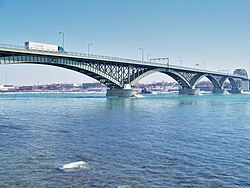
- The Peace Bridge (1927): Connecting Buffalo, New York, and Fort Erie, Ontario.
| Feature | Details |
|---|---|
| Date Signed | December 24, 1814 |
| Location | Ghent, United Netherlands |
| Effective Date | February 17, 1815 |
| Border Status | Status quo ante bellum (Pre-war borders) |
| Key US Figure | John Quincy Adams |
| Key British Figure | Lord Gambier |
Frequently Asked Questions
Did the Treaty of Ghent end the Battle of New Orleans?
No. The Battle of New Orleans took place on January 8, 1815, after the treaty had been signed in Ghent but before the news of the peace reached the United States.
What does "status quo ante bellum" mean in the context of this treaty?
It means that the parties agreed to return to the state of affairs that existed before the war began, specifically restoring the borders as they were in June 1812.
Did the United States gain any territory from the treaty?
The treaty focused on restoration rather than acquisition. However, the US regained approximately 10 million acres of territory in Maine and near Lakes Superior and Michigan that had been captured during the conflict.
What happened to the proposed Indigenous buffer state?
The British proposed a sovereign Indigenous state in the southwest Canadian territory to block US expansion, but the United States refused. The British eventually dropped the demand in exchange for a promise to restore Indigenous rights as they existed in 1811.
How did the treaty handle the issue of freed slaves?
The British initially promised to return freed slaves to the US. Instead, in 1826, Britain paid the US government $1,204,960 to compensate American slaveholders.