Transportation Technology: The Evolution of Mobility in the 21st Century
The dawn of the 21st century marked a pivotal shift in how humans and goods move across the globe. From the phasing out of supersonic passenger travel to the rise of artificial intelligence in driving, the last two decades have been defined by a transition toward sustainability, automation, and digital integration. As the world grapples with climate change and urban congestion, the focus has shifted from mere speed to efficiency and environmental responsibility.
The Rise of Sustainable and Electric Transit
The early 2000s saw a surge in experimentation with energy storage and alternative fuels. Germany led early efforts with capa vehicle hybrid buses in Nuremberg (2001) and trams in Mannheim (2003), utilizing ultracapacitors to store electrical energy. This era also saw the introduction of the first modern ground-level power supply technology via the Bordeaux tramway in 2003.
The shift toward mass-market electrification gained momentum in 2008 with the Tesla Roadster, the first mass-produced electric car powered by lithium-ion batteries. This trend extended to rail, with the NE Train trialing lithium-ion hybrid trains in 2003 and the later introduction of the Škoda 15 T in 2009, the first completely low-floor tram with articulated bogies.
Hydrogen technology has emerged as a critical pillar for decarbonization. Key milestones include the 2015 demonstration of a hydrogen fuel cell tramcar by China South Rail Corporation (CSR) and the 2018 launch of the Toyota Mirai, the first mass-produced hydrogen fuel cell car. In the rail sector, the Alstom Coradia Lint launched in Germany in 2018 as the first commercial hydrogen-powered passenger train.
Autonomous Vehicles and the Robotaxi Era
Automation has evolved from niche experiments to commercial services. Early milestones included the 2015 launch of the Navya Autonom Shuttle in Israel and the 2018 testing of driverless trams in Potsdam, Germany. By 2020, the CR400BF-C 'Fuxing Hao' became the world's first high-speed rail service capable of driverless automation in commercial operations.
The most visible shift has occurred in urban ride-hailing. In 2022, California regulators allowed Cruise to charge for fully driverless rides in San Francisco. This was followed by Baidu securing permits for driverless robotaxis in Wuhan and Chongqing. By 2023, the CPUC authorized both Waymo and Cruise for 24/7 driverless services in San Francisco, and Mercedes-Benz became the first automaker certified for SAE Level 3 (hands-off, eyes-off) driving in the U.S.
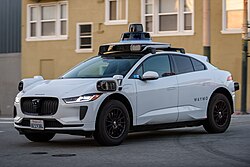
Despite this progress, the industry has faced setbacks. In late 2023, Cruise's operations were halted in California following a pedestrian-dragging incident, leading to fleet withdrawals and investigations. Conversely, Waymo has continued to expand, securing permits for Los Angeles and announcing a partnership with Lyft in 2025 to broaden its footprint.
Next-Generation Transit and Space Innovation
Beyond cars and buses, engineers are rethinking the physics of travel. In 2004, Shanghai launched its first commercial high-speed Maglev (magnetic levitation) train. More recently, China has conducted test runs of a superconducting maglev known as a hyperloop in Datong, aiming for speeds up to 1,000 km/h, though passenger-pod tests by Hyperloop One in Los Angeles were reportedly abandoned by 2023.
Innovation has also reached the skies and seas. The IKAROS spacecraft (2010) utilized solar sail propulsion, and MIT tested an ion-propelled aircraft using ionic wind in 2018. On the water, the 2021 launch of the MV Yara Birkeland in Norway introduced the first fully electric autonomous cargo ship, designed to reduce truck dependency.
Societal Impacts and Environmental Challenges
The 2020s have brought a critical reassessment of transportation's cost to society. The COVID-19 pandemic temporarily slashed air and surface travel, though it triggered a surge in cycling and bike sales. This period also saw the rise of digital platforms like BlaBlaCar and Flixbus, which streamlined carpooling and affordable public transit.
Recent research highlights the hidden costs of automobility. A 2024 global review estimated that personal cars have caused 60–80 million deaths since their invention, accounting for roughly every 34th death globally. Additionally, studies have pointed to the environmental impact of the "billionaire space race," suggesting that routine space tourism could significantly affect the ozone layer and climate change.
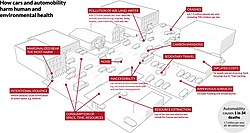
Decarbonizing aviation remains a steep challenge. A 2023 study noted that achieving net-zero aviation by 2050 would require nearly five times the 2019 global production of biofuels (SAF), potentially competing with food security and land use.
Key Facts
- Hydrogen Milestones: First hydrogen fuel cell passenger aircraft flight occurred in 2016 (DLR HY4).
- Autonomous Shipping: The MV Yara Birkeland (2021) is the first fully electric autonomous cargo ship.
- Urban Mobility: Low Traffic Neighbourhoods in Outer London have been found highly cost-efficient for health benefits (2024).
- Safety Concerns: Personal car transport is linked to 60–80 million deaths since its inception.
- High-Speed Tech: China's hyperloop tests in Datong target speeds of ~1,000 km/h.
| Year | Technology/Event | Significance |
|---|---|---|
| 2004 | Shanghai Maglev | First commercial high-speed Maglev operation. |
| 2008 | Tesla Roadster | First mass-production lithium-ion electric car. |
| 2018 | Toyota Mirai | First mass-produced hydrogen fuel cell car. |
| 2020 | Fuxing Hao | First commercial driverless high-speed rail. |
| 2021 | Roboats | First urban autonomous vessels deployed in Amsterdam. |
| 2023 | Mercedes-Benz L3 | First certified SAE Level 3 driving in the U.S. |
Frequently Asked Questions
What is a robotaxi?
A robotaxi is an autonomous vehicle that operates as a taxi service without a human driver, utilizing sensors and AI to navigate public roads and charge fares for passengers.
How does a hydrogen fuel cell vehicle differ from a battery electric vehicle?
While battery electric vehicles store energy in lithium-ion batteries, hydrogen fuel cell vehicles generate electricity through a chemical reaction between hydrogen and oxygen, emitting only water vapor.
What is the current status of the Hyperloop?
While China has conducted superconducting maglev tests in Datong, other ventures like Hyperloop One have reportedly abandoned the goal of transporting humans as of 2023.
What are the challenges of decarbonizing aviation?
The primary challenges include the massive amount of Sustainable Aviation Fuel (SAF) required—nearly five times 2019 levels—which could conflict with land use and food security.
What is SAE Level 3 driving?
SAE Level 3, or "conditional automation," allows the driver to take their eyes off the road and hands off the wheel under specific conditions, though they must be ready to intervene when prompted.