Transnistria's Polish Heritage: A History of Colonization and Assimilation
The history of Transnistria is a complex tapestry of shifting borders and ethnic migrations. While often viewed through the lens of Soviet and post-Soviet conflict, the region possesses a deep-rooted connection to Polish culture and administration that dates back centuries. From the grand estates of the Polish-Lithuanian Commonwealth to the systemic pressures of Sovietization, the Polish presence in this territory reflects the broader geopolitical struggles of Eastern Europe.
Early Foundations and the Polish-Lithuanian Commonwealth
The early medieval history of Transnistria remains somewhat ambiguous, with uncertainty regarding the extent to which it was part of Kievan Rus' starting in the 11th century. Following the Mongol Invasions and the subsequent collapse of Kievan Rus', the region transitioned to the rule of the Grand Duchy of Lithuania in the 15th century as part of Podolia.
By the 16th century, much of the area was integrated into the Bracław Voivodeship of the Polish–Lithuanian Commonwealth. This period was marked by a stark geopolitical divide: while the north remained under Polish influence, the southernmost portion (south of the Iagorlîc/Jagorlyk river) was conquered by the Crimean Khanate in 1504. This southern region, known as Yedisan, remained under the control of the Ottoman Empire until 1792, establishing the Iagorlîc river as a critical border between two competing empires.
The Era of Polish Colonization
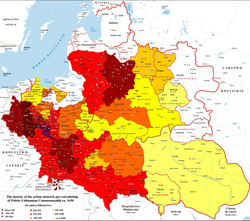
During the 16th and 17th centuries, the southern reaches of the Polish–Lithuanian Commonwealth were sparsely populated due to frequent and violent slave raids by the Crimean Khanate. To secure and develop the land, Polish kings—most notably Stephen Báthory and Sigismund III Vasa—sponsored large-scale colonization of Podolia, including modern-day Transnistria.
This colonization effort was structured around a social hierarchy:
- Polish Magnates: Wealthy nobles granted vast tracts of land.
- Petty Gentry: Lower-ranking nobles who managed estates and served as military defenders.
- Serfs: Peasants lured from central Poland and western Ukrainian lands with a temporary 20-year exemption from serfdom.
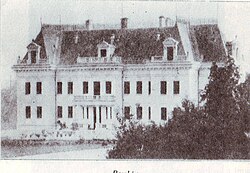
This era saw a cultural flourishing, characterized by the establishment of Jesuit schools and the construction of ornate castles and estates. These residences often housed libraries and art collections that rivaled those found in Poland. By the late 18th century, Roman Catholics—primarily Poles—made up approximately 11% of the population.
Incorporation into the Russian Empire
The Second Partition of Poland in 1793 brought these territories under the control of the Russian Empire. Initially, the transition maintained some continuity; Polish remained the language of government, education, and the courts until the failed insurrection of 1830–1831.
However, Russian rule led to a sharp stratification of Polish society. While wealthy magnates often prospered by aligning themselves with the Russian administration and moving to St. Petersburg, the middle and poorer gentry faced decline. Following the 1830 anti-Russian uprising, the Russian government stripped many of these lower nobles of their legal status, reducing them to the level of peasants. This forced many to assimilate into Ukrainian language and culture, though they often became key figures in the emerging Ukrainian national movement.
By the end of the 19th century, the impact of these policies and social shifts was evident: only 3% of the population reported Polish as their first language.
The Soviet Era and the Decline of Polish Culture
The aftermath of World War I and the Polish–Soviet War (1919–1921) triggered a massive exodus of the Polish intelligentsia and landowners. In 1919, the region was organized into the Ukrainian SSR, and by 1924, the Moldavian Autonomous Soviet Socialist Republic (MASSR) was established.
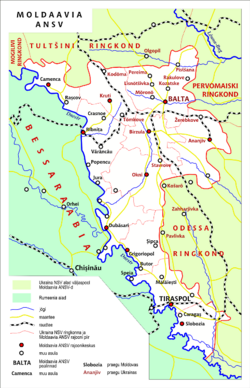
Under Stalinist rule, the Polish community faced severe persecution. The late 1930s were particularly brutal, marked by the NKVD Polish Operation (1937-1938), which involved mass terror, harassment, and dispersal. Furthermore, the Soviet government banned instruction in native languages for non-Romanian populations in the Moldavian ASSR, replacing them with Russian and Ukrainian.
Throughout the post-WWII period, policies of Sovietization aimed to systematically erase Polish culture. This erasure was so effective that the existence of a Polish community in Moldova and Transnistria remained largely unknown in Poland until the collapse of the USSR in the 1990s.
Transnistria Today
Current data on the Polish population in Transnistria varies significantly. The 2004 Census recorded approximately 1,100 Poles (2% of the population). However, some diplomats and activists estimate the number to be as high as 20,000, likely including individuals of Polish descent or those of the Catholic faith.
Due to decades of linguistic suppression, very few Poles in the region currently speak the language. Nevertheless, some public figures, including former First Lady Nina Shtanski and politician Yevgeni Zubov, have openly acknowledged their Polish roots.
![Former First Lady of Transnistria Nina Shtanski has spoken about being of Polish descent.[6]](/images/1a/2d/1a2d5c8f630da45ad2dd074a7b14fd711a3b2664ec9e41e2ac75905357674605.jpg)
Cultural revival efforts have emerged in recent years, most notably through the "Jasna Góra" Association of Polish Culture, which has been active in Tiraspol since 2013.
Key Facts
- Historical Rule: The region transitioned from the Grand Duchy of Lithuania to the Polish-Lithuanian Commonwealth, then to the Russian Empire, and finally the USSR.
- Colonization Incentive: Serfs were encouraged to settle in Podolia via a 20-year exemption from serfdom.
- Linguistic Shift: Polish was the administrative language until the 1830-1831 insurrection.
- Soviet Repression: The NKVD Polish Operation (1937-38) significantly decimated the local Polish population.
- Current Status: While the 2004 census lists 2% as Polish, some estimates suggest up to 20,000 people of Polish descent.
| Period | Governing Entity | Key Characteristic |
|---|---|---|
| 15th C. - 1793 | Polish-Lithuanian Commonwealth | Large-scale colonization and construction of estates. |
| 1793 - 1917 | Russian Empire | Initial administrative use of Polish, followed by Russification. |
| 1924 - 1991 | USSR (Moldavian ASSR) | Systemic Sovietization and NKVD repressions. |
| 1991 - Present | Transnistria (De facto) | Small minority population and cultural revival efforts. |
Frequently Asked Questions
Why did Polish settlers move to Transnistria in the first place?
Polish kings sponsored colonization to populate the sparsely settled southern regions of the Commonwealth, which had been depleted by slave raids from the Crimean Khanate.
What happened to the Polish language in the region?
It served as the administrative language until the early 19th century but declined due to Russian Russification policies and later Soviet mandates that replaced native languages with Russian and Ukrainian.
What was the NKVD Polish Operation?
It was a campaign of mass terror and persecution conducted by the Soviet secret police between 1937 and 1938, targeting ethnic Poles within the USSR.
How many Poles live in Transnistria today?
Official 2004 census data indicates about 1,100 people (2%), though some estimates by activists and diplomats suggest up to 20,000 people of Polish descent.
Is there any active Polish cultural presence in the region now?
Yes, the "Jasna Góra" Association of Polish Culture has been active in Tiraspol since 2013 to preserve and promote Polish heritage.