Transcription Factors: The Master Regulators of Gene Expression
At the heart of every biological process—from the development of an embryo to the way a cell responds to a sudden change in its environment—lies the precise control of gene expression. Gene expression is the process by which information stored in a gene is used to synthesize a functional product, typically a protein. The primary switch for this process is transcription, where RNA polymerase creates messenger RNA (mRNA) from a DNA template.
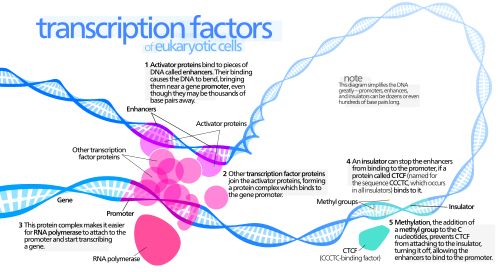
Transcription factors are the specialized proteins that control this switch. By binding to specific DNA sequences, they determine whether a gene is turned on (upregulation, activation, or promotion) or turned off (downregulation, repression, or suppression). This intricate system allows cells to maintain basal functions while remaining flexible enough to respond to intercellular signals and environmental stressors.
Key Facts
- Primary Role: Transcription factors regulate the rate of mRNA synthesis by interacting with DNA and RNA polymerase.
- Binding Sites: They attach to specific DNA sequences known as response elements.
- Modular Structure: Most contain distinct domains for DNA binding, signal sensing, and activation.
- Diversity: Human transcription factors include approximately 1,639 known or likely proteins.
- Clinical Impact: Mutations in these factors are linked to various disorders, including Rett syndrome and multiple types of cancer.
The Mechanism of Transcriptional Regulation
Transcription factors do not work in isolation; they operate through complex biochemical mechanisms to alter the accessibility of the genetic code. Some factors act by stabilizing or blocking the binding of RNA polymerase to the DNA. Others recruit additional proteins, such as coactivators or corepressors, to the DNA complex to amplify or dampen the signal.
The activity of these factors is tightly regulated through several pathways:
- Synthesis and Localization: Controlling when the protein is made and whether it can enter the nucleus.
- Activation: Modifying the protein's activity through phosphorylation or interaction with other transcription factors (homo- or hetero-dimerization).
- DNA Accessibility: The ability of the factor to reach its binding site, which can be influenced by the presence of other cofactors or the interaction with methylated cytosine.
Structural Architecture of Transcription Factors
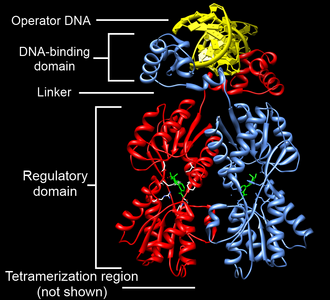
Transcription factors are modular, meaning they are composed of distinct functional units called domains. A prototypical transcription factor typically includes a DNA-binding domain (DBD), a signal-sensing domain (SSD), and an activation domain (AD). While the order and number of these domains vary, the SSD and AD often overlap in function.

Common DNA-Binding Domains
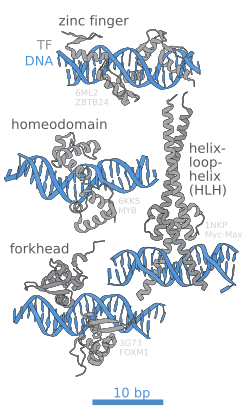
The DNA-binding domain is what allows the factor to recognize and attach to a specific response element. Different families of transcription factors use different structural motifs to achieve this:
- Zinc Fingers: These include Cys2His2, Zn2/Cys6, and nuclear receptor zinc fingers.
- Helix-Turn-Helix: A motif often found in homeodomain proteins and the lactose repressor (LacI).
- Basic Leucine Zipper (bZIP): Characterized by a zipper-like structure that often facilitates dimerization.
- Basic Helix-Loop-Helix (bHLH): Common in myogenic and ubiquitous factors.
The way these domains contact the DNA varies significantly, with some interacting with the major groove and others utilizing different structural scaffolds to ensure high specificity.
Classification and Examples
Transcription factors are classified by their mechanism, their regulatory function, or their structural superclass. Below is a summary of some well-studied factors and their characteristics.
| Factor | Structural Type | Recognition Sequence | Binding State |
|---|---|---|---|
| SP1 | Zinc finger | 5' -GGGCGG- 3' | Monomer |
| AP-1 | Basic zipper | 5'-TGA(G/C)TCA-3' | Dimer |
| c-Myc | Basic helix-loop-helix | 5'-CACGTG-3' | Dimer |
| Oct-1 | Helix-turn-helix | 5'-ATGCAAAT-3' | Monomer |
| Heat shock factor | Basic zipper | 5'-XGAAX-3' | Trimer |
Clinical Significance and Disease
Because transcription factors control the blueprint of cell behavior, their malfunction can lead to severe pathologies. Mutations or reduced activity in these proteins are linked to various conditions:
- Developmental Disorders: Rett syndrome (Xq28) and developmental verbal dyspraxia (7q31).
- Cancer: Li-Fraumeni syndrome (17p13.1), breast cancer, and various other malignancies.
- Chronic Conditions: Osteoarthritis (linked to SOX9 mutation) and autoimmune diseases (Xp11.23-q13.3).
Due to their central role in disease, transcription factors are increasingly viewed as potential drug targets for precision medicine and gene therapy.
Frequently Asked Questions
What is the difference between upregulation and downregulation?
Upregulation (or activation) increases the rate of gene transcription, leading to more mRNA and typically more of the resulting protein. Downregulation (or repression) decreases the rate of transcription, reducing the production of the gene product.
What is a response element?
A response element is a specific sequence of DNA that acts as a landing pad for a transcription factor. When the factor binds to this sequence, it triggers the regulation of the associated gene.
How do zinc fingers work?
Zinc fingers are structural motifs where a zinc ion stabilizes a small protein fold, allowing the transcription factor to insert itself into the major groove of the DNA to recognize specific base sequences.
Why are transcription factors important in cancer?
Many transcription factors regulate cell growth, division, and apoptosis (programmed cell death). When these factors are mutated or overexpressed, they can drive uncontrolled cell proliferation, leading to tumor formation.
Can transcription factors work alone?
While some bind as monomers, many transcription factors function as dimers (two units) or trimers (three units), often pairing with other factors to increase binding specificity or stability.