Traditional Chinese Characters: History, Usage, and Global Distribution
Traditional Chinese characters are a logographic writing system—where symbols represent words or morphemes rather than individual sounds—that served as the primary written medium for the Chinese language and the historical lingua franca of East Asia for millennia. While the mid-20th century saw the rise of simplified characters in mainland China, traditional characters remain the official script in several regions and continue to hold deep cultural and artistic significance worldwide.
Today, these characters are the standard in Taiwan, Hong Kong, and Macau, and they remain prevalent in many overseas Chinese communities. While simplified and traditional scripts are generally mutually intelligible to native speakers, the choice between them often reflects regional identity, political history, and cultural preservation.
Key Facts
- Official Status: Used officially in Taiwan, Hong Kong, and Macau.
- Terminology: Known as zhèngtǐzì (orthodox characters) in Taiwan and fántǐzì (complex characters) more generally.
- Origins: Modern forms emerged with the clerical script during the Han dynasty (c. 200 BCE).
- Digital Standard: Identified by the ISO 15924 code Hant and the W3C language tag zh-Hant.
- Related Scripts: Influenced Japanese kanji, Korean hanja, and Vietnamese chữ Nôm.
Terminology and Meaning
The names used to describe traditional characters often reveal the perspective of the speaker. The most common term is fántǐzì (繁體字), which literally translates to "complex form characters." In contrast, the government of Taiwan officially uses the term zhèngtǐzì (正體字), meaning "orthodox form characters," to emphasize their status as the standard, correct form of the script.
Other less common terms include lǎozì ("old characters") and quántǐzì ("full characters"). These distinctions are often a point of scholarly debate; some argue that "complex" is an unfair descriptor for original standard forms, while others argue that "standard" is inaccurate given the massive population of simplified-character users.
Regional Usage and Legal Status
Mainland China
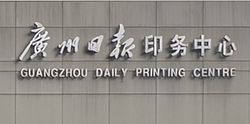
Although simplified characters are the norm in the People's Republic of China (PRC), traditional characters are still utilized in specific contexts. Under the Law of Standard Spoken and Written Chinese Language (effective January 1, 2026), their use is permitted for cultural relics, historic sites, calligraphy, seal engraving, and specific research or publishing needs.
Many prestigious institutions, such as Tsinghua University and the Bank of China, maintain traditional characters in their logos. Furthermore, high-ranking leaders from Mao Zedong to Xi Jinping have frequently used traditional forms in their personal signatures and calligraphic works.
Taiwan, Hong Kong, and Macau
In Taiwan, the Ministry of Education regulates the script through the Standard Form of National Characters. While the government abandoned simplification efforts in 1956, some simplified variants (such as those for "Taiwan") have entered everyday usage. In Hong Kong and Macau, traditional characters were retained throughout the colonial period and are now protected as vital elements of cultural heritage.
Global Presence
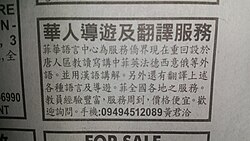
In the Philippines, the Chinese Filipino community is notably conservative, with many established schools and newspapers like the Chinese Commercial News continuing to use traditional characters. In North America, traditional characters remain prevalent in Chinatowns and among older immigrant populations, though most modern university courses now prioritize simplified characters.
Technical Implementation and Computing
Historically, traditional Chinese text was often encoded using the Big5 standard. However, the global adoption of Unicode has provided a universal framework that supports both simplified and traditional characters equally.
In digital typography, the initialism TC is used to denote Traditional Chinese, while SC denotes Simplified Chinese. For web development, the W3C recommends the zh-Hant tag to ensure content is correctly identified and rendered for users.
Comparison with Other East Asian Scripts
| Script/System | Relationship to Traditional Chinese | Key Characteristic |
|---|---|---|
| Simplified Chinese | Sister System | Reduced stroke counts; merged distinct characters. |
| Japanese Kanji | Sister System | Includes kyūjitai (traditional) and shinjitai (simplified). |
| Korean Hanja | Sister System | Virtually identical to traditional characters. |
| Chữ Nôm | Sister System | Vietnamese script based on Chinese characters. |
Frequently Asked Questions
What is the difference between zhèngtǐzì and fántǐzì?
Both refer to traditional Chinese characters. Zhèngtǐzì means "orthodox characters" and is the official term used in Taiwan, while fántǐzì means "complex characters" and is a more general descriptive term.
Are traditional and simplified characters mutually intelligible?
Yes, most native speakers can understand both scripts, although their level of proficiency depends on their education and regional background. Many digital platforms provide tools to switch between the two instantly.
Where are traditional characters still used officially?
They are the official writing systems in Taiwan, Hong Kong, and Macau.
How do traditional characters relate to Japanese Kanji?
Japanese kyūjitai are traditional forms that are mostly congruent with traditional Chinese. After World War II, Japan created shinjitai, which are simplified versions of these characters, though they differ from the simplified characters used in mainland China.
What is the Unicode tag for traditional Chinese?
The ISO 15924 code is Hant, and the W3C language tag for webpages is zh-Hant.