Written Chinese: The Evolution of a Morphosyllabic Writing System
Written Chinese is a unique and ancient writing system that utilizes logograms—symbols known as characters—to transcribe various Chinese languages. Unlike alphabetic systems where letters represent individual sounds, Chinese characters are morphosyllabic. This means that while each character typically represents a single spoken syllable, it generally corresponds to a morpheme, which is the smallest unit of meaning in a language. These characters can function as independent words or as components of larger, polysyllabic words.
Because characters do not directly represent pronunciation, literacy in Chinese requires the memorization of thousands of distinct symbols. For instance, a college-educated speaker typically knows approximately 4,000 characters. To assist with pronunciation, modern complementary phonetic systems like Hanyu Pinyin and Bopomofo have been adopted to transliterate the sounds of the characters.
Key Facts
- System Type: Morphosyllabic logograms.
- Earliest Evidence: Oracle bone script from the late Shang dynasty (c. 1250–1050 BCE).
- Character Construction: Most characters are built from smaller components called radicals (or pianpang).
- Literacy Standard: College-educated speakers generally recognize 4,000 characters.
- Modern Standards: Written vernacular Chinese, largely based on the Beijing dialect of Mandarin, is the current standard.
The Historical Journey of Chinese Script
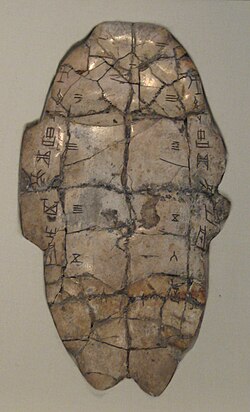
The history of Chinese writing is one of the oldest continuous traditions in the world. The earliest universally accepted forms are the oracle bone inscriptions from the Shang dynasty. These were carved into ox scapulae and turtle shells to record divinations performed by the royal family. The process involved carving a question into the bone, heating it until cracks formed, and then carving the interpreted answer into the same surface.
Following the Shang period, writing evolved into bronze script (jinwen) during the Zhou dynasty, which was used for inscriptions on ritual vessels. As the script became more regularized during the Warring States period, it eventually led to the seal script. This style was standardized under the Qin dynasty and remains in use today, primarily for artistic signature seals, or "chops." Over time, the script transitioned through various forms, including the more efficient clerical script during the Han dynasty, eventually leading to the diverse styles of calligraphy seen today, such as regular, running, and cursive scripts.
![The tomb of Fu Hao (c. 1200 BCE), containing 200 bronze vessels with 109 inscriptions of Fu Hao's name.[38]](/images/f1/1a/f11a8f54be975da5ab8537ae9a69dcddf0d3dc1395b40cf563ed23e3f9d3735f.jpg)
Evolution of Script Styles
The development of Chinese writing has produced several distinct styles used for different purposes:
- Seal Script: The oldest form still in modern use, often for seals.
- Clerical Script: A more convenient, standardized form developed during the Han dynasty.
- Regular Script: A formal, standardized style used in printing.
- Cursive and Semi-cursive Scripts: More casual, fluid styles used in calligraphy.
Structure and Layout
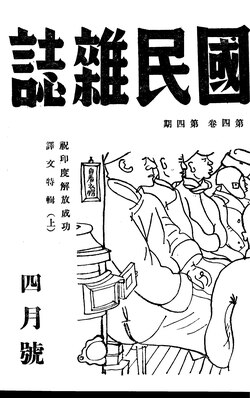
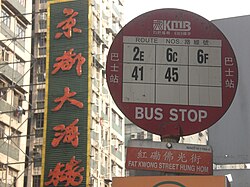
Chinese characters are constructed using specific principles. They are written from left to right, and the "frames" of the characters are typically closed last. While traditional layouts often featured vertical columns, the 20th century saw a shift toward the Western-style horizontal layout (rows from left to right, top to bottom). This was mandated in mainland China in 1955 and later followed by Taiwan for official documents in 2004, though vertical layouts remain popular for aesthetic reasons, such as on book spines or signage.
The Role of Radicals and Dictionaries
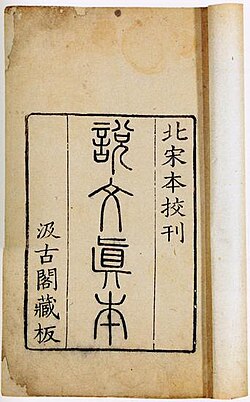
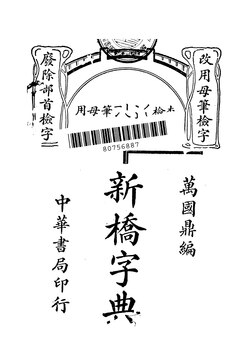
To organize the vast number of characters, traditional dictionaries use a system of radicals. These are character roots used for indexing. A canonical set of 214 radicals was established during the reign of the Kangxi Emperor around 1700. These radicals are ordered by their stroke count, providing a logical method for locating specific characters.
From Literary Chinese to the Vernacular
For over two millennia, the written standard was Literary Chinese, a formal language rooted in the classics of the Confucian era. Because it was distinct from spoken dialects, it functioned as a lingua franca, allowing speakers of mutually unintelligible varieties to communicate through writing. This state of diglossia—where a written standard differs significantly from the spoken language—changed in the early 20th century following the May Fourth Movement.
Modern written Chinese is now largely based on written vernacular Chinese, which aligns more closely with the grammar and vocabulary of Standard Mandarin. While most Chinese varieties are not written in their own vernacular, local traditions exist for written Cantonese, Shanghainese, and Hokkien.
Summary of Writing Media and Systems
| Category | Examples / Details |
|---|---|
| Historical Media | Bamboo/wooden slips, Silk, Paper |
| Phonetic Systems | Hanyu Pinyin, Bopomofo, Wade–Giles |
| Primary Script Types | Logograms (Characters) |
| Modern Standard | Written Vernacular Chinese (Mandarin-based) |
Frequently Asked Questions
How do Chinese characters represent meaning?
Chinese characters are morphosyllabic logograms. Instead of representing individual sounds like an alphabet, each character typically represents a syllable and a specific morpheme (a unit of meaning).
What is the difference between Simplified and Traditional Chinese?
While the source notes the development of simplification programs to increase literacy and ease the transition to phonetic systems, the primary distinction lies in the complexity of the character forms used in different regions and historical periods.
What are radicals in Chinese writing?
Radicals, or pianpang, are smaller components used to construct characters. They often reflect the character's meaning or pronunciation and are used as a primary method for indexing characters in dictionaries.
Why are phonetic systems like Pinyin used?
Because Chinese characters do not reliably indicate how they are pronounced, phonetic systems like Hanyu Pinyin use the Latin alphabet to transliterate the sounds, assisting students and aiding in modern communication.
Is there a single "Chinese language"?
No. There are many Sinitic varieties (such as Cantonese, Wu, and Hokkien) that can be mutually unintelligible when spoken. However, they can often communicate through a shared written standard.