Exploring the World of Tradescantia: From Garden Favorites to Scientific Wonders
The genus Tradescantia encompasses a diverse group of approximately 85 to 86 species of herbaceous perennials—plants that live for multiple years but have non-woody stems that die back to the ground each season. Known for their vibrant colors and easy growth, these plants are found throughout the Americas, ranging from southern Canada to northern Argentina, including the West Indies. Whether they are trailing gracefully from a hanging basket or providing lush ground cover in a wooded area, Tradescantia species have earned a permanent place in gardens worldwide.
Key Facts
- Scientific Family: Commelinaceae
- Native Range: The Americas, including the West Indies
- Common Names: Inchplant, spiderwort, dayflower, and wandering dude
- Growth Habit: Typically 30–60 cm (1–2 ft) tall
- Scientific Use: Used as bioindicators to detect environmental mutagens
- Pet Safety: Some species can cause skin irritation in cats and dogs
Physical Description and Characteristics
Tradescantia plants are characterized by their succulent stems, meaning they have fleshy tissues designed to store water. Their leaves are typically long, thin, and blade-like, ranging from 3 cm to 45 cm in length. The sap of the plant is clear and mucilaginous, possessing a thick, gluey consistency.
The flowers are a standout feature, appearing in shades of white, pink, purple, or blue. Most species possess three petals and six yellow anthers, though rare variations exist with four petals and eight anthers.
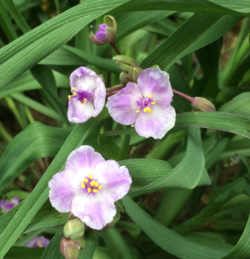
A unique trait of many species is that their flowers are "dayflowers," meaning they open in the morning and close by the evening, lasting only a single day.
Etymology and Common Names
The genus was named by Carl Linnaeus to honor the English naturalists John Tradescant the Elder and John Tradescant the Younger, both of whom were instrumental in introducing new plant species to English gardens. The type species, Tradescantia virginiana, was brought to England from the Virginia colony in 1629.
Common names for the genus vary by region. "Inchplant" likely refers to the plant's rapid growth or the short distance between leaves on the stem. "Spiderwort" is a descriptive name for the way the sap dries into web-like threads when a stem is cut. While the name "wandering Jew" has been used historically, it is considered controversial due to its religious origins; consequently, many now prefer terms like "wandering dude" or "wandering willie."
Taxonomy and Subdivisions
The classification of Tradescantia has evolved significantly. While older studies suggested different groupings, recent morphological research has led to a classification involving five distinct subgenera. As of late 2023, the Royal Botanic Gardens, Kew, recognizes 86 species within the genus.
Subgenus Austrotradescantia
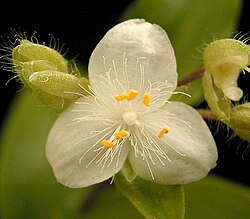
This subgenus includes various species found across different habitats, such as Tradescantia fluminensis.
Subgenus Campelia
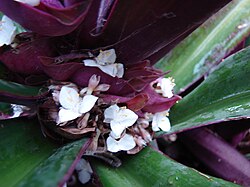
This group contains several sections, including the Tradescantia spathacea species found in the Rhoeo section.
Subgenus Setcreasea
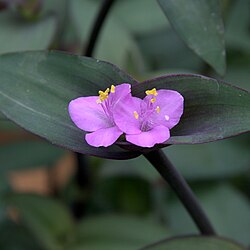
This subdivision includes species like Tradescantia brevifolia.
Distribution, Habitat, and Cultivation
While the genus is native to the Americas, it has become naturalized in many parts of the world, including Europe, Asia, Africa, and Australia. They thrive in diverse environments, from temperate and tropical habitats to wooded deciduous forests and open prairies.
| Feature | Details |
|---|---|
| Family | Commelinaceae |
| Species Count | Approximately 85–86 |
| Native Region | The Americas (Canada to Argentina) |
| Growth Habit | Herbaceous perennials |
| Primary Uses | Ornamental, Bioindicators |
In gardening, Tradescantia is split into two main cultivation styles. Temperate species, such as those in the Andersoniana Group, are grown as hardy garden perennials. This group consists of interspecific hybrids—plants created by crossing two different species—such as T. virginiana and T. ohiensis. Conversely, tropical species like T. zebrina are popular as houseplants, often valued for their variegated foliage in shades of silver, purple, and gold.
Scientific Importance and Environmental Impact
Beyond their beauty, Tradescantia species are vital to science. They serve as bioindicators, which are living organisms used to monitor the health of an environment. Specifically, the cells in the stamen hairs of certain species can detect environmental mutagens. When exposed to ionizing radiation or pollutants like sulphur dioxide, these cells mutate and change color from blue to pink, providing a visual assay for ambient radiation levels.
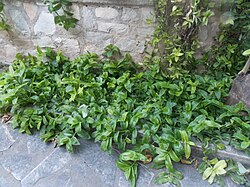
However, the plant's ease of propagation can be a double-edged sword. Because they can grow easily from stem fragments, some species, such as T. fluminensis, have become invasive weeds in Australia, New Zealand, and the southern United States. Additionally, owners should be aware that certain species, including T. spathacea and T. pallida, may cause red, itchy skin reactions in pets like cats and dogs.
Frequently Asked Questions
Are Tradescantia plants toxic to pets?
Yes, some members of the genus can cause allergic reactions in pets, particularly cats and dogs. Symptoms typically include red, itchy skin. Notable species to watch for include T. spathacea (Moses in the cradle) and T. pallida (purple heart).
Why is the genus sometimes called "spiderwort"?
The name "spiderwort" comes from the plant's unique sap. When a stem is cut, the sap dries into thin, web-like threads that resemble a spider's web.
Can Tradescantia become an invasive weed?
Yes. Due to their ability to propagate quickly from stem fragments, species like T. fluminensis can dominate the ground layer in forest environments and are considered environmental weeds in parts of Australia, New Zealand, and the southern United States.
How are these plants used in scientific research?
Tradescantia is used as a bioindicator to detect environmental mutagens. The color of the cells in their stamen hairs changes from blue to pink when exposed to pollutants or ionizing radiation, making them effective for monitoring ambient radiation levels.
What is the difference between hardy and tropical Tradescantia?
Hardy Tradescantia, such as the Andersoniana Group, are temperate perennials that can survive in outdoor gardens. Tropical species, such as T. zebrina, are typically grown as indoor houseplants or outdoor annuals in cooler climates.