Tottenham Hotspur vs West Ham United: A Century of London Rivalry
The rivalry between Tottenham Hotspur and West Ham United is a storied chapter of English football, spanning over 120 years of competition. From their humble beginnings in the late 19th century to the high-stakes drama of the Premier League era, these two London clubs have clashed in a series of matches defined by dramatic turnarounds, controversial scandals, and battles for territorial dominance in the capital.
Early Years and Foundation
The two clubs emerged from very different social backgrounds. Tottenham Hotspur was founded in 1882 by schoolboys in the Tottenham area, while West Ham United was established in 1895 by shipbuilders from the Thames Ironworks company. Their first competitive meeting took place on September 3, 1898, in the Thames and Medway League, where Spurs secured a 3–0 victory at home.
For the next decade, the teams met frequently in non-league football until Tottenham was elected to the Football League in 1908. West Ham followed suit in 1919. Their first FA Cup encounter occurred on February 21, 1920, resulting in another 3–0 win for Tottenham. However, the tide turned shortly after in the Football League's Second Division, where West Ham claimed a 2–1 home victory, though Tottenham won the return fixture 2–0.
Mid-Century Success and the 1960s Golden Era
The 1949–50 season saw Tottenham complete a league double over the Hammers, winning 1–0 at the Boleyn Ground and 4–1 at White Hart Lane. This momentum helped Spurs secure the Second Division title and a subsequent first-ever top-flight league title.
By 1958, West Ham returned to the First Division after a 32-year absence, immediately completing a league double over Tottenham on Christmas and Boxing Day with scores of 2–1 and 4–1. The 1960s marked a period of significant achievement for both clubs. Tottenham won their second top-flight title in 1961, three FA Cups, and the 1963 Cup Winners' Cup. West Ham countered with a 1964 FA Cup win and the 1965 Cup Winners' Cup.
The 1966 World Cup triumph for England featured stars from both sides: West Ham's Bobby Moore, Martin Peters, and Sir Geoff Hurst, and Tottenham's Jimmy Greaves. In a notable 1970 transaction, the clubs swapped Peters for Greaves, with Spurs paying a then-record £200,000 for Peters.
Turmoil and Transition (1970–1992)
The late 70s and 80s were characterized by volatility. Tottenham suffered a shock relegation in the 1976–77 season, only to be promoted the following year. Conversely, West Ham was relegated in 1978 but found success in cup competitions, winning the 1980 FA Cup. The two sides met in the 1986–87 League Cup quarter-finals, where Spurs dominated a replay with a 5–0 win.
The era concluded in 1991–92, the final season of the old First Division. While they split their league fixtures, West Ham finished bottom of the table, missing out on the inaugural season of the breakaway FA Premier League.
The Premier League Era and "Lasagna-gate"
West Ham returned to the top flight in 1993, and the rivalry intensified. One of the most memorable encounters occurred on February 24, 1997, a high-scoring match that West Ham won 3–2 via a Julian Dicks penalty.
However, the most infamous moment in the rivalry came on the final day of the 2005–06 season. Tottenham needed a win to secure 4th place and Champions League qualification. The night before, 10 Spurs players suffered from viral gastroenteritis (popularly known as "Lasagna-gate") after a team dinner. Despite the illness, the FA denied a postponement request. A depleted Tottenham side lost 2–1 to West Ham, allowing Arsenal to leapfrog them into the Champions League spots.

The Battle for the Olympic Stadium
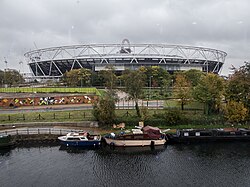
Around 2010, both clubs vied to become anchor tenants of the multi-purpose Olympic Stadium in Stratford. West Ham was initially awarded the rights in 2011, but the decision was marred by allegations of corruption and legal challenges from Tottenham. After the awarding of tenancy was cancelled in October 2011, Tottenham opted to build their own stadium, while West Ham eventually secured occupancy in 2013.
Modern Clashes and Title Implications
In recent years, West Ham has frequently acted as a "spoiler" for Tottenham's title ambitions. In the 2015–16 season, a 1–0 loss to the Hammers at Upton Park dented Spurs' hopes of winning the league. A similar pattern occurred in 2016–17, where a 1–0 defeat in Tottenham's first visit to the Olympic Stadium effectively ended their title charge.
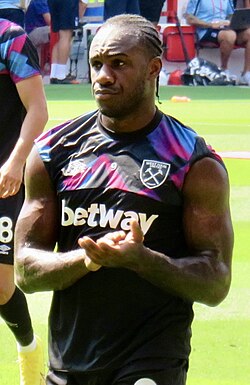
The opening of Tottenham's new stadium in 2019 saw a surprising result: Michail Antonio scored the first-ever away goal at the venue, handing Spurs their first home defeat in the new ground. More recently, the clubs have remained competitive, with West Ham finishing above Tottenham in the 2020–21 season for the first time since 2008.

Key Facts
- First Meeting: September 3, 1898 (Tottenham won 3–0).
- Record Transfer: Martin Peters moved to Spurs for £200,000 in 1970.
- Lasagna-gate: A 2006 incident where viral gastroenteritis cost Tottenham Champions League qualification.
- Stadium Rivalry: A legal and political battle over the 2012 Olympic Stadium tenancy.
- Premier League Record: West Ham held the record for most points (42) for a relegated team in a 38-game season in 2002–03.
| Era/Event | Key Outcome | Significance |
|---|---|---|
| 1960s | Both won Cup Winners' Cups | Peak of domestic and European success |
| 1970 | Peters-Greaves Swap | High-profile player exchange |
| 2006 | Lasagna-gate | Spurs miss Champions League qualification |
| 2011-2013 | Olympic Stadium Bid | West Ham secures tenancy; Spurs build own ground |
| 2019 | New Stadium Opener | Michail Antonio scores first away goal at Spurs' new home |
Frequently Asked Questions
What was "Lasagna-gate"?
It was a 2006 scandal where 10 Tottenham players suffered from viral gastroenteritis the night before a crucial final-day match against West Ham. The resulting 2–1 loss caused Tottenham to miss out on 4th place and Champions League qualification.
Who won the battle for the Olympic Stadium?
After a contentious bidding process and legal disputes, West Ham United eventually prevailed and became the regular occupants of the stadium (now the London Stadium) in 2013.
Which players have played for both clubs?
Several players have crossed the divide, including Jimmy Greaves, Martin Peters, Jermain Defoe, and most recently, Mohammed Kudus, who transferred to Tottenham in July 2025.
How did West Ham impact Tottenham's title runs?
West Ham has frequently defeated Tottenham during seasons where Spurs were title contenders, specifically causing critical losses in the 2015–16 and 2016–17 campaigns.
When did the two teams first meet?
The clubs first played against each other on September 3, 1898, in the Thames and Medway League, with Tottenham winning 3–0.