Toomas Hendrik Ilves: The Digital Architect and Former President of Estonia
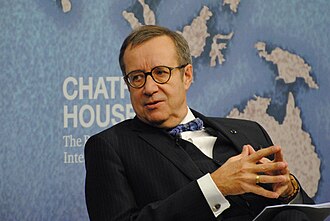
Toomas Hendrik Ilves is a distinguished Estonian politician and diplomat who served as the fourth President of Estonia from 2006 to 2016. Known for his strong advocacy for digital transformation and cybersecurity, Ilves played a pivotal role in shaping Estonia's identity as a global leader in information and communication technology (ICT).
His journey is one of international transition, moving from a childhood in the United States to the highest office in his ancestral homeland. Throughout his career, he has bridged the gap between Western democratic ideals and the evolving needs of a post-Soviet Baltic state.
Key Facts
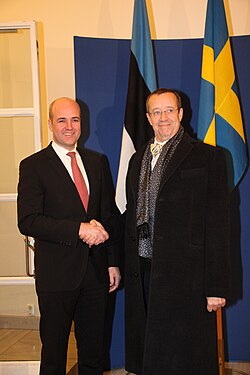
- Presidency: Served two terms as President of Estonia (2006–2016).
- Diplomatic Career: Former Ambassador to the United States, Canada, and Mexico.
- Digital Leadership: Expert in cybersecurity and blockchain, advising the World Bank and World Economic Forum.
- Education: Degrees in psychology from Columbia University and the University of Pennsylvania.
- Political Shift: Joined Volt Europa in April 2025 after years as an independent.
Early Life and Academic Foundation
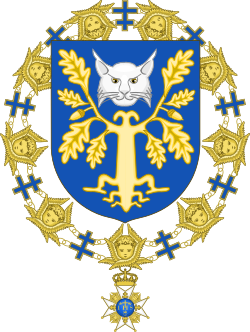
Born on December 26, 1953, in Stockholm, Sweden, Ilves was the son of refugees who fled Estonia following the Soviet occupation during World War II. In 1957, his family relocated to Leonia, New Jersey, where he spent his formative years. He graduated as valedictorian from Leonia High School in 1972.
Ilves pursued higher education in the United States, earning a bachelor's degree in psychology from Columbia University in 1976 and a master's degree in the same field from the University of Pennsylvania in 1978. A polyglot, he is fluent in Estonian, English, German, Spanish, and Latvian.
Professional Ascent and Diplomatic Career
Before entering formal politics, Ilves held various academic and journalistic roles. He worked as a research assistant at Columbia University and later taught Estonian literature and linguistics at Simon Fraser University in Canada. From 1985 to 1993, he served as a journalist for Radio Free Europe in Munich, eventually heading the Estonian desk.
Following Estonia's restoration of independence in 1991, Ilves transitioned into diplomacy. In 1993, he was appointed Ambassador of Estonia to the United States, concurrently serving as Ambassador to Canada and Mexico. To accept this role, he renounced his U.S. citizenship.
Ministerial and European Roles
Ilves served two separate tenures as the Minister of Foreign Affairs (1996–1998 and 1999–2002). During this time, he was a staunch supporter of Estonian membership in the European Union, initiating the negotiations that led to the country joining the EU on May 1, 2004.
From 2004 to 2006, he served as a Member of the European Parliament (MEP), representing the Estonian Social Democratic Party. His landslide victory in the 2004 elections solidified his standing as a prominent political figure before his ascent to the presidency.
The Presidency (2006–2016)
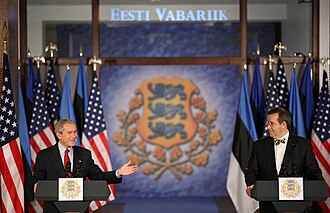
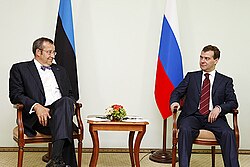
Toomas Hendrik Ilves was elected President by an electoral college on September 23, 2006, and took office on October 9. He was later re-elected by Parliament in 2011, becoming the first candidate to be elected in the first round since Estonia regained independence in 1991.
His presidency was marked by a focus on e-governance and international security. He became a global voice for cybersecurity, chairing the EU Task Force on eHealth and the European Cloud Partnership Steering Board. He also advised the World Bank and the World Economic Forum on digital dividends and blockchain technology.
Global Engagement and ICT Leadership
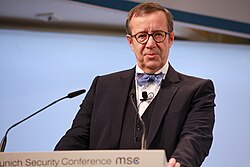
Beyond the borders of Estonia, Ilves held several high-level advisory positions. He chaired the High-Level Panel on Global Internet Cooperation and Governance Mechanisms convened by ICANN and served as a visiting fellow at Stanford University's Hoover Institution and the Center for International Security and Cooperation.
Personal Life and Interests
Ilves has been married three times and has four children. He is well-known for his passion for music, particularly rock 'n' roll. In 2015, he released a compilation album titled "Teenage Wasteland: T.H. Ilves Favourites 1963-1978", with proceeds benefiting chronically ill children in Estonian hospitals.
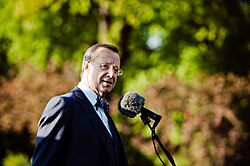
His life and career were the subject of the 2024 documentary Rebel with a Bow Tie (Kikilipsuga Mässaja), which debuted at the Tallinn Black Nights Film Festival.
Summary of Political Career
| Period | Role | Organization/Government |
|---|---|---|
| 1985–1993 | Journalist / Head of Estonian Desk | Radio Free Europe |
| 1993–1996 | Ambassador to USA, Canada, Mexico | Government of Estonia |
| 1996–1998; 1999–2002 | Minister of Foreign Affairs | Government of Estonia |
| 2004–2006 | Member of the European Parliament | European Parliament |
| 2006–2016 | 4th President of Estonia | Republic of Estonia |
| 2025–Present | Party Member | Volt Europa |
Frequently Asked Questions
How did Toomas Hendrik Ilves contribute to Estonia's digital reputation?
Ilves championed the transition to a digital society, serving in various EU and global ICT leadership roles, including chairing the European Cloud Partnership Steering Board and advising on blockchain technology.
What is Ilves's educational background?
He holds a bachelor's degree in psychology from Columbia University and a master's degree in psychology from the University of Pennsylvania.
Why did Toomas Hendrik Ilves join Volt Europa in 2025?
Ilves stated that he joined the party due to the increasing threats posed to Europe by other countries and the necessity for pragmatic reforms within the European Parliament.
Which languages does Toomas Hendrik Ilves speak?
He is fluent in Estonian, English, German, Spanish, and Latvian.
What is the significance of the album "Teenage Wasteland"?
The album is a compilation of Ilves's favorite songs from 1963-1978, released to raise money for the "My Dream Day" charity project for chronically ill children.