Tony Tan: A Legacy of Leadership and Public Service in Singapore
Tony Tan Keng Yam is a distinguished statesman who served as the 7th President of the Republic of Singapore from 2011 to 2017. With a career spanning several decades in the highest echelons of government, Tan has held nearly every major ministerial portfolio, contributing significantly to the nation's economic, educational, and security frameworks.
Before ascending to the presidency, Tan was a central figure in the People's Action Party (PAP), serving as its Chairman and as the Deputy Prime Minister. His journey from a highly educated academic to a national leader reflects a commitment to meritocracy and strategic governance.
Key Facts
- Presidency: Served as the 7th President of Singapore (September 1, 2011 – August 31, 2017).
- High Office: Former Deputy Prime Minister and Chairman of the People's Action Party.
- Ministerial Roles: Held portfolios in Finance, Trade and Industry, Education, and Defence.
- Education: Holds degrees from the University of Singapore (BS), Massachusetts Institute of Technology (MS), and University of Adelaide (PhD).
- Political Base: Member of Parliament for Sembawang SMC and later Sembawang GRC.
Early Life and Academic Foundation
Born on February 7, 1940, in the Straits Settlements, Tony Tan pursued a rigorous academic path that equipped him for complex policy-making. He earned a Bachelor of Science from the University of Singapore, followed by a Master of Science from the Massachusetts Institute of Technology (MIT) and a PhD from the University of Adelaide.
A Diverse Ministerial Career
Tan's political ascent began in 1979 when he was elected as the Member of Parliament (MP) for Sembawang SMC. Over the next two decades, he became one of Singapore's most versatile ministers, managing critical sectors of the state.
Economic and Educational Leadership
In the early 1980s, Tan served as the Minister for Finance (1983–1985) and Minister for Trade and Industry (1981–1986). He later transitioned to the Ministry of Education, serving as Minister from 1985 to 1992, where he oversaw the development of the nation's human capital.
Defence and National Security
Tan's leadership extended to national security, serving as the Minister for Defence from 1995 to 2003. He further expanded his responsibilities as the Coordinating Minister for Security and Defence from 2003 until 2005.
Deputy Prime Minister and Party Leadership
From August 1, 1995, to September 1, 2005, Tan served as the Deputy Prime Minister of Singapore. During this period, he also led the People's Action Party as its Chairman from 1993 to 2004, working closely with Prime Ministers Goh Chok Tong and Lee Hsien Loong.
The 2011 Presidential Election
In 2006, Tan transitioned to an independent political status, paving the way for his bid for the presidency. The 2011 election was a closely contested race. Tan's campaign emphasized his experience and stability, though it was not without controversy, including public heckling during his Nomination Day speech.
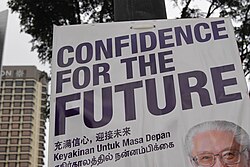
Despite the challenges, Tan secured a narrow victory, becoming the 7th President of Singapore on September 1, 2011. His election was seen as a continuation of steady leadership for the nation.

The Presidency (2011–2017)
As President, Tony Tan focused on the ceremonial and custodial roles of the office. He emphasized the importance of the President acting independently and used his platform to promote social reserves and charitable causes, such as the President's Challenge.
His term was marked by various diplomatic engagements, including meetings with global leaders and visits to countries like Switzerland and the United Kingdom. He also showed a strong interest in the arts and sciences, opening the Natural History Museum and the Singapore Pavilion at the Architecture Biennale in Venice.
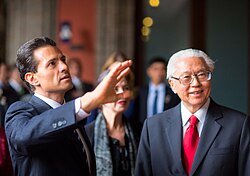
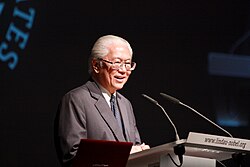
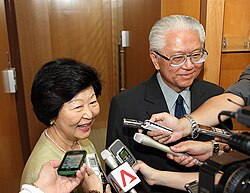
Tan's presidency concluded on August 31, 2017, after which he was succeeded by Halimah Yacob.
Summary of Political Offices
| Role | Period | Key Focus |
|---|---|---|
| President of Singapore | 2011–2017 | Head of State / Custodial Role |
| Deputy Prime Minister | 1995–2005 | National Governance |
| Minister for Defence | 1995–2003 | National Security |
| Minister for Education | 1985–1992 | Human Capital Development |
| Minister for Trade and Industry | 1981–1986 | Economic Growth |
| Minister for Finance | 1983–1985 | Fiscal Policy |
Later Life and Honors
Following his presidency, Dr. Tan returned to the financial sector, being appointed as a director and special advisor to the Government of Singapore Investment Corporation (GIC). He also maintained a strong connection to academia, serving as an honorary patron of the Singapore Management University (SMU).
Throughout his career, he received numerous accolades, including the Order of Temasek (DUT) and the Grand Cross of the Order of Merit (GCB). Internationally, he was recognized with the King Charles II Medal from the Royal Society.
Frequently Asked Questions
Who succeeded Tony Tan as President of Singapore?
Tony Tan was succeeded by Halimah Yacob on September 1, 2017.
Which political party was Tony Tan affiliated with?
He was a member of the People's Action Party (PAP) from 1979 to 2006 before becoming an independent.
What were Tony Tan's primary educational qualifications?
He holds a BS from the University of Singapore, an MS from the Massachusetts Institute of Technology, and a PhD from the University of Adelaide.
What ministerial roles did Tony Tan hold before becoming President?
He served as Minister for Finance, Trade and Industry, Education, and Defence, as well as Deputy Prime Minister.
How long did Tony Tan serve as the President of Singapore?
He served a single six-year term from September 1, 2011, to August 31, 2017.