President of the Republic of Singapore
The President of the Republic of Singapore serves as the head of state, representing the nation both domestically and internationally. Unlike the head of government, who manages daily political administration, the President occupies a non-executive role within a modified Westminster parliamentary system. While the Cabinet, led by the Prime Minister, holds primary political power, the President provides a critical layer of oversight and symbolic leadership from the official residence, The Istana.
Key Facts
- Current Incumbent: Tharman Shanmugaratnam (since September 14, 2023).
- Term Length: Six years, renewable.
- Selection Method: Direct popular election (since 1991).
- Primary Role: Head of State (non-executive).
- Annual Salary: S$1,540,000.
- Key Requirement: Must be a non-partisan Singaporean citizen.
Evolution of the Presidency
The office evolved from the Yang di-Pertuan Negara (Lord of the State), a ceremonial position created in 1959 after Singapore achieved internal self-governance from the British Empire. Following independence from Malaysia on August 9, 1965, this role was succeeded by the President of Singapore. Yusof Ishak, the last Yang di-Pertuan Negara, became the nation's first president.
Initially, the presidency was predominantly ceremonial, and holders were appointed by Parliament. This changed in 1991 with constitutional amendments that introduced custodial powers and shifted the selection process to a popular vote.
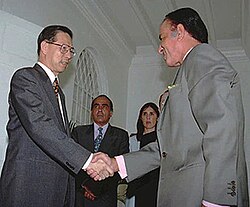
The Shift to an Elected Presidency
Ong Teng Cheong became the first president elected by popular vote in 1993. However, the government recognizes Wee Kim Wee as the first elected president because he exercised the custodial powers introduced by the 1991 amendments during his final term.
Subsequent presidents have included S. R. Nathan, who served two terms starting in 1999, and Tony Tan, who took office in 2011. Notably, Ong Teng Cheong, Tony Tan, and Tharman Shanmugaratnam are the only individuals to have served as Deputy Prime Minister before ascending to the presidency.
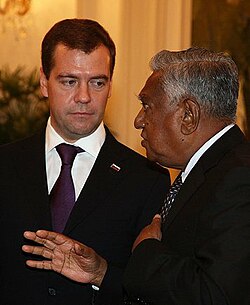
Reserved Elections and Diversity
In 2016, the Constitution was amended to introduce reserved elections. This mechanism ensures that if a specific ethnic community has not held the presidency for five consecutive terms, the election is reserved for candidates from that community. Under these terms, Halimah Yacob became the eighth president in 2017, marking the first time a woman and the first Malay person since Yusof Ishak held the office.
Constitutional Role and Powers
The President is required to remain strictly non-partisan and act above party politics. While the role is largely ceremonial, the President possesses significant custodial powers, acting as a check on the government.
One of the most critical functions is the personal discretion to approve or veto budgets and financial transactions of specific state-owned companies and statutory boards that would draw upon the nation's past reserves.
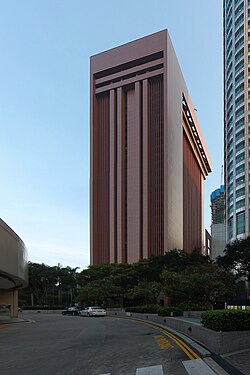
Qualifications and Restrictions
To ensure the integrity of the office, candidates must meet strict criteria. A candidate cannot be an undischarged bankrupt, cannot be found of unsound mind, and must not hold an office of profit. Furthermore, they must have held a high-level office for at least three years.
Once in office, the President is prohibited from:
- Holding any other office recognized by the Constitution.
- Actively engaging in commercial enterprises.
- Being a member of any political party.
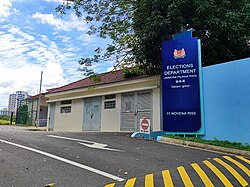
The 2023 Presidential Election
The 2023 election was the first contested ballot since 2011. Tharman Shanmugaratnam won a landslide victory, securing over 70% of the valid votes cast.
| Candidate | Votes | Percentage |
|---|---|---|
| Tharman Shanmugaratnam | 1,749,261 | 70.41% |
| Ng Kok Song | 390,636 | 15.72% |
| Tan Kin Lian | 344,584 | 13.87% |
Frequently Asked Questions
Who is the current President of Singapore?
The current president is Tharman Shanmugaratnam, who assumed office on September 14, 2023.
What is the difference between the President and the Prime Minister?
The President is the head of state and holds a non-executive, custodial role. The Prime Minister is the head of government and wields the actual political and executive power through the Cabinet.
What are reserved elections?
Reserved elections are constitutional provisions that ensure a specific ethnic community can be represented in the presidency if no member of that community has served as president in the previous five terms.
How long is a presidential term in Singapore?
The President serves a term of six years, which is renewable.
Can the President hold other jobs while in office?
Generally, the President cannot hold other constitutional offices or engage in commercial enterprises. However, a 2023 amendment allows the President to hold international positions in a private capacity if it is deemed to be in the national interest.