The Republic of Singapore: A Comprehensive Guide to the Lion City Singapore, a vibrant city-state located in Southeast Asia, is a remarkable example of rapid development and multicultural...
The Republic of Singapore: A Comprehensive Guide to the Lion City
Singapore, a vibrant city-state located in Southeast Asia, is a remarkable example of rapid development and multicultural harmony. Known for its high standard of living, advanced economy, and stunning urban landscapes, this island nation has transformed from a colonial trading post into one of the world's most influential global hubs.
Key Facts
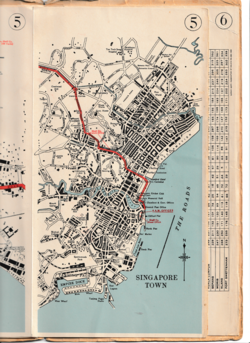
Map of the City of Singapore in 1951
Official Name: Republic of Singapore
National Motto: Majulah Singapura ("Onward Singapore")
Population: Approximately 6,110,200 (2025 estimate)
GDP per capita (PPP): $173,708 (Ranked 1st globally, 2026 estimate)
Official Languages: English, Malay, Mandarin, and Tamil
Government Type: Unitary parliamentary republic
Historical Evolution
Facing the Central Area of Singapore in 1978
The history of modern Singapore is marked by significant political shifts, moving from British colonial rule to independence. The foundation of the modern era began in 1819 when the British East India Company established a factory on the island.
Letter from William Farquhar to Sultan Muhammad Kanzul Alam, the 21st Sultan of Brunei, dated 28 November 1819. In the first line, Farquhar mentions that Sultan Hussein Shah and Temenggong Abdul Rahman allowed the British East India Company to establish a factory in Singapore on 6 February 1819.[39][40]: Letter from William Farquhar to Sultan Muhammad Kanzul Alam, the 21st Sultan of Brunei, dated 28 November 1819. In the first line, Farquhar mentions that Sultan Hussein Shah and Temenggong Abdul Rahman allowed the British East India Company to establish a factory in Singapore on 6 February 1819.[39][40]
During the mid-20th century, Singapore faced the hardships of the Japanese occupation. Following the post-war period, the nation entered a period of self-governance in 1959 and later joined the Federation of Malaysia in 1963. However, on 9 August 1965, Singapore officially proclaimed its independence, becoming a sovereign republic.
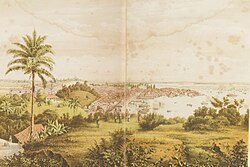
A lithograph by Vincent Brooks of Singapore City in 1865 from the former Mount Wallich: A lithograph by Vincent Brooks of Singapore City in 1865 from the former Mount Wallich
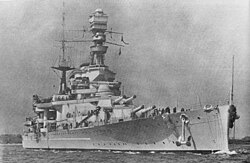
Battlecruiser HMS Repulse, one of the few capital ships sent by Churchill to Singapore to defend it: Battlecruiser HMS Repulse, one of the few capital ships sent by Churchill to Singapore to defend it
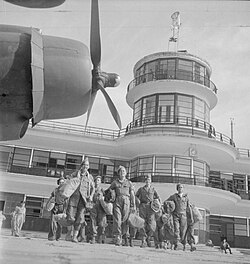
British prisoners of war evacuating in 1945 following the Japanese surrender at Kallang Airport. The airport's control tower, located near the city, has been conserved.: British prisoners of war evacuating in 1945 following the Japanese surrender at Kallang Airport. The airport's control tower, located near the city, has been conserved.
Geography and Demographics
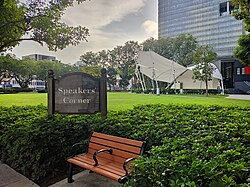
The Speakers' Corner at Hong Lim Park provides a public demonstration area, which are often restricted in other parts of the country.
Singapore is a compact island nation covering a total area of 744.3 km². Despite its small size, it is one of the most densely populated places on Earth, with a density of approximately 8,290 people per km².
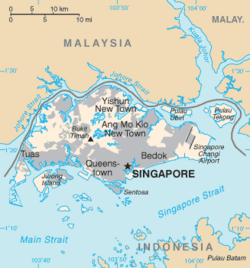
An outline of Singapore and the surrounding islands and waterways by the CIA World Factbook, c. 2005: An outline of Singapore and the surrounding islands and waterways by the CIA World Factbook, c. 2005
A Multicultural Society
The nation is defined by its diverse ethnic composition. As of 2023, the population is 74.3% Chinese, 13.5% Malay, and 9.0% Indian, with the remaining 3.2% comprising other groups. This diversity is reflected in the country's religious landscape, which includes Buddhism, Christianity, Islam, Taoism, and Hinduism.
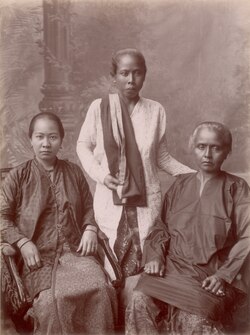
Chinese (East Asian), Malay (Southeast Asian), and Indian (South Asian) women in Singapore, c. 1890. To promote racial harmony among the three races, a unique Racial Harmony Day is celebrated on 21 July every year.: Chinese (East Asian), Malay (Southeast Asian), and Indian (South Asian) women in Singapore, c. 1890. To promote racial harmony among the three races, a unique Racial Harmony Day is celebrated on 21 July every year.
Languages
While Malay is the national language, English serves as the primary language for administration and business, spoken by 58.1% of the population. Mandarin (26.6%) and Tamil (2.2%) are also widely used.
Economy and Infrastructure
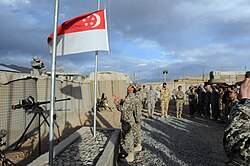
In 2007, military personnel from the Singapore Armed Forces were deployed in Afghanistan as part of a multinational coalition.
Singapore boasts one of the most robust economies in the world. It is a global leader in finance, trade, and logistics. The nation's high GDP per capita (PPP) reflects its status as a premier global economic center.
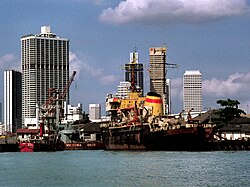
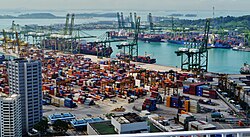
Port of Singapore viewed from The Pinnacle (2015): Port of Singapore viewed from The Pinnacle (2015)
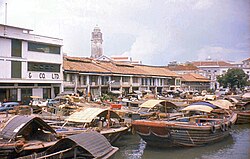
Singapore thrived as an entrepôt. In the 1960s, bumboats were used to transport cargoes and supplies between nearshore ships and Singapore River.: Singapore thrived as an entrepôt. In the 1960s, bumboats were used to transport cargoes and supplies between nearshore ships and Singapore River.
Transport and Connectivity
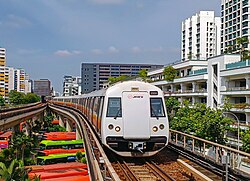
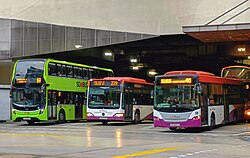
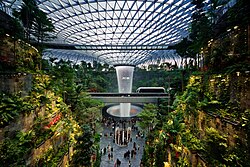
The country features highly efficient transport systems, including a comprehensive public bus network and the Mass Rapid Transit (MRT) system. For international travel, Changi Airport serves as a world-class gateway, featuring iconic attractions like the Rain Vortex.
A C151B MRT train approaching Eunos station: A C151B MRT train approaching Eunos station
Public buses in Singapore: Public buses in Singapore
The Rain Vortex at Jewel Changi Airport: The Rain Vortex at Jewel Changi Airport
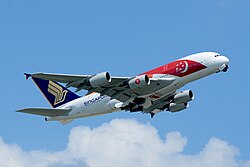
Singapore Airlines, the country's flag carrier, celebrated the nation's 2015 Golden Jubilee with a flag livery on its Airbus A380.: Singapore Airlines, the country's flag carrier, celebrated the nation's 2015 Golden Jubilee with a flag livery on its Airbus A380.
Government and Politics
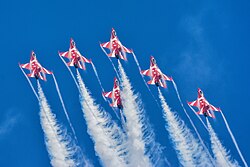
Republic of Singapore Air Force Black Knights perform at the Singapore Air Show.
Singapore operates as a unitary parliamentary republic. The government is led by a President, currently Tharman Shanmugaratnam, and a Prime Minister, Lawrence Wong. The legislative power is held by the Parliament.
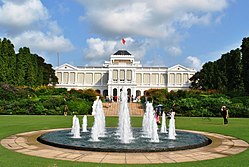
The Istana is the official residence and office of the president, as well as the working office of the prime minister.: The Istana is the official residence and office of the president, as well as the working office of the prime minister.
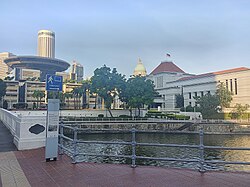
The Supreme Court (left) and Parliament House (right) where the Singapore Parliament sits: The Supreme Court (left) and Parliament House (right) where the Singapore Parliament sits
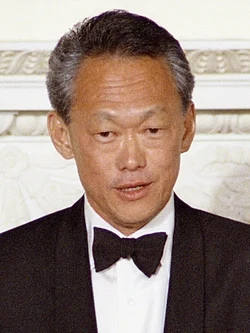
Lee Kuan Yew, the first prime minister of Singapore from 1959 to 1990: Lee Kuan Yew, the first prime minister of Singapore from 1959 to 1990
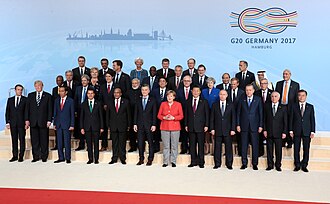
Prime Minister Lee Hsien Loong at the 2017 G20 meeting in Germany. Since 2010, Singapore has often been invited to participate in G20 processes.: Prime Minister Lee Hsien Loong at the 2017 G20 meeting in Germany. Since 2010, Singapore has often been invited to participate in G20 processes.
Culture, Tourism, and Lifestyle
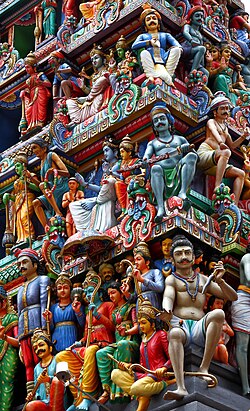
Ornate details on top of Sri Mariamman Temple in Chinatown district, Singapore's oldest Hindu temple since 1827
From historic landmarks to futuristic architecture, Singapore offers a unique blend of old and new. Visitors can explore colonial-era buildings, lush tropical gardens, and modern integrated resorts.
Landmarks and Attractions
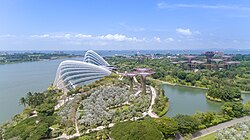
Gardens by the Bay: A futuristic nature park.
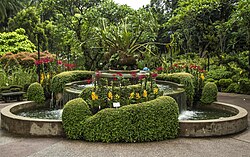
Singapore Botanic Gardens: A UNESCO World Heritage Site.
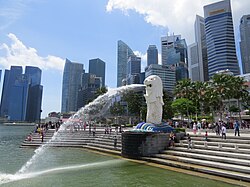
The Merlion: The official mascot of the nation.
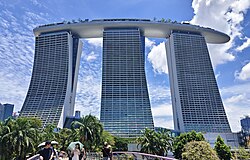
Marina Bay Sands: A world-renowned integrated resort.
Singapore Botanic Gardens is a UNESCO World Heritage Site – one of three gardens in the world, and the only tropical garden, to be recognised as such.: Singapore Botanic Gardens is a UNESCO World Heritage Site – one of three gardens in the world, and the only tropical garden, to be recognised as such.
Gardens by the Bay: Gardens by the Bay
The Marina Bay Sands, one of Singapore's two integrated resorts: The Marina Bay Sands, one of Singapore's two integrated resorts
The Merlion, the official mascot of Singapore: The Merlion, the official mascot of Singapore
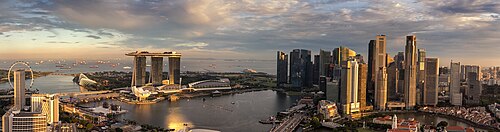
Skyline of Singapore's Downtown Core: Skyline of Singapore's Downtown Core
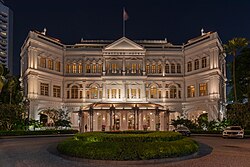
Raffles Hotel: Raffles Hotel
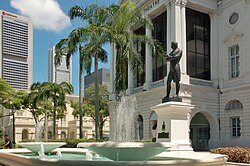
The Victoria Theatre: The Victoria Theatre
Arts and Cuisine
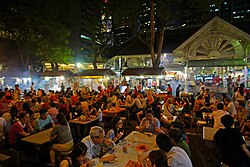
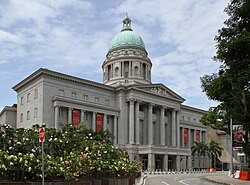
The nation's culinary scene is famous for its hawker centres—open-air food courts that offer a wide variety of local dishes. The arts are also highly celebrated, with institutions like the National Gallery Singapore housing vast collections of Southeast Asian art.
Lau Pa Sat hawker centre in the financial district. Satay cart-stalls roll in after dusk, on a side street.: Lau Pa Sat hawker centre in the financial district. Satay cart-stalls roll in after dusk, on a side street.
The National Gallery Singapore oversees the world's largest public collection of Singaporean and Southeast Asian art.: The National Gallery Singapore oversees the world's largest public collection of Singaporean and Southeast Asian art.
Sports and Education
Singapore places a strong emphasis on education and physical excellence, producing world-class athletes and maintaining high-ranking educational institutions.
Joseph Schooling is a gold medalist and Olympic record holder at the Rio 2016 Games – 100 m butterfly.[531]: Joseph Schooling is a gold medalist and Olympic record holder at the Rio 2016 Games – 100 m butterfly.[531]
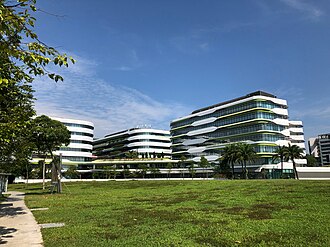
Singapore University of Technology and Design (SUTD) campus: Singapore University of Technology and Design (SUTD) campus
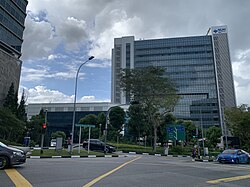
National University Hospital is the second largest hospital in the city, serving one million patients yearly.: National University Hospital is the second largest hospital in the city, serving one million patients yearly.
Summary of National Statistics
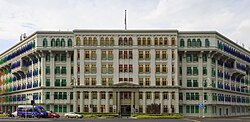
The Ministry of Communications and Information oversees the development of infocomm, media and the arts.
Singapore Key Indicators (2025-2026 Estimates)
Category
Metric
Value
Population
Total Estimate
6,110,200
Economy
GDP (PPP) Total
$1.063 trillion
Economy
GDP (Nominal) Total
$659.572 billion
Demographics
Chinese Population %
74.3%
Demographics
Malay Population %
13.5%
Demographics
Indian Population %
9.0%
Frequently Asked Questions
What is the official language of Singapore?
Singapore has four official languages: English, Malay, Mandarin, and Tamil. Malay is designated as the national language.
When did Singapore gain independence?
Singapore officially proclaimed its independence as a republic on 9 August 1965.
What is the currency used in Singapore?
The official currency is the Singapore dollar (S$), abbreviated as SGD.
How diverse is the population of Singapore?
Singapore is highly multicultural, with the largest ethnic group being Chinese (74.3%), followed by Malay (13.5%) and Indian (9.0%).
What is the main religion in Singapore?
The largest religious group is Buddhist (30.9%), followed by those with no religion (23.9%), Christians (17.1%), and Muslims (15.0%).
![Letter from William Farquhar to Sultan Muhammad Kanzul Alam, the 21st Sultan of Brunei, dated 28 November 1819. In the first line, Farquhar mentions that Sultan Hussein Shah and Temenggong Abdul Rahman allowed the British East India Company to establish a factory in Singapore on 6 February 1819.[39][40]](/images/1f/fc/1ffc5c8159b4627d90fefe78576b4aadbec2dab0d20f395516cb3e073fe21222.jpg)
![Joseph Schooling is a gold medalist and Olympic record holder at the Rio 2016 Games – 100 m butterfly.[531]](/images/fb/86/fb86c5316adbff9cf92d945b3dc4b43117aa0e9ac10f10b7657ca85bf64735c3.jpg)