Tiphiid Wasps: Nature's Specialized Parasitoids
In the complex world of insect ecology, few groups play a role as specialized as the Tiphiidae. Commonly known as tiphiid wasps or flower wasps, these large, solitary insects are defined by their unique relationship with beetle larvae. While they may appear as simple inhabitants of flowering landscapes, they are actually highly efficient predators that serve a vital role in regulating insect populations.
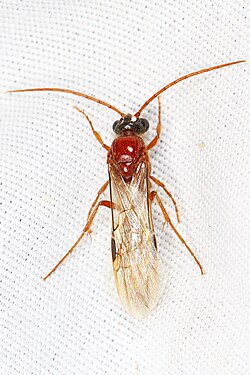
Biological Role and Life Cycle
Tiphiid wasps are classified as parasitoids. Unlike a standard predator that simply eats its prey, a parasitoid develops inside or on a host, eventually killing it. The primary targets for tiphiid larvae are the larvae of various beetles, particularly those belonging to the superfamily Scarabaeoidea (which includes scarab beetles).
The hunting process is highly specialized. In certain subfamilies, such as the Brachycistidinae, the females are wingless and hunt fossorial (ground-dwelling) beetle larvae. The female locates the prey underground, uses her sting to paralyze the beetle larva, and then lays an egg on it. This ensures that when the wasp larva hatches, it has a fresh, living food supply to sustain its development.
Because many scarab species are considered agricultural or garden pests, these wasps are often viewed as beneficial biological control agents, helping to manage beetle populations naturally.
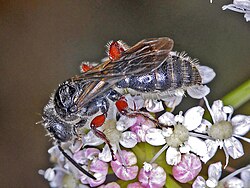
Key Facts
- Common Names: Tiphiid wasps, flower wasps, or tiphiid flower wasps.
- Primary Prey: Larvae of beetles, specifically within the Scarabaeoidea superfamily.
- Lifestyle: Solitary wasps that act as parasitoids.
- Ecological Value: Act as natural biological control agents against pest beetles.
- Specialized Traits: Some females in the Brachycistidinae subfamily are wingless to facilitate hunting in soil.
Taxonomy and Classification
The scientific classification of Tiphiidae has undergone refinement through recent studies. While the family once included several additional subfamilies, modern research has confirmed that those lineages belong to a separate family known as Thynnidae.
Subfamily Brachycistidinae
This subfamily includes several genera, such as Acanthetropis, Brachycistellus, and Stilbopogon. Members of this group are often noted for their specialized hunting methods in subterranean environments.
Subfamily Tiphiinae
The Tiphiinae subfamily contains a wide variety of genera, including the well-known Tiphia. Notable examples within this group include Tiphia femorata and Tiphia minuta.
| Rank | Classification |
|---|---|
| Kingdom | Animalia |
| Phylum | Arthropoda |
| Class | Insecta |
| Order | Hymenoptera |
| Superfamily | Tiphioidea |
| Family | Tiphiidae |
Frequently Asked Questions
Are tiphiid wasps dangerous to humans?
Tiphiid wasps are solitary wasps that use their sting primarily to paralyze beetle larvae for their offspring. While they possess a sting, their primary biological focus is on their specific insect hosts.
What is the difference between a predator and a parasitoid?
A predator typically kills and consumes its prey immediately. A parasitoid, like the tiphiid wasp, lays eggs on or in a host, and the developing larva consumes the host over time, eventually resulting in the host's death.
Why are they called "flower wasps"?
The name "flower wasps" refers to their presence in flowering environments, though their most significant biological impact occurs through their role as parasitoids of beetle larvae.
How do they help gardeners and farmers?
They act as biological control agents. By parasitizing the larvae of scarab beetles—many of which are significant agricultural pests—they help keep pest populations in check naturally.
Are all tiphiid wasps wingless?
No. While some females within the subfamily Brachycistidinae are wingless to assist in hunting ground-dwelling larvae, many other species and genera within the family possess wings.