Thomas Garnett: The Life of an English Physician and Natural Philosopher
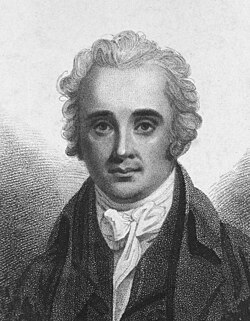
Thomas Garnett was a distinguished English physician and natural philosopher—a term used historically to describe a scientist who studied the laws of nature. Born on 21 April 1766 in Casterton, Westmoreland, Garnett's life was marked by a profound dedication to scientific inquiry, a passion for teaching, and a series of personal tragedies that shaped his professional trajectory.
Garnett's academic journey began at Sedbergh School, followed by an apprenticeship at age fifteen under John Dawson, a surgeon and mathematician in Sedbergh, Yorkshire. This early mentorship provided him with a foundational knowledge of physics and chemistry, which he expanded upon upon matriculating at the University of Edinburgh in 1785. He was noted for his exceptional scientific knowledge and was a devoted student of Dr. Black and Dr. John Brown, eventually becoming a disciple of the Brunonian theory, a medical system based on the concept of excitability.
Professional Career and Scientific Contributions
After graduating in 1788 and completing his medical training in London, Garnett contributed a treatise on optics to the Encyclopædia Britannica. He spent the early 1790s practicing medicine in Bradford, Knaresborough, and Harrogate. While in Harrogate, he achieved a notable scientific milestone by publishing the first scientific analysis of the local mineral waters.
A pivotal shift in his career occurred in 1795. While in Liverpool, a chance invitation to lecture on natural philosophy proved highly successful. This success led to a series of lectures in Manchester and eventually an appointment as a professor at Anderson's Institution in Glasgow. During his time in Scotland, Garnett became a prominent figure as both a physician and a lecturer. In 1810, the Garnethill Observatory was founded in Glasgow's Blythswood Hill district on land named in his honor by developer William Harley.
The Highland Tour and Botanical Insights
In 1798, Garnett undertook an extensive tour of the Scottish Highlands. His account of this journey, published in 1800, served as a valuable record of the region. Notably, his writings in this work anticipated modern theories regarding a quasi-intelligence in plants, demonstrating his sagacious approach to the natural world.
Challenges at the Royal Institution
In October 1799, Garnett was appointed professor of natural philosophy and chemistry at the prestigious Royal Institution. However, this period was marred by personal grief; his wife, Catharine Grace Cleveland, had died in December 1798 while giving birth to their daughter. This loss led to a deep depression that hindered his performance.
Garnett struggled to connect with the popular audiences at the institution. His lectures were highly technical and delivered with a north-country accent and a lack of vitality due to ill health. These lectures were later published posthumously in 1804 as Zoonomia, or the Laws of Animal Life. Despite their clarity and depth of knowledge, they were deemed too specialized for the general public of the time.
Final Years and Legacy
After resigning from the Royal Institution, Garnett returned to medical practice in London. While he was beginning to find success once more, his life was cut short on 28 June 1802. He died of typhus fever, which he contracted while working at the Marylebone Dispensary.
Garnett was buried in St James's Burial Ground in Euston, London. His remains, including his gravestone and coffin plate, were rediscovered during archaeological excavations for the HS2 rail line. He is remembered as an amiable man who, while perhaps not a primary discoverer of new laws, possessed a keen ability to observe and synthesize the ideas of others.
Key Facts
- Born: 21 April 1766, Casterton, Westmoreland.
- Died: 28 June 1802, London (Typhus fever).
- Education: University of Edinburgh (Graduated 1788).
- Major Works: Zoonomia, or the Laws of Animal Life and Observations on a tour through the Highlands.
- Key Achievement: Published the first scientific analysis of Harrogate waters.
- Academic Roles: Professor at Anderson's Institution (Glasgow) and the Royal Institution (London).
| Period/Year | Location | Key Activity/Achievement |
|---|---|---|
| 1785–1788 | Edinburgh | Medical studies and adoption of Brunonian theory |
| 1790–1791 | Harrogate | First scientific analysis of Harrogate waters |
| 1795–1798 | Glasgow | Professor at Anderson's Institution |
| 1798 | Scottish Highlands | Conducted a detailed tour of the Highlands and Isles |
| 1799–1801 | London | Professor at the Royal Institution |
Frequently Asked Questions
What was Thomas Garnett's primary area of expertise?
Thomas Garnett was an expert in both medicine and natural philosophy, with specific contributions to optics, chemistry, and the study of animal life.
What is the significance of the work Zoonomia?
Published in 1804, Zoonomia, or the Laws of Animal Life contains Garnett's lectures from the Royal Institution. While too technical for the general public at the time, the work is noted for its clarity and depth of scientific knowledge.
How did Garnett contribute to the study of botany?
In his account of his Highland Tour, Garnett included observations that anticipated the modern scientific theory of quasi-intelligence in plants.
What caused the decline of his tenure at the Royal Institution?
His tenure was affected by severe depression following the death of his wife, as well as a delivery style and technical depth that did not align with the expectations of a popular audience.
How was Thomas Garnett's burial site rediscovered?
His gravestone and coffin plate were found during archaeological excavations at the former St James's Burial Ground in London during the preparatory phases of the HS2 rail line project.