Thomas Cavalier-Smith and the Evolution of Biological Classification
Thomas Cavalier-Smith (1942–2021) was a distinguished professor of evolutionary biology at the University of Oxford whose work fundamentally challenged and reshaped how scientists categorize the diversity of life. A prolific taxonomist, he spent his career refining the system of classification for all organisms, with a particular focus on protists—unicellular eukaryotes that often defy simple categorization.
Cavalier-Smith was known for his courage in utilizing narrative-driven evolutionary theories, reminiscent of Charles Darwin, rather than relying solely on the rigid frameworks of cladistics (a method of classifying organisms based on shared derived characteristics). While his frequent revisions and bold pronouncements often sparked debate within the scientific community, his willingness to grapple with complex cellular details led to the discovery of several new organisms and the proposal of major taxonomic groups.
Key Facts
- Primary Focus: Specialized in zoology and the classification of protists and eukaryotes.
- Major Proposals: Introduced the kingdom Chromista and groups such as Opisthokonta, Rhizaria, and Excavata.
- Academic Career: Held professorships at the University of British Columbia and the University of Oxford.
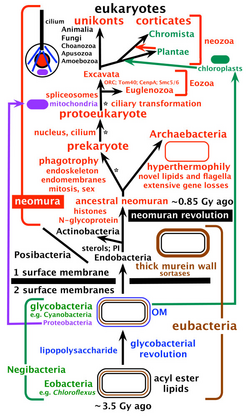
- Root of Life: Proposed that the last universal common ancestor was a Gram-negative "negibacterium."
- Honors: Recipient of the International Prize for Biology (2004) and the Linnean Medal (2007).
Life and Academic Journey
Born in London on October 21, 1942, Cavalier-Smith pursued his early education at Norwich School before earning an MA in Biology from Gonville and Caius College, Cambridge. He later completed his PhD in Zoology at King's College London under the supervision of Sir John Randall, focusing his thesis on organelle development (the formation of specialized subunits within a cell) in Chlamydomonas reinhardii.
His professional trajectory took him from a guest investigation at Rockefeller University to a lectureship in biophysics at King's College London. By the 1980s, he began promoting novel views on taxonomic relationships. He served as Professor of Botany at the University of British Columbia in 1989 before joining the University of Oxford in 1999, where he became a Professor of Evolutionary Biology in 2000.
The Evolution of Kingdom Models
Cavalier-Smith is perhaps best known for his iterative attempts to organize all life into a coherent kingdom-based system. His models evolved as new biological evidence emerged.
The Eight Kingdoms Model
In 1981, he proposed an eight-kingdom system to replace the traditional Five Kingdom model. By 1993, this had evolved to include Eubacteria, Archaebacteria, Archezoa, Protozoa, Chromista, Plantae, Fungi, and Animalia. A key part of this era was the Archezoa hypothesis, which suggested that certain protists lacking mitochondria represented a primitive stage of eukaryogenesis (the origin of eukaryotes).
The Six Kingdoms Model
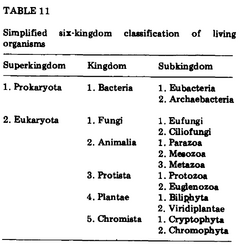
By 1998, he simplified his classification into six kingdoms: Animalia, Protozoa, Fungi, Plantae, Chromista, and Bacteria. In this framework, he divided eukaryotes into Unikonts (primarily heterotrophs like animals and fungi) and Bikonts (primarily photosynthetic organisms like plants and chromists).
The Seven Kingdoms Model
In a 2015 revision published in PLOS ONE, Cavalier-Smith and his collaborators reintroduced the division of prokaryotes into two distinct kingdoms: Bacteria and Archaea, aligning his work with the broader scientific consensus found in the Catalogue of Life.
Major Taxonomic Contributions
Cavalier-Smith's most significant contribution was the proposal of the kingdom Chromista. He argued that these organisms shared a single endosymbiotic event—where a cell engulfs another organism to form a symbiotic relationship—to acquire plastids containing chlorophylls a and c.
Beyond Chromista, he introduced several influential groupings:
- Opisthokonta: Grouping animals and fungi.
- Rhizaria and Excavata: New groupings for various protist lineages.
- Chromalveolata: A broad clade uniting various photosynthetic and heterotrophic lineages.
In the realm of animal classification, he recognized 23 phyla and created three new ones: Acanthognatha, Brachiozoa, and Lobopoda.
Summary of Career and Achievements
| Category | Details |
|---|---|
| Education | Cambridge (MA), King's College London (PhD) |
| Key Institutions | University of Oxford, University of British Columbia, King's College London |
| Major Awards | Fellow of the Royal Society, International Prize for Biology, Linnean Medal, Frink Medal |
| Key Concept | Kingdom Chromista and the Bikont/Unikont split |
| Proposed Ancestor | Gram-negative "negibacterium" |
Frequently Asked Questions
What was the Chromista kingdom?
The Chromista was a proposed kingdom of eukaryotes that Cavalier-Smith argued were monophyletic, meaning they descended from a common ancestor that acquired plastids with chlorophylls a and c through a single endosymbiotic event.
How did Cavalier-Smith's approach differ from cladistics?
Unlike cladists, who use a strict nested series of falsifiable propositions to determine relationships, Cavalier-Smith relied on evolutionary narratives and a broad synthesis of morphological and cellular data.
What is the "negibacterium" hypothesis?
In 2006, Cavalier-Smith proposed that the last universal common ancestor (LUCA) of all life was a non-flagellate, Gram-negative bacterium with two membranes, which he termed a "negibacterium" or diderm bacterium.
Why was his work considered controversial?
His work was often debated because he published rapidly and frequently amended the composition of his taxa without changing their names, which some peers found confusing or lacking in reproducible methodology.
What are Unikonts and Bikonts?
These are high-level eukaryotic groupings proposed by Cavalier-Smith; Unikonts are generally heterotrophic organisms (like animals and fungi), while Bikonts are primarily photosynthetic (like plants and chromists).