The World: Conceptualizing Reality Across Science, Philosophy, and History
At its most fundamental level, the world is defined as the totality of all entities, the whole of reality, or everything that exists. While this seems straightforward, the nature of the world is conceptualized differently depending on the field of study. Some perspectives view the world as a unique, single object, while others propose a plurality of worlds or analyze it as a complex system composed of various parts.
From the vast reaches of scientific cosmology to the intimate reflections of phenomenology, the definition of the world shifts to accommodate different goals of understanding. Whether viewed as a physical space, a mental representation, or a historical progression, the world remains the central subject of human inquiry.
Key Facts
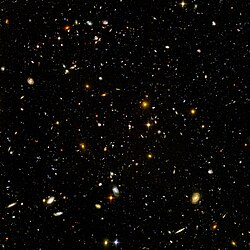
- Scientific Definition: In cosmology, the world (or universe) is the totality of all space and time, encompassing everything that was, is, and will be.
- Philosophical Range: Concepts range from monism (the world as one simple object) to pluralism (the existence of multiple worlds).
- Modal Theory: Distinguishes between possible worlds (ways things could have been) and impossible worlds (contradictory states that could not be).
- Historical Frameworks: World history utilizes global viewpoints, focusing on interaction zones and long-term developments like the Industrial Revolution.
- Political Scope: World politics examines transnational issues, including the roles of nation-states, multinational corporations, and NGOs.
Philosophical and Scientific Perspectives
Scientific Cosmology
In the realm of science, the world is often synonymous with the universe. It is defined as the sum of all space and time. This perspective seeks to understand the physical laws and the chronological progression of the totality of existence.
Theories of Modality
Modality explores the nature of possibility. Possible worlds are described as complete and consistent ways the world could have been. Conversely, impossible worlds involve logical contradictions—for example, a world where a single candidate both won and lost the same election. Despite these differences, both are treated as totalities of their respective constituents.
Phenomenology and the Mind
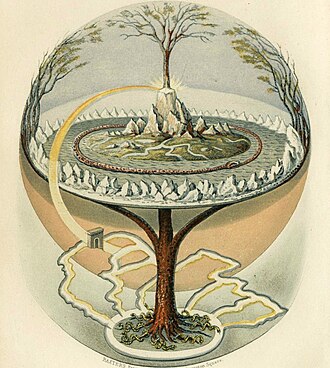
Phenomenology defines the world as the "horizon of all horizons," starting from the objects present in the periphery of human experience. In the philosophy of mind, a clear distinction is made between the world and the mind; the world is that which is represented by the mind.
Historical Philosophical Views
Different eras have produced vastly different definitions. In the 1920s, Ludwig Wittgenstein famously stated in his Tractatus Logico-Philosophicus that "the world is everything that is the case." Other thinkers, such as Plato, explored the imperfection of the sensible world in relation to higher forms.
World History and Global Dynamics
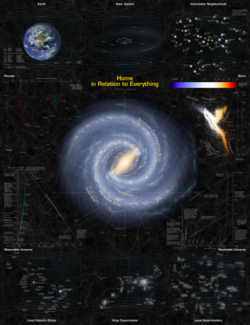
World history differs from traditional history by employing a global viewpoint. Rather than focusing on individual nations, it examines wider regions, zones of interaction, and the movement of people, goods, and ideas.
Research Paradigms in History
Contemporary world history is generally organized around three main paradigms:
- Human-Nature Relations: This focuses on productive shifts, such as the Neolithic Revolution (agriculture and husbandry, c. 10,000–8,000 BCE) and the Industrial Revolution (c. 1760 CE).
- Culture and Religion: Based on Karl Jaspers' theory of the Axial Age (800–200 BCE), a period when new religious and philosophical thoughts emerged independently across the globe.
- Civilizational Relations: This divides history by dominant regions: Middle Eastern dominance (before 500 BCE), Eurasian balance (until 1500 CE), and Western dominance (since 1500 CE).
Beyond this, Big History expands the framework even further, tracing the narrative from the Big Bang through the formation of galaxies and the evolution of life to the present day.
World Politics and International Relations
World politics, or international relations, is the study of issues that transcend national and continental borders. It analyzes patterns of power, order, and justice within the context of globalization. This field looks beyond nation-states to include transnational actors such as non-governmental organizations (NGOs), terrorist groups, and multinational corporations to explain global events like the 2008 financial crisis.
Summary of World Conceptions
| Field | Primary Definition/Focus | Key Concept |
|---|---|---|
| Cosmology | Totality of space and time | The Universe |
| Modality | Ways things could or could not be | Possible/Impossible Worlds |
| Phenomenology | The biggest horizon of experience | Horizon of Horizons |
| World History | Global interactions and long-term trends | Big History / Axial Age |
| World Politics | Transnational issues and power | Globalization |
Frequently Asked Questions
What is the difference between a possible world and an impossible world?
A possible world is a consistent way that reality could have existed. An impossible world contains a logical contradiction, representing a state of affairs that could not possibly exist.
How does Big History differ from World History?
While world history focuses on global human interactions and civilizations, Big History uses a much wider lens, beginning with the Big Bang and including the geological and biological evolution of the universe.
What was the Axial Age?
The Axial Age, a concept proposed by Karl Jaspers, refers to the period between 800 and 200 BCE when significant new religious and philosophical movements emerged simultaneously in different parts of the world.
What are the main actors in world politics?
World politics considers not only nation-states but also transnational actors, including multinational corporations, non-governmental organizations (NGOs), and terrorist groups.
How did Ludwig Wittgenstein define the world?
In his 1921 work Tractatus Logico-Philosophicus, Wittgenstein defined the world as "everything that is the case."