Pantheism: The Philosophy of Divine Unity and Nature
Pantheism is a diverse family of philosophical and religious beliefs that equate the totality of reality with divinity. Rather than viewing God as a separate, supernatural creator, pantheists believe that the universe itself—often referred to as Nature or the cosmos—is a self-organizing unity. For those who hold these views, the universe is not merely a creation of the divine, but is the divine itself.
This perspective allows practitioners to address the cosmos with a sense of reverence and dulia (veneration) similar to that which theists attribute to a personal god, though pantheism explicitly rejects the notion of an anthropomorphic or distinct personal deity.
![Pantheists believe that the universe itself and everything in it form a single, all-encompassing deity.[11][12]](/images/8d/79/8d791e1fd1c39a336a1986dea7d07c2cec2e486b7d4c7b376086c8ae8c9a504c.jpg)
Key Facts
- Core Belief: The universe and divinity are identical; there is no separate creator.
- Distinction: Unlike panentheism, which sees God as greater than the universe, pantheism equates the two.
- Historical Roots: While concepts are ancient, the term was first used in English around 1702.
- Key Figure: Baruch Spinoza is one of the most influential philosophers associated with pantheistic thought.
- Modern Form: Naturalistic pantheism focuses on metaphysical naturalism and environmental ethics.
Defining Pantheism and Its Distinctions
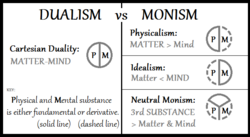
At its heart, pantheism is a form of monism—the philosophical view that a variety of existing things can be explained in terms of a single substance or principle. In this context, the "single substance" is the universe.
It is important to distinguish pantheism from panentheism. While pantheism claims that the universe is God, panentheism maintains that the divine is an entity greater than the universe, out of which the universe arises. Pantheism removes the boundary between the creator and the created, merging them into one all-encompassing reality.
Historical Evolution
Early Terminology and the 18th Century
One of the earliest recorded uses of the term dates back to the mathematician Joseph Raphson in 1697. The term entered the English language via a translation of Raphson's work in 1702 and was later popularized by the Irish writer John Toland in his 1705 work, Socinianism Truly Stated, by a Pantheist.
Toland, influenced by the works of Bruno and Spinoza, used "pantheist" and "Spinozist" interchangeably. In his 1720 work, Pantheisticon, Toland envisioned a society based on the belief that "All things in the world are one, and one is all in all things," identifying this singular essence as an eternal and immense God.
The Influence of Baruch Spinoza
The philosophy of Baruch Spinoza remains a cornerstone of pantheistic thought. Spinoza's rejection of a providential, personal god in favor of a single, infinite substance that encompasses all of existence has led many commentators to regard his work as the definitive expression of pantheism.
![The philosophy of Baruch Spinoza is often regarded as pantheism.[13][35]](/images/2c/78/2c7897cd16d9cce6b8eb10772692f509e43ae6aae2e39cb013c55a5cb264919a.jpg)
19th and 20th Century Perspectives
Pantheistic ideas continued to influence prominent figures into the modern era. For example, a letter from 1886 written by William Herndon, the law partner of Abraham Lincoln, suggests that the U.S. President's evolving religious views included elements of pantheism.
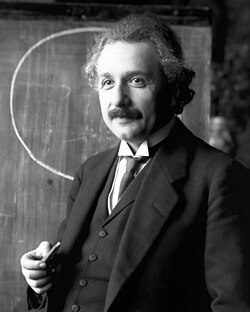
In the 20th century, some commentators have categorized Albert Einstein as a pantheist, noting his reverence for the harmony and structure of the cosmos without belief in a personal deity.
Modern Movements and Demographics
Contemporary Organizations
In the late 20th century, pantheism saw a resurgence through new religious movements and modern spirituality, including Neopaganism and Theosophy. Two notable organizations emerged during this time:
- The Universal Pantheist Society (est. 1975): An inclusive organization supportive of various pantheistic views and environmental causes.
- The World Pantheist Movement (est. 1999): Led by Paul Harrison, this group promotes naturalistic pantheism, a version of the belief rooted in strict metaphysical naturalism and "dark green religion," which emphasizes environmental ethics.
Global Prevalence and Demographics
Census data from the early 21st century indicates that the United Kingdom has had one of the highest numbers of self-identified pantheists. In Canada, the population grew from approximately 1,000 people (0.003%) in 2011 to 1,855 (0.005%) by 2021.
Demographic trends in Canada suggest that pantheists are more likely to be in their 20s and 30s than the general population. Additionally, 2021 data shows that 90.3% of Canadian pantheists do not belong to a recognized minority group. Gender distribution varies by region; for instance, 2011 data from Ireland showed a slight female majority, while 2021 Canadian data showed a slight male majority (51.5%).

| Country | Number of Pantheists | Percentage of Population | Year |
|---|---|---|---|
| Australia | 1,394 | 0.006% | 2011 |
| Canada | 1,855 | 0.005% | 2021 |
| Ireland | 1,940 | 0.04% | 2011 |
| New Zealand | 366 | 0.009% | 2006 |
| United Kingdom (Eng/Wales) | 2,216 | 0.004% | 2011 |
| Uruguay | 790 | 0.02% | 2006 |
Frequently Asked Questions
What is the difference between pantheism and panentheism?
Pantheism believes that the universe and God are identical—the universe is God. Panentheism believes that God encompasses the universe but also extends beyond it, meaning the universe is in God, but God is greater than the universe.
Does pantheism believe in a personal God?
No. Pantheism does not recognize a distinct personal god, whether anthropomorphic (human-like) or otherwise. Instead, it views divinity as the totality of existence.
Who is Baruch Spinoza?
Baruch Spinoza was a philosopher whose work is often regarded as the foundation of modern pantheism. He proposed that there is only one substance in the universe, which he identified as God or Nature.
What is naturalistic pantheism?
Naturalistic pantheism is a version of pantheism that rejects supernaturalism entirely. It is based on metaphysical naturalism and often focuses on environmental ethics and the scientific understanding of the cosmos.
Is pantheism a religion or a philosophy?
It can be both. While it began as a philosophical framework for understanding reality and divinity, it has evolved into a spiritual path for many, with organized movements like the World Pantheist Movement providing a religious structure.