Baruch Spinoza: The Radical Philosopher of the Enlightenment
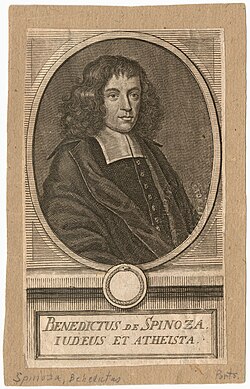
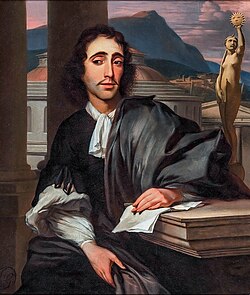
Baruch Spinoza, also known by his Latin name Benedictus de Spinoza, was a titan of 17th-century Western philosophy. Born in the Dutch Republic, Spinoza emerged as a central figure of the Age of Enlightenment, challenging the traditional boundaries of religion, ethics, and metaphysics. His commitment to reason and logical rigor led him to develop a philosophical system that viewed the universe as a single, infinite substance, fundamentally altering how humanity perceives the relationship between God and Nature.
Key Facts
- Lifespan: Born in Amsterdam; died February 21, 1677, in The Hague at age 44.
- Core Philosophy: A proponent of Rationalism and Substance Monism (the belief that only one substance exists).
- Major Works: Ethics, Tractatus Theologico-Politicus, and Tractatus Politicus.
- Key Conflict: Famously excommunicated from the Portuguese-Israelite community of Amsterdam in 1656.
- Legacy: Influenced modern thinkers from Hegel to Albert Einstein.
Early Life and Education
Spinoza was raised in the Portuguese-Israelite community of Amsterdam. He received his early education at the Talmud Torah, where he studied Hebrew and Jewish scripture. However, his intellectual curiosity soon led him beyond traditional religious instruction. He was influenced by the provocative ideas of Uriel da Costa and later attended the University of Leiden, though he did not graduate with a degree.
![The Moses and Aaron Church now stands at the site of Spinoza's childhood home.[26]](/images/57/39/57390d381b2fbb6d18fa0bd38ceea118187bc30888714fb258826d44ec595eb6.jpg)
As Spinoza's views diverged from the orthodox beliefs of his community, he faced increasing scrutiny. His intellectual journey is often depicted in art as a transition from traditional study to independent inquiry.
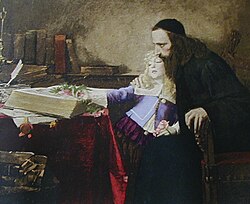
The Great Rupture
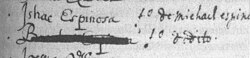
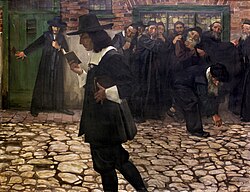
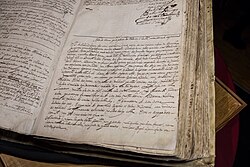
The tension between Spinoza's rationalist inquiries and the religious authorities culminated in 1656. On 6 Av 5416 (July 27, 1656), Spinoza was issued a formal decree of expulsion, or excommunication, from the Jewish community. This act was a result of his perceived heresies and his refusal to adhere to communal dogma.
Philosophical Career and Later Years
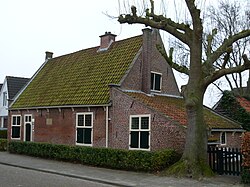
Following his excommunication, Spinoza lived a modest and largely secluded life, avoiding public office or academic positions to maintain his intellectual independence. He resided in various locations, including Rijnsburg, Voorburg, and finally The Hague.
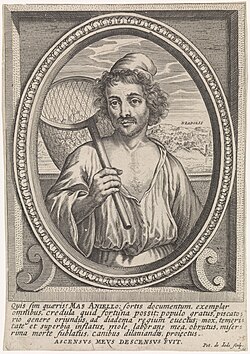
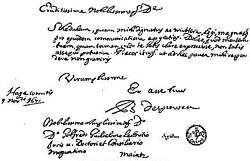
Throughout these years, he engaged in extensive correspondence with the leading intellectuals of his day, including Gottfried Wilhelm Leibniz. Despite being labeled an atheist by some contemporaries—a claim he vehemently denied—Spinoza focused on the intersection of epistemology (the study of knowledge), ethics, and the Hebrew Bible.
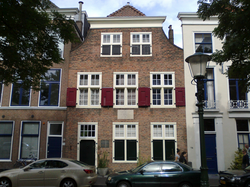
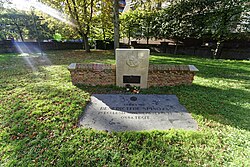
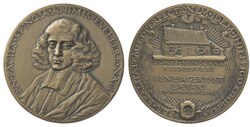
Spinoza passed away in The Hague in 1677. He was buried in the churchyard of the Nieuwe Kerk without a prepared tombstone, though a memorial plaque now marks the site near the remains of Johan de Witt.
Core Philosophical Contributions
Spinoza's work is characterized by a geometric method of demonstration, attempting to prove ethical and metaphysical truths with the certainty of mathematics.
Metaphysics and Substance Monism
At the heart of Spinoza's thought is Substance Monism. Unlike Cartesian dualism, which separates mind and matter, Spinoza argued that there is only one infinite substance in the universe, which he identified as "God or Nature" (Deus sive Natura). This perspective is often associated with Pantheism (the belief that God is identical to the universe) or panentheism.
Ethics and Causality
In his masterpiece, Ethics, Spinoza explored the nature of human emotions and the concept of Necessitarianism—the idea that every event is determined by prior causes. He argued that true freedom comes not from the absence of causality, but from the rational understanding of the necessity of all things.
Political and Theological Thought
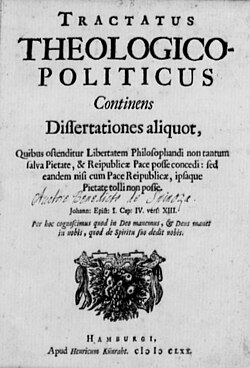
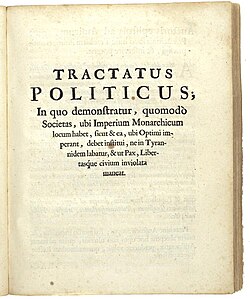
In the Tractatus Theologico-Politicus, Spinoza applied rational criticism to the Bible and argued for the separation of religious authority from political governance. He championed the idea that the primary objective of the state is the preservation of freedom.
Legacy and Modern Influence
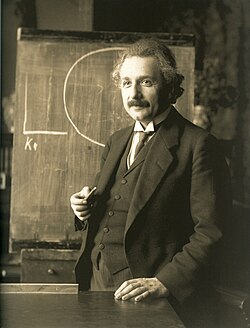
Spinoza's influence extended far beyond the 17th century. His work laid the groundwork for the secular age and modern liberal democracy. In the 20th century, Albert Einstein famously stated his belief in "Spinoza's God," referring to a divine order inherent in the laws of physics rather than a personal deity who intervenes in human affairs.
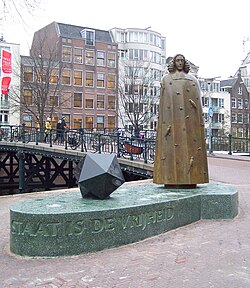
Today, Spinoza is remembered as a symbol of intellectual courage. A statue in Amsterdam's Zwanenburgwal bears the inscription: "The objective of the state is freedom."
| Category | Details |
|---|---|
| Primary School | Rationalism / Conceptualism |
| Key Concept | Substance Monism (God = Nature) |
| Major Works | Ethics, Tractatus Theologico-Politicus, Tractatus Politicus |
| View on Freedom | Understanding necessity through reason |
| Political Stance | Advocacy for freedom of thought and state secularism |
Frequently Asked Questions
Was Baruch Spinoza an atheist?
No. While he was accused of atheism by his contemporaries and critics, Spinoza vehemently denied this. He believed in one infinite substance, which he called God, though his definition differed radically from the personal, providential God of traditional Abrahamic religions.
What is Substance Monism?
Substance Monism is the metaphysical view that only one independent substance exists in the universe. For Spinoza, this single substance is God (or Nature), and everything else in existence—including humans, thoughts, and physical objects—are merely attributes or modes of that one substance.
Why was Spinoza excommunicated?
Spinoza was excommunicated from the Portuguese-Israelite community in Amsterdam because his philosophical views were seen as heretical. His questioning of the divine origin of the Bible and his views on the nature of God were incompatible with the community's orthodox beliefs.
How did Spinoza influence Albert Einstein?
Einstein was drawn to Spinoza's concept of a God who reveals Himself in the orderly harmony of what exists, rather than a God who concerns Himself with the fates and actions of individual human beings.
What is the main goal of the state according to Spinoza?
According to Spinoza's Tractatus Theologico-Politicus, the primary objective of the state is to ensure freedom, allowing individuals to use their reason and express their thoughts without fear.