Eric Hobsbawm: The Marxist Historian of the Modern World
Eric John Ernest Hobsbawm was one of the most influential historians of the modern era, renowned for his sweeping analyses of the rise of industrial capitalism, socialism, and nationalism. A lifelong Marxist—someone who applies the socio-economic theories of Karl Marx to historical analysis—Hobsbawm's political convictions deeply informed his scholarly work, allowing him to synthesize vast amounts of data into coherent narratives of global change.
Key Facts
- Primary Focus: Social, labour, and world history, specifically the transition to industrial capitalism.
- Major Concept: Coined the terms "long 19th century" and "short 20th century."
- Key Theory: Introduced the influential concept of "invented traditions."
- Academic Affiliations: Birkbeck, University of London; King's College, Cambridge; Stanford University; and The New School.
- Linguistic Ability: A polyglot fluent in English, German, French, Spanish, and Italian.
Early Life and Academic Journey
Born in Alexandria, Sultanate of Egypt, in 1917, Hobsbawm pursued his higher education at King's College, Cambridge, where he studied under the guidance of doctoral advisor M. M. Postan. His academic career was marked by a commitment to social history, which focuses on the lived experiences of ordinary people rather than just political elites.
In 1952, he helped establish the prestigious academic journal Past & Present. Over the following decades, he held various prestigious positions, including a visiting professorship at Stanford University in the 1960s and a long-term tenure at Birkbeck, University of London, where he eventually served as president in 2002. He also spent significant time in Manhattan as a professor at The New School for Social Research from 1984 to 1997.
Defining Works and Historical Frameworks
Hobsbawm is perhaps best known for his tetralogy that redefined how historians view the modern era. He proposed the concept of the "long 19th century," spanning from the French Revolution in 1789 to the outbreak of World War I in 1914. This period was detailed across three seminal volumes: The Age of Revolution, The Age of Capital, and The Age of Empire.
He complemented this with The Age of Extremes, which covered the "short 20th century" (1914–1991), analyzing the era's ideological conflicts and the eventual collapse of the Soviet Union.
Beyond these broad surveys, Hobsbawm made a lasting impact with the edited volume The Invention of Tradition. In this work, he explored how traditions that appear ancient are often actually created recently to establish continuity with a perceived past, serving to legitimize institutions or national identities.
Honours and Global Recognition
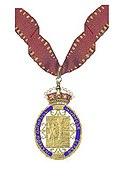
Throughout his career, Hobsbawm received numerous accolades for his contributions to the humanities. He was elected a Fellow of the British Academy in 1976 and a Fellow of the Royal Society of Literature in 2006. In 1998, he was appointed a Member of the Order of the Companions of Honour, a prestigious award recognizing outstanding achievements in the arts or science.
His international reach was evidenced by honorary degrees from the University of Vienna and Charles University in Prague, as well as honorary citizenship from Vienna in 2008.
Personal Life and Legacy
Hobsbawm's personal life was as complex as the history he wrote. He was married twice: first to Muriel Seaman in 1943 (divorced 1951) and later to Marlene Schwarz in 1962. He had three children, including Julia and Andy Hobsbawm. While his Jewish heritage was a part of his identity, his close friend and fellow historian Donald Sassoon noted that Hobsbawm viewed himself primarily as a historian who happened to be Jewish, rather than a "Jewish historian."
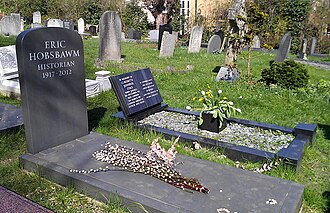
Eric Hobsbawm passed away on October 1, 2012, at the age of 95 in London, England.
Summary of Major Publications
| Book Title | Year | Key Focus |
|---|---|---|
| The Age of Revolution | 1962 | Europe 1789–1848 |
| The Age of Capital | 1975 | Global capitalism 1848–1875 |
| The Invention of Tradition | 1983 | Sociology of tradition |
| The Age of Empire | 1987 | Imperialism 1875–1914 |
| The Age of Extremes | 1994 | The short 20th century (1914–1991) |
| Interesting Times | 2002 | Autobiography |
Frequently Asked Questions
What is the "long 19th century"?
The "long 19th century" is a historical framework proposed by Hobsbawm that defines the era from the start of the French Revolution in 1789 to the beginning of World War I in 1914, rather than using strict calendar centuries.
What does "invented traditions" mean?
This term refers to practices that appear to be old and traditional but are actually relatively recent inventions designed to create a sense of historical continuity and legitimacy for a group or nation.
How did Marxism influence Hobsbawm's work?
Hobsbawm was a lifelong Marxist, meaning he analyzed history through the lens of class struggle and the economic structures of production, which heavily influenced his views on industrial capitalism and social movements.
Which academic institutions was he associated with?
He was primarily associated with Birkbeck, University of London, but also held positions at King's College, Cambridge, Stanford University, and The New School for Social Research in New York.
What languages did Eric Hobsbawm speak?
He was a polyglot who spoke English, German, French, Spanish, and Italian fluently, and he was also able to read Dutch, Portuguese, and Catalan.