The Weizsäcker Family: A Legacy of German Leadership and Intellect
The Weizsäcker family is a distinguished lineage originating from the former Kingdom of Württemberg. Over several generations, the family has produced a remarkable array of influential figures who have shaped German society across diverse fields, including politics, science, diplomacy, and theology. Some members of the family carry the nobiliary particle "von," a traditional indicator of noble status in German culture.
From serving as the head of state to contributing to fundamental physics, the Weizsäcker name is synonymous with academic excellence and public service. Their trajectory reflects the broader shifts in German history, moving from the regional governance of the Kingdom of Württemberg to the leadership of the modern Federal Republic of Germany.
Key Facts
- Origin: The family hails from the former Kingdom of Württemberg.
- Political Reach: Members have served as the President of Germany and the Ministerpräsident (Prime Minister) of Württemberg.
- Scientific Contribution: The family includes a physicist associated with the Bethe–Weizsäcker formula.
- Diverse Expertise: Notable members span fields such as neurology, political economy, art history, and mathematics.
The Foundations of the Lineage
The family's prominence began with figures like Christian Ludwig Weizsäcker (1785–1831), who served as the domestic chaplain to the Prince of Hohenlohe-Öhringen. This early connection to the nobility and the church set a precedent for the family's future roles in administration and academia.
His descendants continued this trend of intellectual pursuit. Karl Heinrich Weizsäcker (1822–1899) became a Protestant theologian and served as the Chancellor of Tübingen University, while Julius Weizsäcker (1828–1889) established a presence in the field of history.
Political and Diplomatic Influence
The family reached significant political heights in the early 20th century. Karl von Weizsäcker (1853–1926) served as the Ministerpräsident to King William II of Württemberg from 1906 to 1918, marking a peak of regional political power.
This influence extended into the diplomatic sphere through Ernst von Weizsäcker (1882–1951), who served as the Secretary of State for Foreign Affairs and the Ambassador to the Holy See during the era of Nazi Germany.
Scientific and Academic Achievements
The Weizsäcker family is equally renowned for its contributions to the sciences. Carl Friedrich von Weizsäcker (1912–2007) was a distinguished physicist and philosopher, most notably recognized for the Bethe–Weizsäcker formula, a key equation in nuclear physics used to describe the binding energy of atomic nuclei.
The tradition of scholarship continued into the next generations with figures such as Heinrich Wolfgang von Weizsäcker, a professor of mathematics, and various professors of political economy and art.
The Presidency of Richard von Weizsäcker
One of the most prominent members of the family in modern history was Richard von Weizsäcker (1920–2015). A respected statesman, he served as the President of Germany from 1984 to 1994, providing steady leadership during a pivotal era of German reunification.
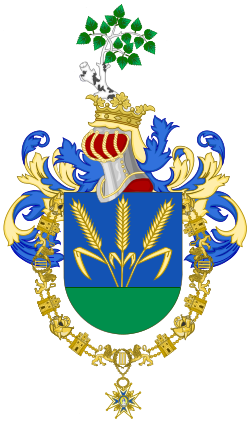
Richard's children also pursued high-level careers, including Robert Klaus von Weizsäcker, a professor of political economy and former president of the German Chess Federation, and Beatrice von Weizsäcker, a noted journalist and author.
Family Summary Table
| Name | Primary Role/Field | Notable Achievement |
|---|---|---|
| Karl von Weizsäcker | Politics | Ministerpräsident to King William II of Württemberg |
| Richard von Weizsäcker | Politics | President of Germany (1984–1994) |
| Carl Friedrich von Weizsäcker | Physics | Bethe–Weizsäcker formula |
| Ernst von Weizsäcker | Diplomacy | Secretary of State for Foreign Affairs |
| Karl Heinrich Weizsäcker | Theology | Chancellor of Tübingen University |
Frequently Asked Questions
Where did the Weizsäcker family originate?
The family originated in the former Kingdom of Württemberg in Germany.
Who is the most famous political member of the family?
Richard von Weizsäcker is perhaps the most widely recognized, having served as the President of Germany from 1984 to 1994.
What is the Bethe–Weizsäcker formula?
It is a scientific formula in physics named after Carl Friedrich von Weizsäcker and Hans Bethe, used to calculate the binding energy of an atomic nucleus.
Did the family have members in the medical field?
Yes, the family included Viktor von Weizsäcker, a neurologist, and Fritz von Weizsäcker, a professor of medicine.
What does the "von" in their name signify?
The "von" is a nobiliary particle, which historically indicated that the person or family belonged to the nobility.