The War of the Worlds Radio Broadcast: The 1938 Martian Panic
On the evening of October 30, 1938, millions of listeners tuned into CBS Radio for an episode of The Mercury Theatre on the Air. What they encountered was not a traditional play, but a terrifyingly realistic simulation of an alien invasion. Directed and narrated by the ambitious Orson Welles, this adaptation of H.G. Wells's novel became one of the most famous events in broadcasting history, sparking debates about media influence and public hysteria that persist to this day.
Key Facts
- Broadcast Date: October 30, 1938, from 8:00 to 9:00 pm ET.
- Network: CBS Radio.
- Key Figures: Orson Welles (Director/Narrator) and Howard Koch (Adaptation Writer).
- Setting: Modernized to the 20th-century United States, specifically Grovers Mill, New Jersey.
- Legacy: Inducted into the Radio Hall of Fame (1988) and the National Recording Registry (2003).
Production and Adaptation
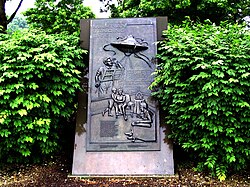
The broadcast was the 17th episode of the series. To make the story more immediate for an American audience, Howard Koch shifted the setting from 19th-century England to the United States. The first Martian spacecraft was depicted as landing in Grovers Mill, an unincorporated village in West Windsor, New Jersey.
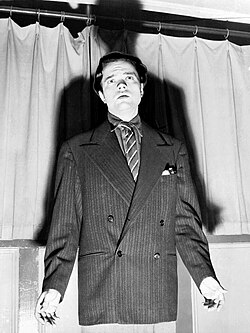
Welles utilized a groundbreaking "as-it-happens" format. He was influenced by previous radio plays like "The Fall of the City" and "Air Raid," as well as his own use of a newscast format for a production of "Julius Caesar." By interrupting standard programming with simulated news bulletins, Welles created a sense of urgency and authenticity.
The Broadcast Experience
The program began with the music of Pyotr Ilyich Tchaikovsky's Piano Concerto No. 1. As the drama unfolded, announcer Dan Seymour and various reporters provided updates on the Martian arrival, creating a narrative that felt like a live news event. Despite the realism, the program included disclaimers four times, stating that the story was entirely fictitious.
Public Reaction and the "Panic"
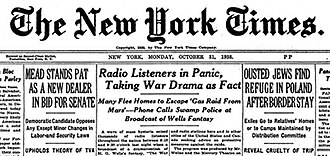
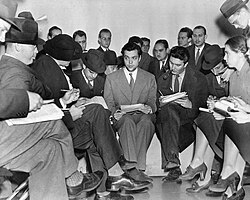
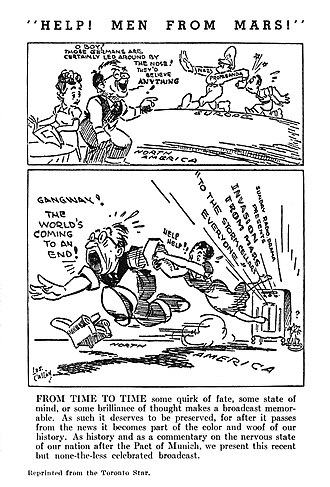
Following the broadcast, reports surfaced of widespread panic. Paul White, the head of CBS News, described the atmosphere at the office as "bedlam." In the following weeks, newspapers published approximately 12,500 articles regarding the event. The broadcast even reached international attention; Adolf Hitler referenced it in a Munich speech on November 8, 1938, citing it as evidence of the "decadent state of affairs in democracy."
However, modern media historians, including Jefferson Pooley and Michael J. Socolow, suggest that the scale of the panic may have been exaggerated. They argue that "almost nobody was fooled" and that the supposed mass hysteria was practically immeasurable on the night of the broadcast. This is supported by accounts from New York City staff and residents of Washington D.C., who reported that life continued as usual in the streets.
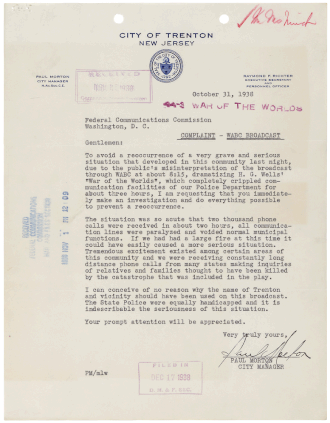
Despite the internal contradictions in reports, the event led to official complaints. For instance, the city manager of Trenton, New Jersey, sent a formal letter of complaint to the Federal Communications Commission (FCC).
Legacy and Recognition
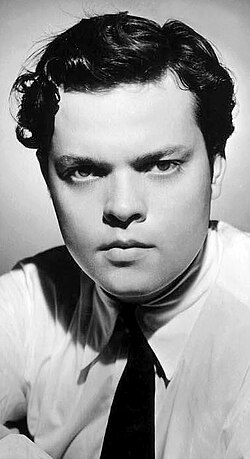
The broadcast cemented Orson Welles's reputation as a creative visionary. In a rare historical meeting in October 1940, Orson Welles and H.G. Wells met in San Antonio, Texas, where they were interviewed together at the KTSA studio.
Over the decades, the broadcast has been recognized for its artistic and cultural impact. It received a Retrospective Hugo Award for "Best Dramatic Presentation, Short Form – 1938" in 2014 and remains a primary case study in the study of fake news and media psychology.
Broadcast Summary
| Category | Details |
|---|---|
| Genre | Radio drama, Science fiction |
| Running Time | 60 minutes |
| Key Cast | Orson Welles, Frank Readick, Kenny Delmar, Ray Collins |
| Recording Location | Columbia Broadcasting Building, New York |
| Original Source | Novel by H.G. Wells |
Frequently Asked Questions
Did the broadcast actually cause a national panic?
While newspapers of the time reported widespread hysteria and thousands of articles were written, many modern historians believe the panic was exaggerated and that the majority of listeners were not fooled.
Where did the Martians land in the radio version?
In the radio adaptation, the first Martian spacecraft landed in Grovers Mill, an unincorporated village in West Windsor, New Jersey.
How did Orson Welles make the broadcast sound so real?
Welles used a "news bulletin" format, interrupting music with simulated live reports and eyewitness accounts, mimicking the style of urgent news broadcasts of the era.
Did H.G. Wells approve of the broadcast?
The two men met in 1940 in San Antonio, Texas, for an interview, though the source does not explicitly detail H.G. Wells's personal approval or disapproval of the specific production.
What awards has the broadcast received?
It was inducted into the Radio Hall of Fame in 1988, added to the National Recording Registry of the Library of Congress in 2003, and received a Retrospective Hugo Award in 2014.