The Quarrymen: The Roots of the Beatles
Before they became the most famous band in history, the members of the Beatles began their musical journey in a modest skiffle group called The Quarrymen. Founded in Liverpool in 1956, this ensemble served as the experimental ground where John Lennon, Paul McCartney, and George Harrison first forged their legendary creative partnership. From playing at school dances to recording their first amateur tracks, the evolution of the Quarrymen is the story of the birth of modern pop music.
Skiffle, a genre blending folk, jazz, and blues often played on improvised instruments, was the catalyst for the band's formation. The group's name was a tongue-in-cheek reference to a line in their school song, "Quarrymen, old before our birth," which Lennon found particularly amusing.
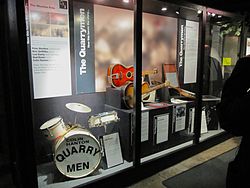
Key Facts
- Founded: 1956 by John Lennon and Eric Griffiths.
- Original Genre: Skiffle, later transitioning to rock and roll.
- Core Members: John Lennon, Paul McCartney, and George Harrison.
- First Recording: "In Spite of All the Danger" and "That'll Be the Day" (1958).
- Evolution: Changed names several times before becoming The Beatles in 1960.
- Legacy: Surviving original members reunited in 1997 to keep the skiffle tradition alive.
Formation and Early Days
The band began in November 1956 with Lennon and Griffiths on guitars, Pete Shotton on the washboard, and Bill Smith on the tea-chest bass. The lineup shifted rapidly in the early months, with members like Nigel Walley, Ivan Vaughan, and Len Garry cycling through. Eventually, the group stabilized with the addition of drummer Colin Hanton and banjo player Rod Davis.
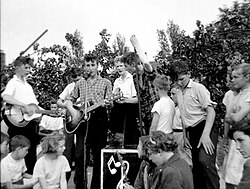
The group's first public appearance took place on June 22, 1957, at a garden fête at St. Peter's Church, a pivotal event that would change the course of music history.
Paul McCartney Joins the Fray
Paul McCartney made his debut with the band on October 18, 1957, at a Conservative Club social in Norris Green. The group's sound began to shift away from skiffle toward the high-energy rock and roll of Elvis Presley, Little Richard, and Carl Perkins. A significant influence during this time was Buddy Holly and the Crickets, which inspired Lennon and McCartney to begin writing their own original songs together.
The Path to Professionalism
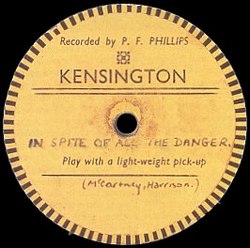
In July 1958, the Quarrymen visited Phillips' Sound Recording Services, a modest studio located between a kitchen and an electrical goods shop. Using a single microphone and recording straight to a 78rpm shellac acetate disc to save costs, they recorded two tracks: a McCartney original titled "In Spite of All the Danger" and a cover of Buddy Holly's "That'll Be the Day."
The Entry of George Harrison
George Harrison joined the group in early 1958 upon McCartney's recommendation. Although Lennon initially hesitated because 14-year-old Harrison was considered too young, Harrison's talent quickly made him indispensable. Following a period of instability where the band lost its drummer and bass player, the trio of Lennon, McCartney, and Harrison famously claimed that "the rhythm's in the guitars."
The Transition to The Beatles
In 1959, the group helped Mona Best open the Casbah Coffee Club in her cellar. Performing as the Quarrymen with guitarist Ken Brown, they played the opening night on August 29, 1959, for approximately 300 teenagers in a sweltering, unventilated room.
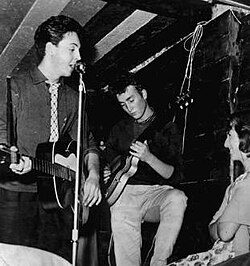
As the group matured, they grew dissatisfied with the name "The Quarrymen." They experimented with several aliases, including Johnny and the Moondogs, Japage 3, and Long John and the Silver Beatles. By March 1960, Lennon and Stuart Sutcliffe settled on "The Beatles," a name that paid homage to the Crickets while adding a clever double meaning.
Modern Reformations (1992–Present)
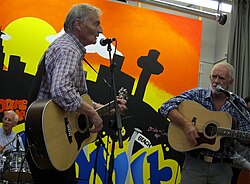
While the original core moved on to global stardom, the other original members of the Quarrymen have maintained the band's legacy. In 1997, the surviving members of the 1957 lineup—Pete Shotton, Rod Davis, Len Garry, Eric Griffiths, and Colin Hanton—reunited to celebrate the 40th anniversary of the Woolton garden fête.
Since then, the group has toured internationally, including visits to the US, Japan, and Russia, performing skiffle and early rock and roll to illustrate the American roots that inspired the Beatles. They have released four studio albums, including Open for Engagements (1994) and Grey Album (2012).
| Category | Details |
|---|---|
| Active Years | 1955–1960; 1994–Present |
| Primary Genres | Skiffle, Rock and Roll |
| Key Spinoff | The Beatles |
| Notable Recording | "In Spite of All the Danger" (1958) |
| Studio Albums | 4 (1994, 1997, 2004, 2012) |
Frequently Asked Questions
How did the band get the name "The Quarrymen"?
The name was inspired by a line in their school song: "Quarrymen, old before our birth. Straining each muscle and sinew." John Lennon and Pete Shotton chose it as a tongue-in-cheek joke.
What was the first song the Quarrymen ever recorded?
Their first professional recording session in 1958 produced "In Spite of All the Danger," written by Paul McCartney and George Harrison, followed by a cover of Buddy Holly's "That'll Be the Day."
Who were the members of the Quarrymen before they became the Beatles?
The group had a rotating lineup including John Lennon, Paul McCartney, George Harrison, Eric Griffiths, Pete Shotton, Colin Hanton, Rod Davis, and Len Garry, among others.
What is the relationship between the Quarrymen and the Casbah Coffee Club?
The Quarrymen provided the musical entertainment for the opening of the Casbah Coffee Club on August 29, 1959, helping Mona Best launch the venue in her cellar.
Do the Quarrymen still exist today?
Yes, surviving original members (non-Beatles) reunited in the 1990s and continue to perform and record, focusing on the skiffle and rock and roll roots of the early Beatles era.