The Official Story: A Cinematic Journey Through Argentina's Dirty War
Released in 1985, The Official Story (Spanish: La historia oficial) is a landmark Argentine historical political drama that confronts one of the darkest chapters of South American history. Directed by Luis Puenzo and co-written with Aída Bortnik, the film serves as both a gripping personal narrative and a searing critique of state-sponsored terrorism.
The film follows Alicia Maquet, an upper-middle-class high school history teacher in Buenos Aires, and her husband Roberto, a government official. Their lives are upended when Alicia begins to suspect that their five-year-old adopted daughter, Gaby, may be the child of a desaparecida—a victim of the forced disappearances that characterized Argentina's last military dictatorship.
Key Facts
- Historical Context: Set during the final year of Argentina's military dictatorship (1976–1983).
- Academy Award Win: The first Latin American film to win the Oscar for Best Foreign Language Film.
- Core Theme: The search for truth regarding the desaparecidos (the disappeared).
- Critical Acclaim: Holds a 100% positive rating from 13 critics on Rotten Tomatoes.
- Lead Performance: Norma Aleandro won Best Actress at the Cannes Film Festival for her role as Alicia.
Plot and Narrative Arc
The story unfolds in 1983, a time of immense tension as the military regime nears its end. Alicia initially believes the government's narrative that only "guilty" people are arrested. However, her worldview is challenged by her students and a colleague, Benítez, who argue that official history textbooks are written by the oppressors.
The catalyst for Alicia's awakening is the return of her friend Ana from exile. Ana reveals the horrors she endured—including torture and the witnessing of pregnant prisoners having their babies stolen—which leads Alicia to question the legitimacy of Gaby's adoption. As Alicia investigates, she discovers an organization searching for missing children and meets Sara, a grandmother who believes Gaby is her granddaughter.
The tension culminates in a domestic clash between Alicia and Roberto. While Alicia seeks the truth, Roberto remains fiercely protective of the status quo and his ties to the military elite. The film ends on a poignant note, with Alicia leaving her home and her husband, symbolizing a break from the "official story" of the regime.
Historical Background: The Dirty War
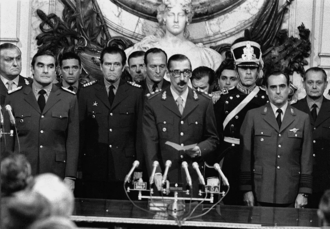
The film is rooted in the real-world events following the 1976 coup led by Jorge Rafael Videla. This era, known as the Dirty War, saw the suspension of Congress and the banning of political parties. It is estimated that between 9,000 and 30,000 people deemed "subversives" were kidnapped, tortured, and murdered by the state.
A central element of this repression was the theft of infants born to detained mothers, who were then illegally adopted by families loyal to the regime. This practice is mirrored in the film's plot and was protested in real life by the Mothers of the Plaza de Mayo, who gathered every Thursday in Buenos Aires to demand the return of their children.
Production and Global Impact
Director Luis Puenzo originally planned to shoot the film in secret using hidden 16mm cameras due to safety concerns, but the fall of the junta occurred just as the screenplay was finished. The film was shot entirely in Buenos Aires, including the symbolic Plaza de Mayo.
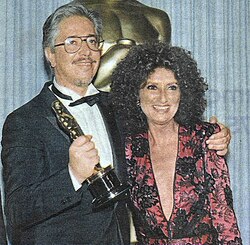
The movie achieved unprecedented international success, winning the People's Choice Award at the 10th Toronto International Film Festival and the Oscar at the 58th Academy Awards.
| Category | Details |
|---|---|
| Director | Luis Puenzo |
| Lead Cast | Norma Aleandro, Héctor Alterio |
| Release Date | April 3, 1985 (Argentina) |
| Running Time | 112 minutes |
| Major Award | Oscar for Best Foreign Language Film (1985) |
| Language | Spanish |
Frequently Asked Questions
What does the term "desaparecidos" mean in the film?
The term refers to the "disappeared"—thousands of Argentine citizens who were kidnapped, tortured, and murdered by the military government between 1976 and 1983, with their deaths often left unacknowledged by the state.
Why was the film's Oscar win significant?
It was the first time a Latin American film won the Academy Award for Best Foreign Language Film, bringing global attention to the human rights violations in Argentina.
How does the film relate to the Mothers of the Plaza de Mayo?
The film depicts the search for stolen children, a cause led by the Mothers of the Plaza de Mayo, who protested in Buenos Aires to find their missing children and grandchildren.
Was the lead actress affected by the events depicted?
Yes, Norma Aleandro was forced into exile in Uruguay and Spain during the military dictatorship and only returned to Argentina after the government fell in 1983.
How has the film been ranked over time?
In 2000, it was ranked as the eighth greatest Argentine film by the Museo del Cine Pablo Ducrós Hicken. In a 2022 survey, it was placed at 28th, and it also appeared on Fotogramas' list of the 20 best Argentine films of all time.