Fernando Solanas: The Visionary of Third Cinema and Argentine Politics
Fernando Ezequiel "Pino" Solanas was a towering figure in Argentine culture, seamlessly blending the roles of film director, screenwriter, score composer, and politician. Born on February 16, 1936, in Olivos, Buenos Aires, Solanas dedicated his life to the intersection of art and activism, using the lens of a camera to challenge power structures and the halls of government to enact social change.
His multidisciplinary background in theatre, music, and law provided the foundation for a career defined by intellectual rigor and creative bravery. From his early short films to his tenure as a National Senator and Ambassador to UNESCO, Solanas remained a steadfast voice for the marginalized and a critic of neo-colonialism.
Key Facts
- Pioneer of Third Cinema: Co-authored the "Toward a Third Cinema" manifesto, advocating for a political cinema independent of Hollywood and European auteur styles.
- Acclaimed Filmmaker: Directed the landmark documentary La hora de los hornos (The Hour of the Furnaces) and won awards at Venice, Cannes, and Berlin.
- Political Leader: Served as a National Deputy (2009–2013) and National Senator (2013–2019) for the City of Buenos Aires.
- Diplomatic Service: Appointed as the Argentine Ambassador to UNESCO in December 2019.
- Legacy of Resilience: Survived a violent attack in 1991 where he was shot six times in the legs following public criticism of President Carlos Menem.
The Birth of Third Cinema
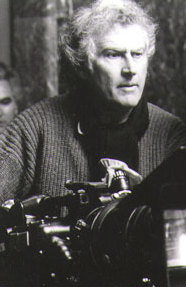
In the 1960s, Solanas emerged as a leader of the Grupo Cine Liberación, a collective that sought to instill a social conscience into Argentine cinema. In 1968, he covertly produced and directed La hora de los hornos, a powerful documentary examining violence and neo-colonialism in Latin America. The film became a global sensation, earning the Grand Jury Prize and Critics Award at the Venice Film Festival, as well as the Prix de la mise en scène at Cannes.
Alongside Octavio Getino, Solanas formulated the concept of Third Cinema. This movement rejected both the commercialism of Hollywood (First Cinema) and the individualistic focus of European auteur cinema (Second Cinema), instead proposing a cinema that served as a tool for liberation and political mobilization in developing nations.
A Life of Political Struggle and Service
Solanas's commitment to his beliefs often came at a great personal cost. During the 1970s, his activism in support of Perón and his cinematic challenges to the status quo led to threats from right-wing forces. He eventually went into exile in Paris in 1976, returning to Argentina only after the restoration of democracy in 1983.
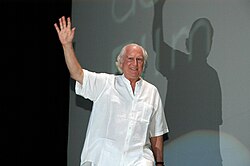
His transition into formal politics was marked by both triumph and tragedy. After being shot in 1991—an attack he attributed to the administration of President Carlos Menem—Solanas intensified his political engagement. He ran for the Senate in 1992 and later served as a National Deputy and National Senator representing the Autonomous City of Buenos Aires. Throughout his political career, he remained an advocate for human rights, including the legalization of abortion, which he framed as a matter of fundamental human rights.
Artistic Contributions and Filmography
Beyond his political documentaries, Solanas was a versatile artist who collaborated with the legendary tango musician Ástor Piazzolla on various soundtracks. His filmography spans decades, moving from the revolutionary fervor of the 60s to the critical social examinations of the 2000s, such as Memoria del saqueo (2004).
| Category | Key Achievement / Award | Year/Period |
|---|---|---|
| Cinema | Grand Jury Prize (Venice Film Festival) | 1985 |
| Cinema | Honorary Golden Bear (Berlin Film Festival) | 2004 |
| Politics | National Senator (Buenos Aires) | 2013–2019 |
| Diplomacy | Ambassador to UNESCO | 2019–2020 |
Final Years and Legacy
Fernando Solanas passed away on November 6, 2020, at the age of 84 in Neuilly-sur-Seine, France, due to complications from COVID-19. He left behind a legacy of "total filmmaking," believing that the creator must be a technician, a producer, and an activist all at once to truly operate outside the established system.
Frequently Asked Questions
What is Third Cinema?
Third Cinema is a political film movement co-founded by Fernando Solanas and Octavio Getino. It opposes the commercial nature of Hollywood and the individualistic approach of European auteur cinema, aiming instead to use film as a tool for social change and liberation in developing countries.
Which was Fernando Solanas's most influential film?
His most influential early work was La hora de los hornos (The Hour of the Furnaces), a 1968 documentary that analyzed neo-colonialism and violence in Latin America and won prestigious awards at the Venice and Cannes film festivals.
What political offices did Solanas hold?
Solanas served as a National Deputy for the City of Buenos Aires from 2009 to 2013 and as a National Senator for the same constituency from 2013 to 2019.
How did Fernando Solanas die?
Fernando Solanas died on November 6, 2020, in Neuilly-sur-Seine, France, as a result of COVID-19.
Did Solanas have any diplomatic roles?
Yes, following his term as a senator, he was appointed as the Argentine Ambassador to UNESCO, a position he held from December 10, 2019, until his death in November 2020.