The Cabildo: A Monument to New Orleans History and Governance
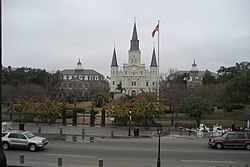
Standing prominently along Jackson Square in the heart of New Orleans, The Cabildo is more than just an architectural landmark; it is a silent witness to the shifting empires and legal battles that shaped the United States. Originally serving as the seat of the Spanish colonial city hall, this historic structure now welcomes visitors as a vital part of the Louisiana State Museum.
The building is renowned for its eclectic architectural blend, featuring Spanish arches paired with a French mansard roof (a four-sided gambrel-style hip roof characterized by two slopes on each side). Its location adjacent to the St. Louis Cathedral makes it a focal point of the city's historic center.
Key Facts
- Original Name: Casa Capitular.
- Construction Period: Built between 1795 and 1799.
- Architect: Gilberto Guillemard.
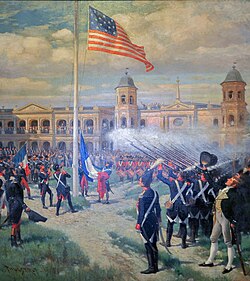
- Historical Significance: Site of the Louisiana Purchase transfer ceremonies in 1803.
- Legal Legacy: Former seat of the Louisiana Supreme Court (1868–1910).
- Status: U.S. National Historic Landmark and part of the Vieux Carre Historic District.
Architectural Evolution and Design
The current Cabildo was constructed after the original structure was destroyed in the Great New Orleans Fire of 1788. Designed by architect Gilberto Guillemard, the building was completed in 1799 in the Spanish Baroque style. Over the decades, the building's facade evolved to reflect the changing political landscape of Louisiana.
In 1821, the Spanish coat of arms on the facade's pediment was replaced by an American eagle with cannonballs, sculpted by Pietro Cardelli. Further modifications occurred in 1847 with the addition of the third floor and the French-style mansard roof, creating the unique hybrid aesthetic seen today.
A Legacy of Law and Governance
The building takes its name from the "Illustrious Cabildo," the city council that once governed New Orleans. Its main hall, the Sala Capitular (Meeting Room), has served various critical judicial functions over two centuries:
- 1799–1803: Used as a courtroom by the Spanish government.
- 1803–1812: Served as the Louisiana territorial superior court.
- 1868–1910: Served as the seat of the Louisiana Supreme Court.
Because of its role as a high court, the Sala Capitular hosted several landmark legal cases, most notably Plessy v. Ferguson, a pivotal case in American constitutional law.
Preservation and Modern Era
By 1895, the Cabildo had fallen into decay and faced the threat of demolition. However, artist William Woodward led a successful campaign to preserve and restore the site. In 1911, following the departure of the state's highest court, the building became the home of the Louisiana State Museum. The museum now curates exhibits detailing Louisiana's history from early settlement through the Reconstruction Era, as well as the heritage of the state's diverse ethnic groups.
The building has survived several major crises. A devastating fire on May 11, 1988, destroyed the third floor and the cupola, necessitating a restoration that lasted until 1994. More recently, the Cabildo survived Hurricane Katrina in 2005 with relatively minor damage. In the immediate aftermath of the storm, the building served a practical purpose once again when the Louisiana State Police established "Troop N" in its business offices to coordinate patrols with agencies from New York and New Mexico.
Summary of The Cabildo
| Category | Details |
|---|---|
| Location | 701 Chartres St., New Orleans, Louisiana |
| Architectural Styles | Spanish Baroque; French-Revival (3rd floor/roof) |
| Construction Dates | 1795–1799 |
| NRHP Reference No. | 66000373 |
| Designations | National Historic Landmark (1960), NRHP (1966) |
Frequently Asked Questions
What was the original purpose of The Cabildo?
The Cabildo, originally known as the Casa Capitular, served as the seat of the Spanish colonial city hall and the meeting place for the city council, known as the "Illustrious Cabildo."
Why is The Cabildo historically significant to the United States?
It is most famous for being the site of the Louisiana Purchase transfer ceremonies in late 1803, marking the official transfer of the territory from France to the United States.
Which famous court case was heard at The Cabildo?
The Sala Capitular, which served as the seat of the Louisiana Supreme Court from 1868 to 1910, was the site of the landmark case Plessy v. Ferguson.
How did the building's architecture change over time?
Originally built in the Spanish Baroque style, the building had its Spanish coat of arms replaced by an American eagle in 1821, and a French-style third floor and mansard roof were added in 1847.
What happens at The Cabildo today?
It currently houses the Louisiana State Museum, which features exhibits on the state's history from settlement through the Reconstruction Era and explores the heritage of various ethnic groups in Louisiana.