Jackson Square: The Historic Heart of New Orleans
Located in the vibrant French Quarter of New Orleans, Louisiana, Jackson Square is more than just a park; it is a living chronicle of American and colonial history. Spanning 2.5 acres, this historic site has served as a military parade ground, a center of government, and a gathering place for artists and revelers for over three centuries.
Originally established in 1721, the square is a cornerstone of the Vieux Carre Historic District. Its significance is recognized nationally, having been designated a National Historic Landmark in 1960. In 2012, the American Planning Association further honored the site by naming it one of the Great Public Spaces in the United States.
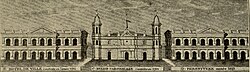
Key Facts
- Established: 1721
- Former Names: Place d'Armes (French) and Plaza de Armas (Spanish)
- Key Event: Site of the 1803 Louisiana Purchase transfer
- Central Landmark: Equestrian statue of Andrew Jackson (erected 1856)
- Designations: National Historic Landmark and part of the National Register of Historic Places
Design and Architectural Evolution
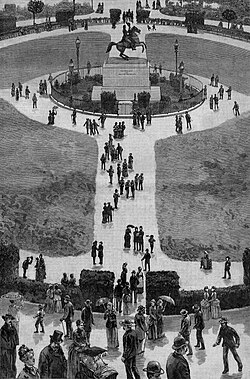
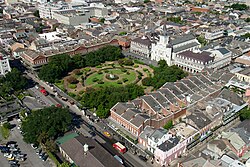
The current layout of Jackson Square was designed by architect and landscape architect Louis H. Pilié. The square's aesthetic is defined by its Parisian-style landscaping, iron fences, and walkways, many of which date back to the 1851 designs of Micaela Almonester, Baroness de Pontalba.
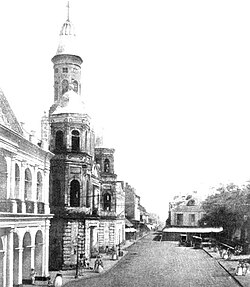
Flanking the square are the Pontalba Buildings, two matching four-story red-brick structures built in the 1840s. These buildings are notable for housing the oldest continuously rented apartments in North America on their upper floors, while the ground floors host various shops and restaurants.
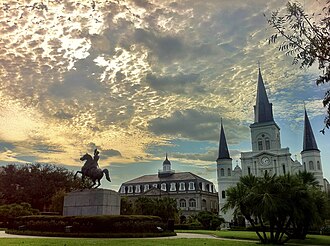
At the center of the park stands a bronze equestrian statue of Andrew Jackson, the seventh U.S. president and victor of the 1815 Battle of New Orleans. Sculpted by Clark Mills and erected in 1856, it is one of four identical statues in the United States. The square also features four neoclassical statues representing the four seasons at its corners.
A Timeline of History
Colonial Beginnings and the Louisiana Purchase
During the French colonial era, the square was known as the Place d'Armes (weapons' square), and later the Plaza de Armas under Spanish rule. It served as the city's central hub and was the site of the 1803 ceremonial transfers of the Louisiana territory from Spain to France, and subsequently from France to the United States.
Following the Great New Orleans Fire of 1788, Spanish officials rebuilt the St. Louis Church (which became a cathedral in 1793) in 1789 and the Cabildo (town hall) in 1795.
Conflict and Reconstruction
The square's history is not without darkness; in the 18th and early 19th centuries, it was used for public executions. Following the 1811 German Coast Uprising, three enslaved people were hanged here.
During the Reconstruction Era, the square functioned as an arsenal. In March 1873, it became the site of the Battle of Jackson Square, where a militia under John McEnery briefly seized control of state buildings before being displaced by Federal forces.
Cultural and Modern Significance
The Arts and New Age Traditions
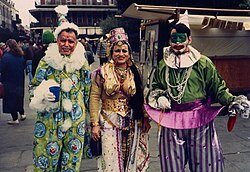
From the 1920s through the 1980s, Jackson Square became a renowned colony for painters, ranging from professional artists like Alberta Kinsey and Rolland Golden to caricaturists and students. Today, the area remains a hub for street performers, including magicians and jugglers.
Since the 1960s, the square has also been a center for New Age and pagan practitioners, who offer tarot readings and palmistry along St. Ann and St. Peter streets.
Surrounding Landmarks and Entertainment
The north side of the square is dominated by three historic buildings: the St. Louis Cathedral (a minor basilica), the Cabildo (the former city hall and site where the final Louisiana Purchase was signed), and the Presbytère (originally for priests, later a courthouse and museum).
Nearby attractions include the 24-hour Café du Monde, famous for its chicory café au lait and beignets, and the Jax Brewery building. To reconnect the city to the Mississippi River, Mayor Moon Landrieu installed a scenic boardwalk known as the "Moon Walk" atop the levee.
Pop Culture and Events
Jackson Square is a frequent filming location for movies and TV shows, including The Curious Case of Benjamin Button, Treme, and Interview with the Vampire. It also hosts annual events such as the French Quarter Festival and Caroling in Jackson Square.
Summary of Jackson Square Landmarks
| Landmark | Primary Function/Significance | Notable Feature |
|---|---|---|
| St. Louis Cathedral | Religious Center | Designated as a minor basilica |
| The Cabildo | Former Town Hall / Museum | Site of the Louisiana Purchase signing |
| The Presbytère | Former Courthouse / Museum | Matches the Cabildo's architecture |
| Pontalba Buildings | Mixed-use Residential/Retail | Oldest continuously rented apartments in North America |
| Andrew Jackson Statue | Monument | Equestrian bronze by Clark Mills |
Frequently Asked Questions
Why is Jackson Square historically significant?
It served as the central hub of early colonial New Orleans and was the site where the Louisiana Purchase was ceremonially transferred in 1803, making Louisiana a U.S. territory.
Who was the square named after?
The square was renamed in 1851 in honor of General Andrew Jackson, who led the victory in the 1815 Battle of New Orleans and later served as the 7th U.S. President.
What are the Pontalba Buildings?
They are two matching red-brick buildings that flank the square. They are famous for containing the oldest continuously rented apartments in North America.
What is the "Moon Walk"?
The Moon Walk is a scenic boardwalk installed on top of the levee by Mayor Moon Landrieu to provide pedestrians with a view of the Mississippi River.
Which famous foods are found near the square?
Café du Monde, located diagonally across from the square, is world-famous for its beignets and café au lait prepared with chicory.