The Antilles: Geography, Geology, and History of the Caribbean Archipelago
The Antilles is a vast archipelago located within the West Indies in the Caribbean region of the Americas. This stunning chain of islands is strategically positioned, bordered by the Caribbean Sea to the south and west, the Gulf of Mexico to the northwest, and the North Atlantic Ocean to the north and east.
While geographically categorized as a subregion of North America, the Antilles hold a complex cultural identity. Cuba, the Dominican Republic, and Puerto Rico are frequently included in Latin America, though many scholars prefer the broader designation of "Latin America and the Caribbean" to encompass the entire region.
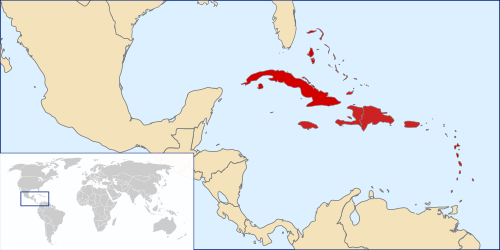
Key Facts
- Composition: Divided primarily into the Greater Antilles and the Lesser Antilles.
- Geology: The Greater Antilles consist of continental rock, while the Lesser Antilles are largely volcanic.
- Boundaries: Surrounded by the North Atlantic Ocean, Gulf of Mexico, and Caribbean Sea.
- Exclusions: The Lucayan Archipelago (Bahamas and Turks and Caicos) is part of the West Indies but generally not considered part of the Antilles.
The Structure of the Archipelago
The Antillean islands are organized into two primary groups based on size and location: the Greater Antilles and the Lesser Antilles.
The Greater Antilles
The Greater Antilles comprise the larger landmasses of the region. This group includes Cuba, Jamaica, Puerto Rico, and Hispaniola—the latter of which is divided into the sovereign nations of Haiti and the Dominican Republic. Additionally, the Cayman Islands and Navassa Island are part of this group.
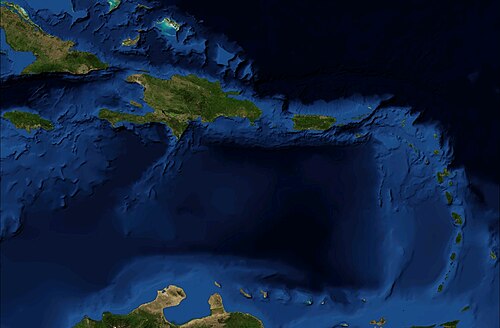
The Lesser Antilles
The Lesser Antilles consist of smaller islands and are further subdivided into three distinct groups:
- Leeward Islands: Located in the northern section of the archipelago.
- Windward Islands: Located in the southeasterly section.
- Leeward Antilles: Situated immediately north of Venezuela.

The Lucayan Archipelago
It is important to distinguish the Antilles from the Lucayan Archipelago. Consisting of The Bahamas and the Turks and Caicos Islands, the Lucayan islands are part of the West Indies but are typically excluded from the Antillean classification.
Geological Foundations
The physical makeup of the islands differs significantly between the two main groups. The Greater Antilles are primarily composed of continental rock that accreted onto the North American Plate due to the relative movement of the Caribbean Plate.
In contrast, the Lesser Antilles are mostly young volcanic islands. These were formed by the Lesser Antilles subduction zone, a geological process where one tectonic plate is forced beneath another, triggering volcanic activity.
Historical Origins and Naming
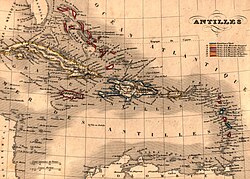
The name "Antilles" predates European colonization. Medieval charts often depicted a mythical land or archipelago called Antilia, which was vaguely placed in the mid-ocean between India and the Canary Islands.
Following Christopher Columbus's 1492 expedition, European powers recognized that these lands formed an extensive archipelago. Before "Antilles" became the standard term, the islands were known by various names. Early Spanish explorers referred to them as the Windward Islands, while 18th-century British sources called them the Forward Islands. Eventually, the term Antilles became the norm, and the Caribbean Sea was frequently referred to as the "Sea of the Antilles" in several European languages.
Regional Summary
| Subregion | Key Islands/Territories | Geological Origin |
|---|---|---|
| Greater Antilles | Cuba, Hispaniola, Jamaica, Puerto Rico, Cayman Islands, Navassa Island | Continental rock (North American Plate) |
| Lesser Antilles | Leeward Islands, Windward Islands, Leeward Antilles | Volcanic (Subduction zone) |
| Lucayan Archipelago | The Bahamas, Turks and Caicos Islands | N/A (Part of West Indies, not Antilles) |
Frequently Asked Questions
Are the Bahamas part of the Antilles?
Generally, no. While The Bahamas are part of the Lucayan Archipelago and the broader West Indies, they are typically not included in the Antillean islands, although some specific sources may differ.
What is the difference between the Greater and Lesser Antilles?
The Greater Antilles consist of larger islands like Cuba and Jamaica and are made of continental rock. The Lesser Antilles are smaller, mostly volcanic islands divided into the Leeward and Windward groups.
How were the Lesser Antilles formed?
The Lesser Antilles were created by volcanic activity resulting from the Lesser Antilles subduction zone.
Where does the name "Antilles" come from?
The name originates from "Antilia," a landmass depicted on medieval charts before the European colonization of the Americas.
Which countries are on the island of Hispaniola?
Hispaniola is subdivided into two nations: the Dominican Republic and Haiti.