Textile Industry: Evolution, Production Processes, and Global Impact
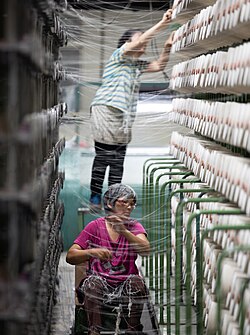
The textile industry is a cornerstone of global commerce, encompassing the design, production, and distribution of yarn (spun threads), cloth, and clothing. From the early days of hand-weaving in cottages to the massive automated factories of the modern era, the industry has evolved through continuous technological innovation and a shift toward globalized supply chains.
Key Facts
- Cotton remains the world's most critical natural fibre, with a 2007 global yield of 25 million tons.
- The 20th century saw a shift from purely natural fibres to synthetic fibres like nylon, polyester, and spandex.
- China, India, and Italy are among the world's largest textile exporters.
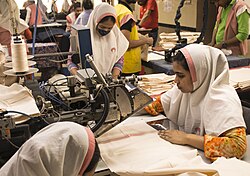
- The industry is a primary employment driver in nations such as India and Pakistan.
- Modern production is governed by strict safety and environmental standards, including REACH and CPSIA.
The Cotton Manufacturing Process

Cotton production is a complex sequence that transforms raw plants into finished textiles. This process generally follows five distinct stages:
- Cultivating and harvesting: Growing and gathering the raw cotton bolls.
- Preparatory processes: Cleaning and preparing the fibre for spinning.
- Spinning: The process of twisting fibres together to create yarn.
- Fabric construction: Weaving or knitting the yarn into cloth.
- Finishing: Applying final treatments to create the end textile product.
In 2007, this industry utilized 35 million hectares of land across more than 50 countries to meet global demand.
Historical Evolution of Textiles
The Cottage Stage and Industrial Revolution
Before the rise of factories, textile production was a labor-intensive activity performed in homes. The Industrial Revolution shifted this paradigm, particularly in Great Britain, where wool production in the Midlands and West Riding of Yorkshire drove early economic growth. By the 18th century, woolen goods accounted for over a quarter of British exports.
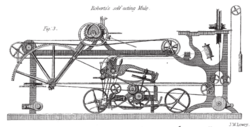
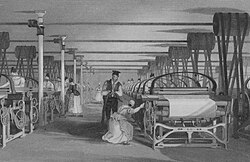
Technological leaps in the 19th century accelerated this growth. In 1830, Richard Roberts introduced the first loom with a cast iron frame. This was followed in 1842 by the Lancashire Loom, a semiautomatic power loom that became the industry mainstay until the 1894 invention of the Northrop Loom, which featured automatic weft replenishment.
The Rise of Synthetic Fibres
The 20th century introduced chemical innovations that challenged the dominance of cotton and wool. Rayon was invented in 1910, followed by DuPont's nylon in 1935, which served as an inexpensive silk substitute for everything from stockings to military parachutes.
The mid-century saw a surge in variety: acetate, modacrylic, and saran appeared in the 1940s, while acrylic, polyester, and spandex arrived in the 1950s. Polyester's popularity grew so rapidly that by the late 1970s, it outsold cotton in the United States apparel market.
Global Industry Landscape
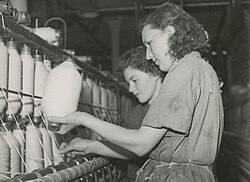
Asia's Dominance
Today, Asia is a powerhouse of textile production. China led exports in 2013 with $274 billion. India's textile sector is the country's second-largest employment generator, providing direct jobs to over 35 million people. In Pakistan, the sector is vital to the economy, accounting for 54% of export earnings and 8.5% of the total GDP.
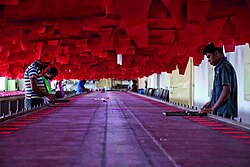
European and Regional Markets
The European Union's industry is characterized by a high density of Small and Medium Enterprises (SMEs). In 2011, the sector comprised over 185,000 companies employing 1.7 million people. In Catalonia, the industry began in the 18th century with printed chintz and later transitioned to hydraulic power in the 1860s due to the high cost of imported coal.
Below is a summary of the leading textile exporters as of 2013:
| Country | Export Value (USD) |
|---|---|
| China | $274 Billion |
| India | $40 Billion |
| Italy | $36 Billion |
| Germany | $35 Billion |
| Bangladesh | $28 Billion |
| Pakistan | $27 Billion |
Regulation and Environmental Impact
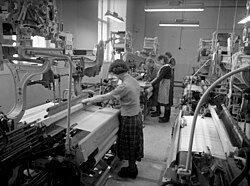
The global trade of textiles was governed by the Multi Fibre Arrangement (MFA) from 1974 to 2004, which imposed quotas on developing countries. Since then, the focus has shifted toward regulatory standards for safety and health.
Key standards include the CPSIA (flammability), ASTM textile standards, and the EU's REACH regulations. Additionally, the EU's Regulation 1007/2011 mandates specific labeling for fibre composition.
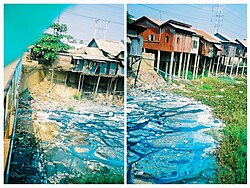
Despite these regulations, the industry faces significant challenges. Environmental issues include water pollution from dyes, while workers face risks such as chemical exposure, noise-induced hearing loss, and ergonomic hazards from repetitive sewing machine operation.
Frequently Asked Questions
What are the five stages of cotton manufacturing?
The five stages are cultivating and harvesting, preparatory processes, spinning (creating yarn), fabric construction, and finishing (creating the final textile).
When did synthetic fibres begin to replace natural ones?
Synthetic fibres began emerging in the early 20th century, with rayon in 1910 and nylon in 1935. By the late 1970s, polyester had become more popular than cotton in the US apparel market.
Which countries are the largest textile exporters?
Based on 2013 data, the largest exporters were China, India, Italy, Germany, Bangladesh, and Pakistan.
What was the Multi Fibre Arrangement (MFA)?
The MFA was a trade agreement that governed world textile and garment trade from 1974 to 2004, imposing quotas on the amount of textiles developing countries could export to developed nations.
What are some common health risks for textile workers?
Workers may be exposed to chemical hazards, respiratory issues from dust exposure, hearing loss due to noise, and musculoskeletal pain resulting from ergonomic hazards.