Terrorism: Definitions, History, and Global Impact
In its broadest sense, terrorism is the use of violence against non-combatants to achieve political or ideological aims. While the term is most frequently used to describe intentional violence during peacetime, it also applies to attacks on non-combatants within the context of war. Because there is no universal agreement on a single definition, various interpretations emphasize different elements, such as the randomness of the attacks, the intent to instill fear, and the psychological impact on a population beyond the immediate victims.
Modern terrorism leverages fear as a strategic tool to influence decision-makers. By targeting densely populated public areas—including transportation hubs, airports, shopping centers, and tourist attractions—perpetrators aim to create widespread insecurity. This psychological manipulation is designed to undermine confidence in security measures and force policy changes.
Key Facts
![Representation of the aftermath of the Saint Germain bombing in L'Illustration (March 19, 1892),[54] an attack that ushered in the Ère des attentats](/images/0c/38/0c385cea001ecc9f881b4cdadc3e82ea3b1ca29a4611fce7fdf0b069d18d1f09.png)
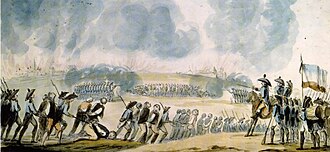
- Origin: The terms "terrorist" and "terrorism" emerged during the French Revolution in the late 18th century.
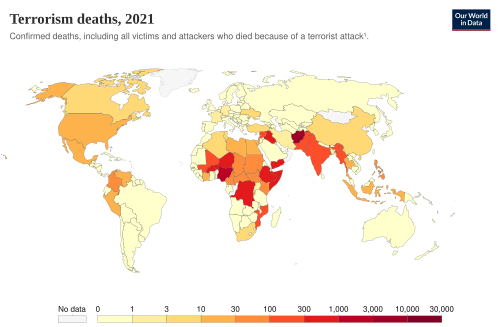
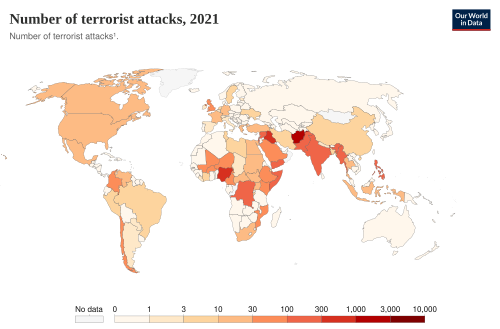
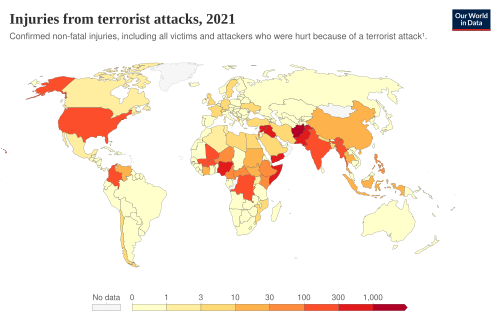
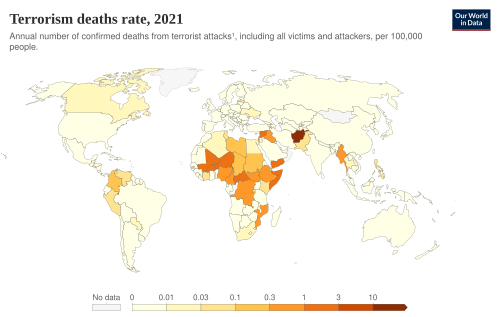
- Scale: The Global Terrorism Database recorded over 61,000 non-state terrorism incidents and at least 140,000 deaths between 2000 and 2014.
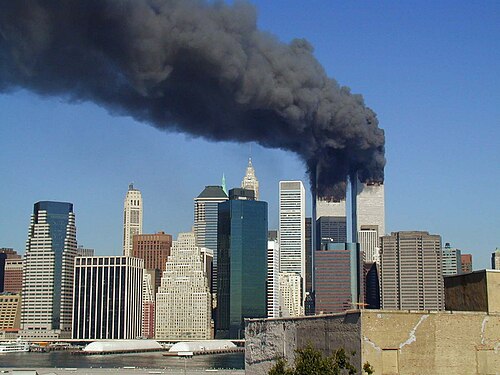
- Tactics: Suicide attacks became more prevalent from the 1980s onward, peaking in events like the September 11 attacks.
- Resolution: According to research, the most common way terrorist groups end is through negotiation and conversion to nonviolence (43%).
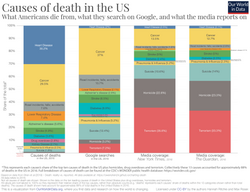
- Perception: Media coverage of terrorism often far exceeds the actual percentage of deaths caused by it compared to other causes.
The Evolution of Terrorism
Etymology and Early History
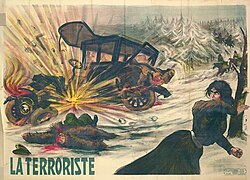
The concept of terrorism as a named phenomenon began with the French Revolution. However, it gained significant international attention in the 1970s, driven by conflicts such as the Troubles in Northern Ireland, the Basque conflict, and the Israeli–Palestinian conflict.

Early iterations of political violence evolved into the "birth of modern terrorism" between 1850 and the 1890s, eventually leading to the diverse array of tactics seen in the 20th and 21st centuries.
Types of Terrorism
Terrorism is categorized based on the motivations and the nature of the perpetrators:
- Political Terrorism: Includes sub-state terrorism, social revolutionary movements, and nationalist-separatist efforts.
- Religious Terrorism: Driven by religious extremism, fundamentalism, or new religious movements.
- Ideological Terrorism: Divided primarily into right-wing and left-wing (including communist) terrorism.
- State-Related Terrorism: This includes state terrorism (violence by a government against its own people) and state-sponsored terrorism (support for non-state groups).
- Other Forms: Criminal terrorism and pathological terrorism.
Causes and Motivations
Strategic Choice of Tactics
Groups choose terrorism as a tactic for several strategic reasons:
- Asymmetric Warfare: Forcing a government to meet demands when the group lacks conventional military power.
- Intimidation: Coercing a population into capitulating to avoid future harm.
- Visibility: Gaining political support and attention for a cause.
- Propaganda of the Deed: Directly inspiring others through revolutionary acts or indirectly provoking a hostile over-reaction from enemies to garner sympathy.
![The Wall Street bombing at noon on September 16, 1920, killed thirty-eight people and injured several hundred. The perpetrators were never caught.[141]](/images/86/74/8674a4ad8251b7d1c88bcf122847da74ff54c2f26e2a9fbd8a0ebea3e3e91475.jpg)
Motivating Factors
Motivations vary from broad political goals to personal grievances. Common causes include independence or separatist movements, environmental protection (eco-terrorism), the spread of a specific religion, or the desire to end perceived government oppression.
On a personal level, factors such as social isolation, previous exposure to violence, financial rewards, and the perception of profound injustice play a role. Research into "lone wolf" terrorists—individuals who act alone—reveals specific trends:
- 43% were motivated by religious beliefs.
- 40% were unemployed at the time of their arrest.
- 32% had pre-existing mental health disorders.

Counterterrorism and Group Dissolution
Strategies for Prevention
Governments employ various counterterrorism strategies to mitigate threats, including:
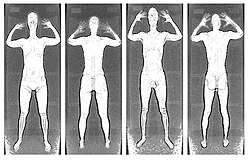
- Target Hardening: Physical security measures like traffic barriers or locked doors.
- Intelligence: Increased surveillance and preemptive military or police action.
- Legal Frameworks: Targeted laws, criminal procedures, and enhanced police powers.
- Humanitarian Aid: Preemptive activities to address the root causes of instability.
How Terrorist Groups End
Research by Audrey Kurth Cronin identifies six primary ways terrorist groups cease to exist:
| Method | Description |
|---|---|
| Negotiation | Entry into a legitimate political process (most common). |
| Repression | Defeat and elimination through brute force. |
| Decapitation | Capture or killing of the group's leadership. |
| Success | Achievement of the group's primary aims. |
| Failure | Group implosion or total loss of public support. |
| Reorientation | Transition into other forms of violence. |
![How terrorist groups end (n = 268): The most common ending for a terrorist group is to convert to nonviolence via negotiations (43%), with most of the rest terminated by routine policing (40%). Groups that were ended by military force constituted only 7%.[174]](/images/2a/dd/2add2363cca969695e4c3f5d245703ccad75799ce2cbd6a110f5bf14c68e5a28.webp)
Frequently Asked Questions
![Number of failed, foiled or successful terrorist attacks by type and year within the European Union. Source: Europol.[66][67][68]](/images/0e/f9/0ef993254584dd0c4d1079b9f0bfb2ba491c0349537d1da59cf670c3b69300a3.jpg)
![Islamabad Marriott Hotel bombing. Approximately 35,000 Pakistanis died from terrorist attacks between 2001 and 2011.[92]](/images/e7/b0/e7b09e7ac2986bf3058d271e3420c5f8d0c8578ba2d271faffb54a6826d67d38.jpg)

![Luis Posada and CORU are widely considered responsible for the 1976 bombing of a Cuban airliner that killed 73 people.[197]](/images/6c/10/6c108ef45a373aa7a915f2f200a0adda4ca41b1c3719f97a8cd8aa7bdbb51c31.jpg)

What is the difference between state terrorism and state-sponsored terrorism?
State terrorism refers to violent acts committed by a government against its own citizens or people in territories it controls. State-sponsored terrorism occurs when a government provides support, funding, or sanctuary to non-state terrorist groups to attack targets abroad or domestically.
Why is there no single universal definition of terrorism?
Definitions vary because the term is often used pejoratively or politically. Different nations and organizations emphasize different aspects, such as the target (non-combatants), the intent (to instill fear), or the goal (political change).
What is "propaganda of the deed"?
Propaganda of the deed is the strategy of using a violent act to inspire others to join a cause or to provoke a government into an over-reaction, which in turn may alienate the public and drive more people toward the revolutionary cause.
How common is the use of military force to end terrorist groups?
While often the most visible response, military force is relatively uncommon as a final resolution. Research indicates that only about 7% of terrorist groups are ended by military force, whereas 43% convert to nonviolence via negotiations.