Federal Bureau of Investigation
The Federal Bureau of Investigation (FBI) serves as the primary federal law enforcement agency of the United States. Operating under the jurisdiction of the Department of Justice and the Office of the Director of National Intelligence, the FBI is tasked with protecting the nation from a wide array of threats, ranging from domestic terrorism to sophisticated cyber operations.
Founded on July 26, 1908, as the Bureau of Investigation, the agency has evolved over more than a century into a massive organization with approximately 38,000 employees and a substantial annual budget, which stood at approximately US$9.75 billion in fiscal year 2021.
Key Facts
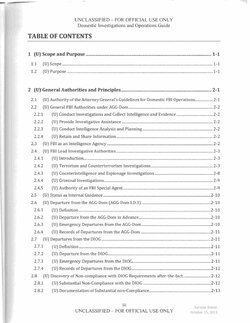
- Motto: Fidelity, Bravery, Integrity.
- Established: July 26, 1908.
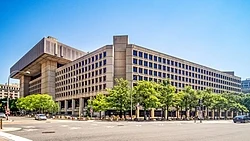
- Headquarters: The J. Edgar Hoover Building, Washington, D.C.
- Parent Agencies: Department of Justice and Office of the Director of National Intelligence.
- Workforce: Approximately 38,000 employees.
- Primary Focus: National security, counterterrorism, and major federal crimes.
Mission and Strategic Priorities
![The "suicide letter",[36] mailed anonymously to King by the FBI](/images/40/ae/40aebe7c89a1a7240621995421bce4af7e49599bd8359041e8690f45db4999ee.png)
The FBI operates with a dual mandate: acting as both a law enforcement agency and an intelligence organization. Its primary goal is to protect the United States from various internal and external threats.
Top Operational Priorities
- Protecting the U.S. from terrorist attacks.
- Countering foreign intelligence operations, espionage, and cyber-attacks.
- Combating significant cybercriminal activity.
- Addressing public corruption at all levels of government.
- Protecting civil rights.
- Dismantling transnational criminal enterprises.
- Fighting major white-collar crime and significant violent crime.
Organizational Structure

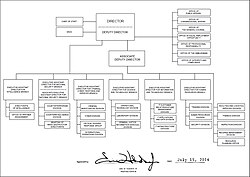
The FBI is organized into several specialized branches, each led by an Executive Assistant Director. This structure ensures that the agency can manage diverse responsibilities, from forensic science to human resources.
Main Branches
- Intelligence Branch: Focuses on the collection and analysis of intelligence.
- National Security Branch (NSB): Includes the Counterintelligence Division, Counterterrorism Division, and the Weapons of Mass Destruction Directorate.
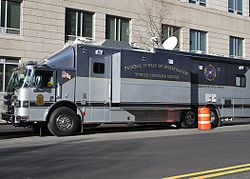
- Criminal, Cyber, Response, and Services Branch (CCRSB): Manages the Criminal Investigation Division, Cyber Division, and the Critical Incident Response Group.
- Science and Technology Branch (STB): Oversees the FBI Laboratory and Operational Technology Division.
- Information and Technology Branch (ITB): Manages the agency's digital infrastructure and data applications.
- Human Resources Branch (HRB): Handles training and personnel management.
Rank Structure
The FBI utilizes a hierarchical rank system to maintain operational discipline. The progression for field agents typically follows this order:
- New Agent Trainee
- Special Agent
- Senior Special Agent
- Supervisory Special Agent
- Assistant Special Agent-in-Charge (ASAC)
- Special Agent-in-Charge (SAC)
Management roles extend further to include Deputy Assistant Directors, Assistant Directors, Executive Assistant Directors, and ultimately the Director of the FBI.

Historical Evolution and Notable Figures
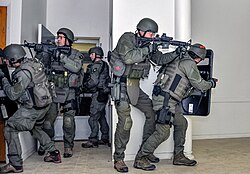
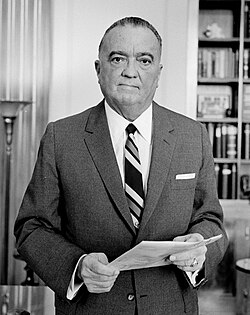
The agency's history is deeply intertwined with the growth of the American state. One of the most influential figures was J. Edgar Hoover, who served as Director from 1924 to 1972, shaping the modern FBI but also leaving a legacy of controversy.
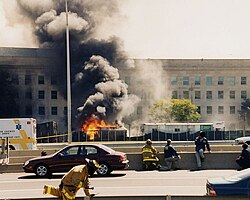
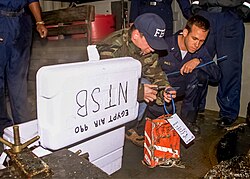
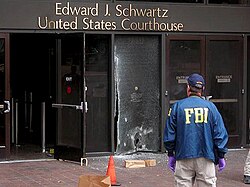
Throughout its history, the FBI has been involved in pivotal national events, including the investigation of the Kennedy assassination, the fight against organized crime, and the response to the September 11 attacks. The agency also maintains a specialized presence in Indian Country to combat crime on Indian reservations.
Agency Overview Summary
| Category | Details |
|---|---|
| Founded | July 26, 1908 |
| Budget (FY 2021) | US$9,748,829,000 |
| Personnel | ≈38,000 |
| Key Equipment | Glock Model 22 (.40 S&W) and Glock 19M (9mm) |
| Headquarters | Washington, D.C. |
Frequently Asked Questions



![An FBI evidence response team[clarification needed]](/images/1b/ce/1bcef1796e70e13fa2346e4e046542b813ca1575b765e2050a4455f6412ce176.jpg)


What is the difference between the FBI and other federal agencies?
While agencies like the DEA focus on drugs and the ATF focuses on alcohol, tobacco, firearms, and explosives, the FBI has a broader mandate covering national security, counterterrorism, and a wide variety of federal crimes.
Who leads the FBI?
The FBI is led by a Director, who is appointed to oversee the agency's operations and report to the Department of Justice.
Where does the FBI train its agents?
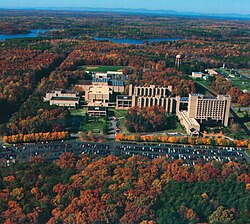
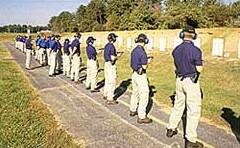
Agents undergo rigorous training at the FBI Academy located in Quantico, Virginia.
What are the FBI's primary weapons?
The FBI has historically used the Glock Model 22 in .40 S&W caliber, but has transitioned toward the 9mm platform with the Glock 19M.
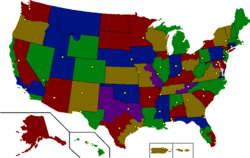
How is the FBI structured geographically?
The FBI operates through a network of field divisions and field offices located across the United States to ensure local presence and rapid response.