Territorial Disputes Between UN Member and Observer States
The map of the world is rarely as static as it appears in textbooks. Across every continent, nations continue to contest the exact placement of borders, the ownership of remote islands, and the rights to vast stretches of ocean. These territorial disputes—disagreements over the possession or control of land between two or more states—often stem from colonial legacies, ethnic divisions, or the discovery of valuable natural resources.
From the frozen reaches of Antarctica to the dense jungles of the Amazon, these conflicts range from diplomatic disagreements to active military standoffs. Understanding these disputes requires a look at both land-based boundaries and the complex laws governing maritime zones.
Key Facts
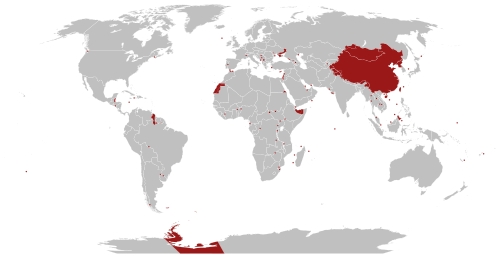
- Global Reach: Territorial disputes exist on every inhabited continent and in the Antarctic.
- Maritime Conflict: Many modern disputes center on the Exclusive Economic Zone (EEZ), the sea zone over which a state has special rights regarding the exploration and use of marine resources.
- Complex Claimants: Some regions are contested by more than two parties, including states with limited international recognition.
- Resolution: While many disputes remain "frozen," others are settled through treaties, international courts, or bilateral agreements.
Major Land Disputes by Region
![As of January 2023, Russian President Vladimir Putin cited recognition of Russia's sovereignty over the annexed territories (pictured) as a condition for peace talks with Ukraine.[74]](/images/e9/90/e99064d0e6efabf7bea509a0ca71faae37d70915ba45e5532d95074ebcc74f39.webp)
Africa
Africa features numerous border disputes, many of which are remnants of the colonial era. Notable examples include the Al-Fashaga District contested by Sudan and Ethiopia, and various island disputes involving France, Comoros, and Madagascar, such as the Glorioso Islands.
The Americas
In North America, disputes are fewer but persistent, such as the Machias Seal Island contest between Canada and the United States. South America sees significant tension in the Guyana-Venezuela dispute over territory west of the Essequibo River, as well as long-standing claims between Argentina and the United Kingdom over the Falkland Islands.
Asia and Europe
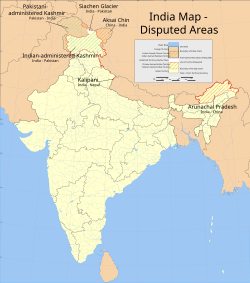
Asia hosts some of the world's most volatile disputes, including the Siachen Glacier and Kashmir regions between India and Pakistan. In Europe, border tensions persist in the Balkans, specifically between Croatia, Serbia, and Slovenia, as well as the Kuril Islands dispute between Russia and Japan.
The Middle East and Antarctica
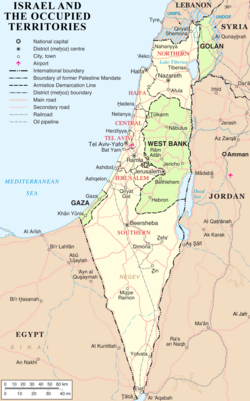
The Middle East is characterized by complex overlaps, particularly involving Israel, Palestine, Syria, and Lebanon. Meanwhile, Antarctica is unique because multiple nations—primarily Argentina, Chile, and the United Kingdom—have overlapping claims to various sectors of the frozen continent.
Maritime and Water-Based Disputes
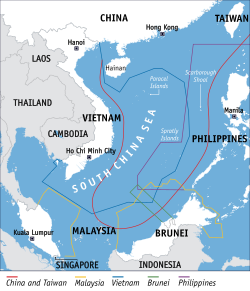
Territorial disputes are not limited to dry land. Many nations clash over territorial waters and the seabed. The South China Sea is one of the most contested areas globally, involving China, the Republic of China, Vietnam, the Philippines, Malaysia, and Brunei.
Other significant maritime disputes include the Caspian Sea, where Kazakhstan, Russia, Turkmenistan, Azerbaijan, and Iran have navigated complex boundary agreements, and the Beaufort Sea between Canada and the United States.
Disputes Involving Limited Recognition
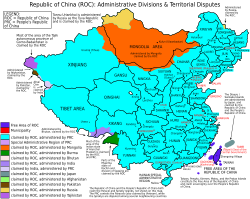
Some disputes involve entities that are not fully recognized as sovereign states. For example, the Republic of China (Taiwan) maintains various claims that overlap with those of the People's Republic of China and other neighbors. Similarly, regions like Northern Cyprus and South Ossetia involve claimants with limited international standing.
Internal Boundary Disputes
Not all disputes are international. Many states face internal conflicts over the boundaries between provinces or states. Examples include the Labrador-Quebec border in Canada, various municipal boundaries in the Philippines, and the Tennessee-Georgia border in the United States.
Summary of Notable Ongoing Disputes
| Territory | Primary Claimants | Region |
|---|---|---|
| Falkland Islands | UK, Argentina | South America |
| Kashmir / Siachen Glacier | India, Pakistan | Asia |
| Kuril Islands | Russia, Japan | Asia |
| West Bank / East Jerusalem | Israel, Palestine | Middle East |
| Spratly Islands | China, Vietnam, Philippines, Malaysia, Brunei, ROC | Asia (Maritime) |
| Essequibo Region | Guyana, Venezuela | South America |
Historic Disputes and Resolutions
Many disputes have been successfully resolved over time. For instance, the border between the US and Mexico was settled in the late 19th century, and more recently, Canada and Denmark resolved the dispute over Hans Island in 2022. These resolutions typically occur through diplomatic treaties or legal arbitration.
Frequently Asked Questions
What is a territorial dispute?
A territorial dispute is a disagreement between two or more political entities (usually sovereign states) over the possession or control of a specific piece of land or a maritime area.
What is an Exclusive Economic Zone (EEZ)?
An EEZ is a maritime zone prescribed by the United Nations Convention on the Law of the Sea over which a state has special rights regarding the exploration and use of marine resources, including fish and minerals.
How are these disputes typically settled?
Settlements are usually reached through bilateral negotiations, treaties, or by referring the case to an international body such as the International Court of Justice (ICJ).
Why do so many disputes exist in Africa?
Many African border disputes are a result of the "Scramble for Africa," where colonial powers drew borders on maps without regard for ethnic, linguistic, or traditional geographic boundaries.
Can a dispute be internal?
Yes. Internal boundary disputes occur within a single sovereign state, where different administrative regions (like states or provinces) disagree on where their borders lie.